To mark a queen bee directly on a frame, you must locate her on the comb—typically a brood frame—and apply a dot of color to the top center of her thorax using a saturated paint marker. This technique relies entirely on the quality of your marker and a gentle touch; because the queen is free to move, you must barely graze her with a fully loaded marker tip rather than pressing down.
The success of marking a queen without restraint hinges on marker preparation. If the tip is sufficiently saturated with paint, a momentary, feather-light touch is all that is required, eliminating the need to apply pressure that could injure or disturb the queen.
Preparation and Precision
Priming the Marker
Before approaching the hive, select a high-quality, non-toxic, water-based paint pen. Shake the pen vigorously and press the tip against a scrap surface to ensure the paint is flowing freely. The tip must be wet with paint so that contact is instantaneous; if the tip is dry, you will be tempted to press harder, which endangers the queen.
Identifying the Target
Locate the queen, usually found moving across a frame of open brood. Focus your attention on the thorax, which is the section of her back between the head and the abdomen. This is the only safe place to apply the mark.
Avoiding Sensitive Areas
You must exercise extreme caution to ensure paint does not touch her antennae, eyes, or wings. Painting these sensory or locomotive organs can cripple the queen. Furthermore, a "messy" mark covering the wrong areas can alter her pheromone profile or behavior, potentially causing the colony to reject or ball (attack) her.
The Application Technique
The "Touch" Method
Once the queen pauses momentarily, bring the marker down gently. You are aiming for a simple touch to the top center of the thorax, not a painting motion. Do not rub the marker back and forth.
Controlling Pressure
Apply minimal pressure. Because the queen is not immobilized in a cage or held by hand, pressing down can pin her against the comb, causing internal injury. A saturated tip allows the surface tension of the paint to transfer the dot without significant physical force.
Post-Marking Patience
After the dot is applied, allow the queen to continue her movement on the frame undisturbed. While some methods require holding the queen while the paint dries, marking on the frame requires you to let her roam immediately, so ensure the paint layer is thin enough to dry quickly on its own.
Understanding the Trade-offs
The Risk of Movement
The primary drawback of marking directly on the frame is the lack of immobilization. Unlike using a "push-in" cage or holding the queen by her legs, the queen is free to run or fly away during the process. This increases the difficulty of placing the dot precisely in the center of the thorax.
Accuracy vs. Convenience
This method is the most convenient as it requires no catching tools or handling, making it faster for experienced beekeepers. However, the margin for error is higher; a sudden movement by the queen can lead to paint ending up on her head or wings.
Comparison to Caging
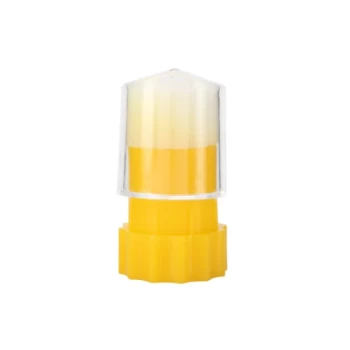
For those less confident in their hand stability, using a round push-in cage or a plunger-style piston device is significantly safer. These tools immobilize the queen, allowing for a stress-free application where the risk of crushing her or painting sensitive areas is drastically reduced.
Making the Right Choice for Your Goal
Select the method that aligns with your experience level and steady-handedness.
- If your primary focus is speed and convenience: Use the direct-on-frame method, but ensure your marker is perfectly primed to require zero pressure.
- If your primary focus is safety and accuracy: Use a push-in cage or piston device to immobilize the queen before applying the paint.
Mastering the use of a saturated marker allows for a swift, non-invasive marking process that disturbs the colony as little as possible.
Summary Table:
| Aspect | Direct-on-Frame Method | Caging/Restraint Method |
|---|---|---|
| Equipment | Saturated Paint Marker | Cage, Plunger, or Piston |
| Main Advantage | Maximum speed & convenience | Higher safety & precision |
| Key Risk | Accidental injury or misplacement | Slight increase in handling time |
| Skill Level | Advanced/Experienced | Beginner to Intermediate |
| Movement | Queen is free to move | Queen is immobilized |
| Best For | Routine hive checks | Beginners or high-value queens |
Elevate Your Apiary Management with HONESTBEE
Precise queen marking is just one step in professional beekeeping. At HONESTBEE, we empower commercial apiaries and distributors with the high-quality tools required for precision and efficiency.
Our extensive wholesale portfolio includes everything from professional-grade queen marking supplies and hive-making machines to automated honey-filling equipment and unique honey-themed cultural merchandise. Whether you are scaling a commercial operation or supplying the industry, we provide the hardware and consumables needed to succeed.
Ready to upgrade your equipment? Contact us today to discuss our wholesale offerings and discover how HONESTBEE can streamline your beekeeping business!
Related Products
- Plastic Long Marker Device for Catching and Marking Bees Queen Bee Marking Tube and Cage
- Queen Bee Marking Pen POSCA Queen Marking Pens for Beekeeping Bee Markers
- One Hand Yellow Queen Marking Catcher Tube Cage Beekeeper Tool Accessory for Queen Bee
- Queen Bee Marking Tube Cage Bottle Catcher Holder with Clear Plastic Plunger Marker
- Queen Bee Marking Pen UNI Medium Point for Queen and Bee Marking
People Also Ask
- Where on the queen bee's body should the mark be applied? Master the Art of Safe Queen Identification
- What are the primary objectives for marking a queen bee? Master Hive Management and Data Tracking
- Why is the physical marking of a queen bee important? Ensure Precise Colony Replacement Cycle Tracking
- How do you capture and immobilize a bee for marking? Master Safe Queen Handling for Your Apiary
- What are the different methods for applying a mark to a queen bee? Master Safe and Effective Queen Marking Techniques