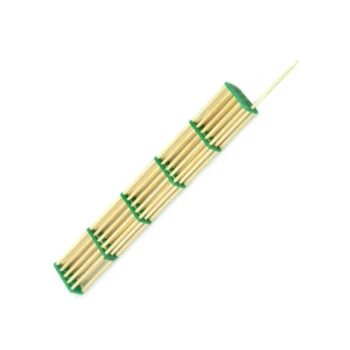
Wooden veneer strips function primarily as a regulated delivery system for botanical essential oils within commercial apiaries. By leveraging the natural adsorption properties of wood fiber, these strips hold complex oils and facilitate their slow, controlled evaporation, allowing for the treatment of Varroa mites without exposing bees to dangerous concentrations of the active ingredients.
Core Insight: The wooden strip acts as a physical buffer, transforming volatile and potentially caustic essential oils into a sustained-release vapor. This mechanism converts a high-intensity liquid agent into a consistent, long-duration treatment that is safe for the colony but lethal to the parasite.
The Mechanics of Controlled Release
Utilizing Natural Adsorption
The fundamental role of the wooden veneer is to serve as a physical carrier.
The natural fibers of the wood possess specific adsorption properties that allow them to soak up and retain a precise, measured amount of botanical essential oils.
This prevents the liquid from pooling or dripping, which could be hazardous to the hive environment.
Leveraging Surface Area for Evaporation
Once saturated, the strip utilizes its large surface area to facilitate the treatment process.
This design maximizes the area exposed to the hive's internal air currents, enabling the essential oil components to evaporate at a steady, controlled rate.
This creates a sustained-release mechanism, maintaining the necessary concentration of the agent over an extended period.
Protecting the Colony
Mitigating Toxicity Risks
Essential oils are potent biological agents; in high concentrations or direct liquid form, they can be harmful to honeybees.
The wooden veneer prevents direct contact damage by locking the oil into the fiber and releasing it only as a vapor.
This ensures the colony is treated via the respiratory system or ambient contact rather than direct dermal exposure to concentrated liquids.
Ensuring Consistent Dosage
Unlike rapid-release methods, wooden strips ensure a stable concentration of the treatment.
This consistency is vital for penetrating the mite's defenses without overwhelming the bees' tolerance thresholds.
Standardized hive environments, such as Langstroth hives, further enhance this function by providing consistent air circulation for the vapor to distribute, though the strip itself is the primary regulator of the dose.
Understanding the Trade-offs
Release Speed vs. Immediate Knockdown
It is critical to distinguish these strips from synthetic miticide fumigants.
While fumigant strips generate medicinal smoke for a rapid, thorough elimination suitable for mite-fall counting, wooden veneer strips operate on a slower timeline.
They are designed for sustained pressure on the mite population rather than an instant "clean out."
Environmental Dependency
Because the mechanism relies on evaporation, the efficacy can be influenced by hive conditions.
The rate at which the oils release from the wood can vary slightly depending on the internal temperature and airflow of the specific hive configuration.
Strategic Application for Apiary Management
When incorporating wooden veneer strips into your Integrated Pest Management (IPM) plan, consider the specific operational goal.
- If your primary focus is sustained suppression: Utilize wooden veneer strips to maintain a long-term, stable concentration of essential oils that targets mites while maximizing bee safety.
- If your primary focus is rapid diagnosis or immediate knockdown: Consider synthetic fumigant strips, which provide a faster release for precise mite-fall data collection.
By using the wood's natural properties to moderate the volatility of essential oils, you achieve a balance between effective pest control and high colony safety standards.
Summary Table:
| Feature | Wooden Veneer Strip Mechanism | Benefit for Apiaries |
|---|---|---|
| Material | Natural wood fiber adsorption | Prevents hazardous liquid pooling and dripping |
| Release Method | Evaporation via surface area | Ensures a consistent, long-duration vapor dosage |
| Safety | Physical buffer / Vapor delivery | Mitigates toxicity and prevents direct dermal contact |
| Application | Sustained-release carrier | Long-term mite suppression with high colony safety |
Elevate Your Apiary Management with HONESTBEE
Are you looking to optimize your pest management strategy and colony health? HONESTBEE specializes in supporting commercial apiaries and distributors with high-quality, professional-grade solutions. From specialized hive-making and honey-filling machinery to a comprehensive range of beekeeping tools and essential consumables, we provide the hardware and expertise needed to scale your operations.
Partner with us to access wholesale beekeeping equipment that balances efficacy with safety. Contact us today to discuss how our portfolio of innovative machinery and industry supplies can enhance your productivity and protect your bees.
References
- Daniela Šálková, Valentina Gornishka. CONTROL OF VARROA DESTRUCTOR WITH DIFFERENT COMBINATIONS OF ESSENTIAL OILS. DOI: 10.5281/zenodo.18031840
This article is also based on technical information from HonestBee Knowledge Base .
Related Products
- Professional Bamboo Queen Isolation Cage
- Compact Circular Bee Mite Treatment Dispenser
- Adjustable Formic and Acetic Acid Dispenser for Bee Mite Treatment
- Langstroth Screen Bottom Board for Beekeeping Wholesale
- Oxalic Acid Vaporizer 12V for Bee Varroa Mite Treatment
People Also Ask
- Why are specialized queen bee cages used for the banking of mated queen bees? Maximize Commercial Apiary Storage Efficiency
- What is the mechanism of action for using temporary queen bee cages? Master Successful Queen Introduction
- How does the side ventilation design of a queen bee cage impact the safety of the queen during long-distance transport?
- What should you do if the queen is still in the cage and the worker bees have not accepted her? Protect Your Colony from Queen Rejection
- What technical precaution must be taken regarding the mesh or grill side of a queen bee cage? Ensure Queen Survival