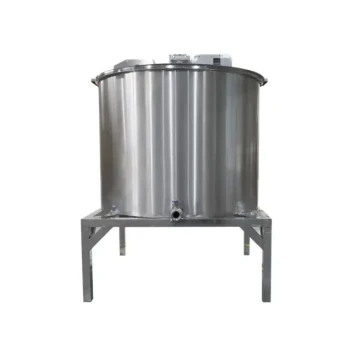
For apiaries aiming for large-scale market penetration, automated honey extraction and filling machinery is the non-negotiable foundation for industrialization. These systems transform labor-intensive manual processes into high-speed, standardized production lines that guarantee food safety, precise volume control, and the consistent product quality required by global retail chains.
Core Takeaway: Automation bridges the gap between artisanal beekeeping and commercial distribution by ensuring hygiene compliance and operational efficiency. For distributors, sourcing these machines means providing clients with the tools to reduce per-kilogram costs and transition from raw material suppliers to high-margin retail-ready producers.
Standardizing Quality for the Global Market
Ensuring Hygiene and Regulatory Compliance
Automated machinery minimizes human contact, which is the primary source of secondary contamination in honey processing. By utilizing sterile filling environments and closed-loop extraction systems, apiaries can meet the stringent food safety standards required by international regulators and large-scale wholesalers.
Maintaining Product Consistency and Integrity
Industrial-grade equipment preserves the natural physical and chemical characteristics of honey while ensuring every bottle has a consistent net weight. This precise metering is critical for maintaining brand reputation and avoiding the legal pitfalls associated with weight discrepancies in retail packaging.
Advanced Impurity Management
Compared to manual methods, automated extraction handles bulk volumes while minimizing the introduction of impurities. This technical prerequisite allows apiaries to produce a cleaner, more professional product that stands up to the scrutiny of high-end distributors and sophisticated consumers.
Driving Operational Efficiency and Profitability
Reducing Comprehensive Operating Costs
Integrating full-chain automation—from hive-making to final packaging—significantly lowers the comprehensive operating cost per kilogram. By standardizing the entire workflow, apiaries can achieve the economies of scale necessary to compete in aggressive B2B markets.
Accelerating Post-Harvest Workflows
Automated filling lines allow for the rapid transformation of raw honey into standardized commercial products. This speed ensures that apiaries can fulfill large orders quickly, a vital capability for distributors who prioritize ultra-fast delivery and efficient order fulfillment.
Optimizing Labor Allocation
Automation reduces the heavy labor demands of the extraction phase, allowing beekeepers to refocus their expertise on core colony management. This shift enables better care for bee health, such as timely pest treatments, which ultimately secures the long-term supply of raw honey for the production line.
Understanding the Trade-offs and Challenges
Initial Capital Investment and Maintenance
The transition to industrial automation requires a significant upfront capital expenditure that may be daunting for smaller operations. Furthermore, these machines require specialized technical knowledge for routine maintenance and calibration to prevent downtime during peak harvest seasons.
The Learning Curve of Industrialization
Moving from fragmented manual operations to a standardized assembly line requires a shift in operational mindset. Apiaries must implement new quality control protocols and digital tracking systems to fully leverage the data and precision provided by automated hardware.
How to Apply This to Your Business Strategy
As a distributor or wholesaler, your goal is to provide solutions that empower your clients to scale while maintaining high-profit margins. Choosing the right machinery partner is essential for ensuring long-term success.
- If your primary focus is rapid market entry: Prioritize one-stop sourcing for integrated extraction and filling lines to ensure your clients can begin high-speed production immediately.
- If your primary focus is high-end retail placement: Invest in machinery with the highest hygiene certifications and precision dosing to guarantee the product consistency required by premium grocery chains.
- If your primary focus is long-term operational stability: Select equipment from suppliers known for deep professional expertise and rapid response times for technical support and spare parts.
Embracing automated honey processing is the definitive step toward turning a local apiary into a powerhouse capable of meeting the demands of the modern global supply chain.
Summary Table:
| Key Benefit | Industrial Impact | Strategic Value for Distributors |
|---|---|---|
| Hygiene & Compliance | Sterile closed-loop systems minimize contamination. | Ensures products meet strict international food safety standards. |
| Precision Filling | Automated metering ensures consistent net weights. | Protects brand reputation and prevents retail legal disputes. |
| Cost Efficiency | Reduces labor-intensive manual processing overheads. | Maximizes profit margins through lower per-kilogram costs. |
| Speed & Scale | Accelerates post-harvest workflows for bulk orders. | Enables rapid response to high-volume market demands. |
Scale Your Honey Business with HONESTBEE
Are you ready to transform your commercial apiary operations or expand your distribution portfolio? HONESTBEE is your dedicated partner for one-stop sourcing in the beekeeping industry. We provide a comprehensive wholesale offering, from high-precision honey-filling machines and hive-making hardware to a full spectrum of beekeeping tools and consumables.
Why choose HONESTBEE?
- Maximize Margins: Industrial-grade machinery designed for high-efficiency and low operational costs.
- Unmatched Reliability: Rapid response times and deep professional expertise to keep your production lines running.
- Global Fulfillment: Ultra-fast delivery and efficient order fulfillment to meet your clients' urgent needs.
Empower your clients with the tools they need to lead the market. Contact us today to discuss wholesale opportunities and OEM/ODM support!
References
- Diana Laura Landero-Hernández, Adalberto Galindo Alcántara. Diagnóstico productivo y sanitario de la apicultura en el estado de Tabasco en el periodo 2015-2018. DOI: 10.22319/rmcp.v16i4.6763
This article is also based on technical information from HonestBee Knowledge Base .
Related Products
- Automatic Honey Filling and Filtering Machine for Beekeeping Bottle Filling
- Fully Automatic Honey Filling Packaging Machine for Processing Line
- Precision Durable Efficient HONESTBEE Rotary Honey Filling Machine
- Precision Automated Packaging Turntable Honey Spoon Filling Sealing Packing Machine
- Semi Automatic Small Honey Bottle Filling Machine Honey Filler
People Also Ask
- What process advantages do professional honey filtering and filling machines provide? Optimize Your Organic Honey Output
- How do honey filling and filtering machines increase product value? Turn Raw Honey into Premium Export-Grade Goods
- How do honey filtration and filling machinery contribute to industrialization? Scale Your Commercial Honey Production
- What specific issues do industrial filtration and automated filling machinery address? Ensure Honey Quality & Compliance
- How does the use of professional honey filtration and filling machinery facilitate international honey exports?