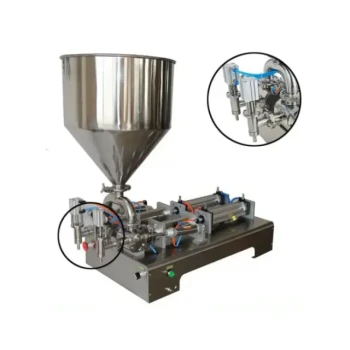
Honey filling machines are the pivot point between raw agricultural harvest and a viable commercial product. They are essential for ensuring precise volume measurement and maintaining strict hygiene standards during packaging. By automating the distribution process, these machines significantly reduce labor costs and increase output, allowing operations to meet retail standards with uniform packaging and consistent product quality.
By transforming bulk honey into standardized retail units, these machines serve as a critical quality control gate that prevents spoilage, ensures regulatory compliance, and enables large-scale scalability.
Safeguarding Hygiene and Product Integrity
Eliminating Contamination Risks
Manual handling is the primary source of secondary contamination in food production. Automated filling machines utilize closed-loop operations and sanitary designs to physically isolate the honey from external pollutants. This significantly reduces the risk of cross-contamination compared to human labor.
Preventing Spoilage and Fermentation
Honey is hygroscopic, meaning it absorbs moisture from the air, which can lead to fermentation. Modern filling machinery employs advanced sealing technologies that create airtight packaging. This blocks external moisture and prevents the spoilage that destroys product value during storage.
Maintaining Chemical Stability
Exposure to air can cause oxidation, leading to color changes and flavor degradation. Professional filling and sealing equipment ensures the physical and chemical stability of the honey. This preservation is vital for maintaining the nutritional integrity and flavor profile required for premium pricing.
Optimizing Operational Efficiency
Precision Volume Control
Accurate volumetric filling is critical for reducing material loss and waste. High-precision machinery ensures that every bottle contains the exact quantitative amount required. This prevents the financial bleed of overfilling while ensuring compliance with strict net-weight regulations.
Handling Production Spikes
Honey production is often seasonal, requiring the rapid processing of large annual harvests. Automated machines offer high-speed packaging capabilities that manual teams cannot match. This speed allows producers to convert bulk raw material into finished goods quickly, ready for distribution.
Managing Varying Viscosities
Honey consistency varies wildly depending on the floral source (e.g., acacia vs. multi-flower) and temperature. Advanced filling machines are engineered to process fluids with different viscosities without clogging or slowing down. This capability ensures production consistency regardless of the specific honey type being processed.
Enhancing Commercial Viability
Meeting International Standards
For producers engaging in cross-border trade, adherence to export requirements is non-negotiable. Automated lines ensure uniform specifications and sanitary safety that meet international regulatory compliance. This standardization is often a prerequisite for entering foreign markets.
Building Brand Trust
In the retail market, appearance drives consumer confidence. Machines provide uniform packaging and professional presentation that manual filling cannot achieve. A consistent, clean, and standardized product appearance enhances brand competitiveness and justifies a premium market position.
Understanding the Trade-offs
Maintenance and Calibration Requirements
While automation reduces manual labor, it introduces a need for technical maintenance. High-precision fluid control technology requires regular calibration and rigorous cleaning protocols to function correctly. Neglecting these maintenance schedules can lead to filling inaccuracies or hygiene failures.
Viscosity-Specific Limitations
While many machines handle varying viscosities, not every machine is universal. Equipment optimized for highly fluid honey may struggle with crystallized or extremely thick raw honey without specific heating or pumping adjustments. Producers must ensure their equipment matches the specific flow characteristics of their honey varieties.
Making the Right Choice for Your Goal
The "best" machine depends entirely on where your honey is going and how much you are producing.
- If your primary focus is International Export: Prioritize machines with advanced sealing and sterilization features to prevent oxidation and ensure stability during transoceanic transport.
- If your primary focus is Cost Reduction: Focus on high-speed automated lines that maximize volumetric precision to minimize material waste and labor hours.
- If your primary focus is Brand Building: Choose equipment that guarantees aesthetic uniformity and airtight sealing to build consumer trust through consistent presentation.
Investing in the right filling technology turns a raw agricultural commodity into a stable, high-value consumer good.
Summary Table:
| Key Importance | Core Benefit | Practical Impact |
|---|---|---|
| Hygiene & Safety | Closed-loop systems | Eliminates contamination and prevents spoilage. |
| Operational Speed | High-speed automation | Efficiently processes seasonal harvests and spikes. |
| Volumetric Precision | Accurate filling sensors | Reduces material waste and ensures regulatory compliance. |
| Market Readiness | Professional packaging | Meets international export standards and builds brand trust. |
| Viscosity Control | Adaptive pumping | Handles various honey types from fluid to thick without clogging. |
Elevate Your Beekeeping Operation with HONESTBEE
Transitioning from raw harvest to a retail-ready product requires precision and reliability. HONESTBEE specializes in empowering commercial apiaries and distributors with high-performance beekeeping machinery and tools.
Our comprehensive wholesale portfolio includes:
- Advanced Honey-Filling Machines: Engineered for precision, hygiene, and handling varying viscosities.
- Hive-Making Machinery: Professional-grade equipment for durable infrastructure.
- Full-Spectrum Tools: From essential consumables to specialized hardware.
- Brand Support: Honey-themed cultural merchandise to enhance your market presence.
Whether you are scaling for international export or optimizing local distribution, we provide the industrial solutions you need to maximize efficiency and profit.
Ready to automate your success? Contact us today for a custom quote!
References
- Piotr Semkiw, Dariusz Gerula. Economic Determinants of the Honey Market in Poland. DOI: 10.3390/agriculture15232458
This article is also based on technical information from HonestBee Knowledge Base .
Related Products
- Precision Durable Efficient HONESTBEE Rotary Honey Filling Machine
- Semi Automatic Small Honey Bottle Filling Machine Honey Filler
- Economy Small Honey Filling Machine Honey Bottle Filler Packaging Machine
- Commercial Rotary Honey Filling Machine for Production
- Fully Automatic Honey Filling Packaging Machine for Processing Line
People Also Ask
- How do high-precision honey filling machines ensure quality? Optimize Your Commercial Production with HONESTBEE
- How do honey filling machines work? Achieve Precision & Speed for Your Apiary
- What are the common types of bottling machines used for honey? Choosing the Right Solution for Your Apiary
- How do honey filling and processing machines aid native bee product conservation? Boost Value with HONESTBEE Technology
- What quality control role does professional honey filling equipment perform? Ensure Consistency and Product Stability