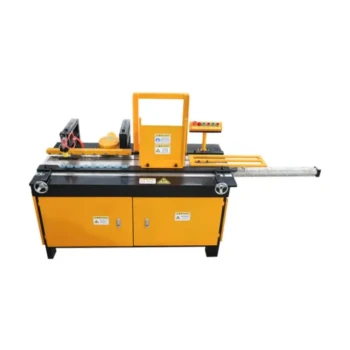
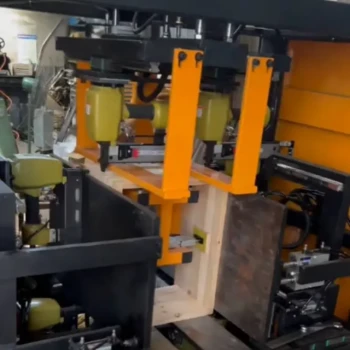
Industrial honeybee hive-making machines are the fundamental hardware requirement for transitioning from small-scale beekeeping to professional, mass-production apiaries. By utilizing high-precision mechanical processing, these machines ensure that every hive component is manufactured with absolute dimensional consistency and superior structural strength. This precision is the prerequisite for implementing standardized management practices, allowing operators to maintain large colony numbers with efficiency and reduced long-term operational costs.
The Core Reality: In large-scale operations, variability is the enemy of efficiency. Industrial hive-making machines solve this by providing the "material foundation" for standardization—ensuring that thousands of hive parts are perfectly interchangeable, biologically accurate for the bees, and durable enough to withstand industrial use.
The Strategic Value of Standardization
Establishing Component Interchangeability
For a large-scale apiary, the ability to swap parts between any two hives is non-negotiable. Industrial machines ensure that frames, bottom boards, and supers are produced with high-precision cutting and assembly.
This uniformity eliminates the logistical nightmare of matching specific parts to specific hives. It simplifies inventory management, as every spare part fits every active hive in the operation.
Alignment with Bee Biology
Precision is not just about logistics; it is critical for the bees themselves. Industrial-grade machines ensure that internal hive dimensions remain uniform to maintain proper "bee space."
When the internal environment aligns strictly with bee biology, it provides a stable nesting environment. This reduces the bees' need to build burr comb (unwanted wax connections), which significantly speeds up colony inspections and frame manipulation.
Customization for Species Optimization
While standardization is key, flexibility is also required for different biological needs. Advanced hive-making machines can be adjusted to customize physical structures for specific species, such as the Italian bee or the Oriental honey bee.
This capability allows commercial operators to optimize the nesting environment based on the specific habits of their target colonies, rather than forcing a "one-size-fits-all" approach that might hamper productivity.
Operational Efficiency and Cost Reduction
Enhancing Durability in Extreme Climates
Industrial manufacturing produces components with higher structural strength compared to manual assembly. This robustness is essential for hives that remain outdoors year-round, exposed to extreme weather conditions.
By producing stronger equipment, apiaries reduce the frequency of hive failure. This directly lowers the replacement rate of woodenware, protecting the initial investment over a longer amortization period.
Reducing Maintenance Friction
High-quality, standardized components serve as the hardware support for efficient maintenance. When dimensions are precise, mechanized management tools and automated honey collection systems can operate without jamming or damaging the equipment.
This streamlines the workflow for apiary staff. It allows a smaller team to manage a larger number of hives effectively, drastically lowering labor costs per hive.
Understanding the Trade-offs
The Shift from Craft to Manufacturing
Adopting industrial hive-making machinery signals a shift away from traditional, manual craftsmanship. While this increases output, it requires a rigid adherence to specific dimensional standards.
Capital Investment vs. Long-Term Savings
Implementing this level of machinery involves significant upfront capital. The value is realized only through volume; for small hobbyists, the cost of industrial machinery outweighs the efficiency gains.
However, for growing commercial entities, the reduction in per-unit manufacturing costs and the decrease in long-term maintenance expenses validate the initial expenditure.
Making the Right Choice for Your Goal
To leverage industrial hive-making technology effectively, align your equipment choice with your specific operational targets:
- If your primary focus is Rapid Expansion: Prioritize machines that guarantee high-speed mass production of interchangeable parts to scale your apiary inventory quickly.
- If your primary focus is Operational Efficiency: Focus on high-precision equipment that ensures strict adherence to bee space dimensions, reducing field maintenance time.
- If your primary focus is Species Specialization: Select machinery that offers customization features to adapt hive structures to the specific biological habits of your bee breed.
Precision in manufacturing is the invisible engine that drives the scalability and profitability of modern commercial beekeeping.
Summary Table:
| Key Benefit | Strategic Impact | Practical Outcome |
|---|---|---|
| Standardization | Component interchangeability | Simplified inventory and faster inspections |
| Biological Precision | Consistent "bee space" | Reduced burr comb and healthier colonies |
| High Durability | Structural integrity | Lower replacement costs in extreme climates |
| Operational Scale | Mechanized management | Lower labor costs per hive for large apiaries |
| Customization | Species-specific optimization | Enhanced productivity for varied bee breeds |
Scale Your Beekeeping Operation with HONESTBEE
Transitioning to large-scale production requires more than just bees—it requires industrial-grade reliability. HONESTBEE empowers commercial apiaries and distributors with the high-precision hardware necessary for global competitiveness.
Our comprehensive wholesale portfolio includes:
- Advanced Machinery: Hive-making machines and honey-filling systems for seamless production.
- Durable Equipment: A full spectrum of beekeeping tools and hardware built for industrial use.
- Industry Consumables: Every essential item needed to keep a large-scale operation running.
Ready to enhance your efficiency and reduce long-term operational costs? Contact HONESTBEE today to discover how our specialized machinery and wholesale solutions can transform your beekeeping business.
References
- V. Pyl, H. I. Ganush. The main directions of development of cooperative and integration relations in the beekeeping industry of the Republic of Belarus. DOI: 10.29235/1818-9806-2022-12-53-61
This article is also based on technical information from HonestBee Knowledge Base .
Related Products
- High-Efficiency Pneumatic Bee Hive Making Machine for Rapid Box Assembly
- Stainless Steel Manual 8 Frame Radial Honey Extractor Machine for Beehives
- HONESTBEE Bee Frame Grooving Machine | Precision Slotting for Bee Frame Making
- Mini Desktop Bee Hive Frame Forming Making Machine
- Beehive Handle and Frame Rest Cutting Machine: Your Specialized Hive Machine
People Also Ask
- How does the introduction of professional beehive-making machinery benefit sustainable beekeeping? Scale Your Apiary
- Why is specialized beehive-making machinery critical for low-defense breeding? Enhance Selection with Precision Tools
- How does the introduction of specialized beehive making machinery contribute to increasing the scale of regional beekeeping industries?
- What is the importance of specialized beehive making machinery in a circular bio-economy? Build Local Sustainability
- Why is specialized beehive-making machinery essential? Scale Your Apiary with Precision Industrial Standards