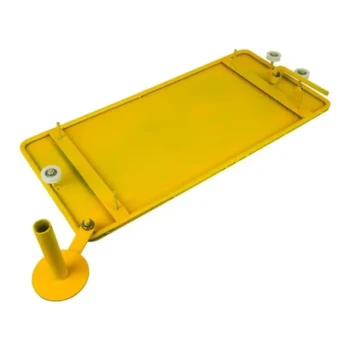
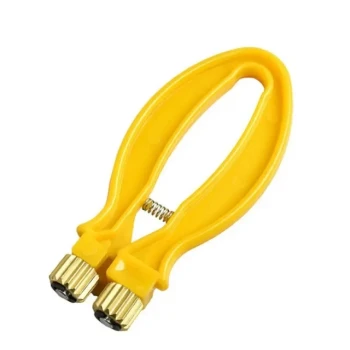
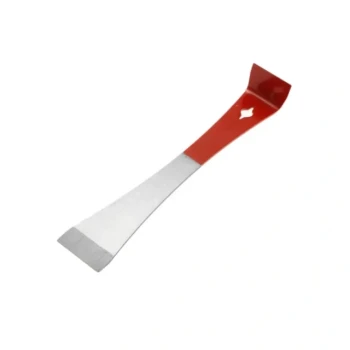
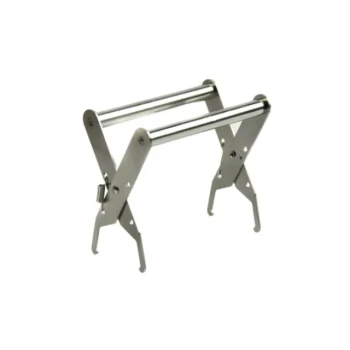
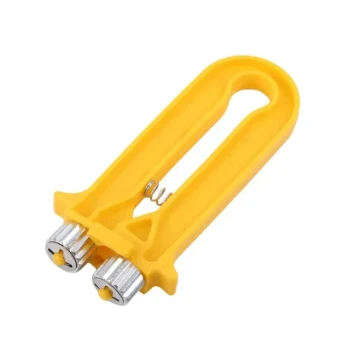
Beehive frame fixers and staples are essential locking mechanisms used to secure internal hive components during transit. They physically anchor the frames within the hive box, preventing the lateral shifting and violent vibrations caused by vehicle motion. Without this hardware, loose frames create a "scissor effect" that can crush adult bees and critically injure the colony's reproductive leader.
The use of frame fixers is a non-negotiable safety protocol for migratory beekeeping. By immobilizing the internal architecture of the hive, you eliminate the risk of mechanical injury to the colony, ensuring they arrive at new locations with their population and social structure intact.
The Physical Risks of Hive Transport
Prevention of Lateral Shifting
During transport, vibration and momentum can cause unsecured frames to slide back and forth on the hive rabbets.
Frame fixers lock these components in place, maintaining the crucial "bee space" between frames. This prevents the heavy frames from slamming together, which would otherwise crush any bees located between the combs.
Protecting the Queen Bee
The survival of the colony depends entirely on the safety of the queen.
Because the queen moves across the comb face, she is highly vulnerable to being crushed by shifting frames. Frame staples specifically mitigate this risk, ensuring the colony does not arrive at its destination queen-less and in a state of emergency.
Operational Continuity
Facilitating Long-Distance Relocation
Beekeepers frequently move hives to chase different nectar flows or for pollination contracts.
Fixers provide the structural rigidity required for these long-distance journeys. They ensure that the hive setup remains consistent from departure to arrival, allowing the bees to orient and begin foraging immediately upon release.
Maintaining Colony Integrity
Transport is already a high-stress event for bees due to confinement and vibration.
By removing the physical trauma of shifting internal parts, you significantly reduce colony stress. This preservation of integrity helps prevent aggressive behavior or absconding after the hive is placed in the new location.
Understanding the Trade-offs
Installation Labor vs. Colony Safety
Implementing frame fixers or staples requires additional preparation time before the move.
While this adds a step to the logistics workflow, the "cost" of this time is negligible compared to the potential financial loss of a crushed queen or a decimated colony.
Hardware Removal
Once the hives are settled, these fixers may need to be removed to facilitate inspections.
This requires a brief maintenance period upon arrival. However, utilizing frames manufactured with precise, standardized dimensions—as noted in modern apiary management—can make the fitment and removal of these tools more predictable and efficient.
Making the Right Choice for Your Goal
When preparing your apiary for transport, consider your specific objectives:
- If your primary focus is Colony Survival: Prioritize heavy-duty staples or fixers for every hive, regardless of the distance, to guarantee zero frame movement.
- If your primary focus is Operational Efficiency: Combine the use of fixers with precision-manufactured hive bodies to ensure hardware fits quickly and uniformly, reducing prep time.
Securing your frames is the single most effective physical intervention you can take to guarantee your bees survive the journey ready to work.
Summary Table:
| Feature | Impact on Hive Safety | Operational Benefit |
|---|---|---|
| Lateral Locking | Prevents frames from sliding and crushing bees | Maintains consistent bee space during transit |
| Queen Protection | Eliminates "scissor effect" on the comb face | Ensures colony arrives with the queen intact |
| Structural Rigidity | Reduces internal vibration and mechanical injury | Facilitates safe long-distance pollination moves |
| Stress Reduction | Minimizes physical trauma to the colony | Prevents aggressive behavior and post-move absconding |
Secure Your Apiary’s Success with HONESTBEE
Moving your colonies shouldn't be a gamble. At HONESTBEE, we specialize in empowering commercial apiaries and distributors with the high-durability hardware needed for safe migratory beekeeping. From precision-engineered beehive frame fixers and staples to advanced honey-filling machines and hive-making equipment, our comprehensive wholesale portfolio is designed to enhance your operational efficiency.
Whether you are scaling your honey production or supplying the next generation of beekeepers, our expert team is ready to provide you with the tools and essential consumables that drive industry growth. Don't let transport risks compromise your productivity—Contact Us Today to explore our wholesale solutions!
References
- R.Jamolov B.Boboyev Z.Mo'ydinova. WORKS DONE IN THE FAMILIES OF BEES IN AUTUMN. DOI: 10.5281/zenodo.7219637
This article is also based on technical information from HonestBee Knowledge Base .
Related Products
- Semi-Auto Bee Frame Assembly and Stapling Machine for Bee Frame
- Heavy-Duty Stainless Steel Clip-On Frame Perch
- Professional Galvanized Steel Frame Rest for Beehives
- Wooden Bee Hive Frames for Beekeeping and Wholesale
- Assembled Wooden Bee Frames with Plastic Foundation for Durability and Convenience by HONESTBEE
People Also Ask
- What tools are recommended for assembling bee frames? Essential Gear for Durable and Efficient Hive Construction
- What is the purpose of Frame Assembly Machines in beekeeping? Boost Apiary Efficiency and Durability
- What is the function of frame assembly machines? Automate Your Frame Prep for Maximum Efficiency
- How does a bee frame making machine work? A Guide to Automated Metal Frame Production
- What is the function of a frame assembly machine? Automate Your Beekeeping Production with Precision