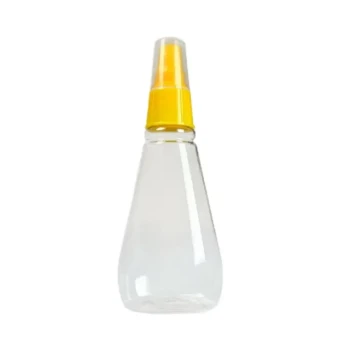
Offering honey in varied packaging sizes is a critical strategy for maximizing market penetration and ensuring product affordability. By providing specific volumes like 350ml and 750ml, producers can differentiate their offerings to meet diverse consumer needs while facilitating entry into high-volume retail channels like supermarkets.
Core Takeaway Diverse packaging options transform honey from a raw agricultural commodity into a branded consumer product. This strategy not only broadens the customer base through varied price points but also establishes the professional image required for high-end market entry.
Expanding Market Reach Through Variety
Catering to Diverse Consumer Groups
Utilizing diverse containers allows you to target specific segments of the market simultaneously. A 350ml container may appeal to a single user or a new customer trying the product, while a 750ml option serves families or heavy users. This differentiation ensures you do not miss sales opportunities due to lack of choice.
Increasing Product Affordability
Offering smaller packaging sizes significantly lowers the entry price for consumers. This increases market penetration by making high-quality honey accessible to shoppers with tighter budgets who might decline a large, expensive bulk purchase.
Elevating Brand Value and Access
Transitioning to High-End Products
Industrial-grade packaging transforms raw honey into a standardized, finished good. This shift allows producers to move away from selling primary agricultural goods and positions the honey as a high-end consumer product.
Securing Retail Shelf Space
Supermarkets and high-end sales channels require professionalism and consistency. Precise volumetric filling and standardized container sizes are prerequisites for gaining entry into these lucrative retail environments.
Enhancing Market Premium
Professional packaging does more than just hold the product; it acts as a value multiplier. Research suggests that professionally packaged honey can command a market price more than double that of raw, unprocessed honey.
Operational Considerations and Trade-offs
The Requirement for Precision
To achieve the "professional brand image" required for supermarkets, manual filling is often insufficient. Success in this strategy relies on industrial-grade equipment capable of precise volumetric filling to ensure every unit is identical.
Material Selection
Choosing between glass and plastic involves balancing cost against perception. While high-quality materials provide a physical barrier that extends shelf life and enhances the premium feel, they also impact shipping weight and breakage risks.
Making the Right Choice for Your Goals
To maximize your market potential, align your packaging strategy with your specific business objectives:
- If your primary focus is Market Penetration: Offer smaller, affordable sizes (e.g., 350ml) to lower the barrier to entry for new customers.
- If your primary focus is Retail Distribution: Invest in precise volumetric filling equipment to ensure the standardization required by supermarkets.
- If your primary focus is Profit Margin: Utilize high-quality packaging materials to justify a premium price point, potentially doubling the value of the raw product.
By treating packaging as a strategic asset rather than a logistical necessity, you turn a commodity into a valuable brand.
Summary Table:
| Strategic Factor | 350ml (Small Packaging) | 750ml (Medium/Large Packaging) |
|---|---|---|
| Target Audience | Single users, trial customers, budget shoppers | Families, frequent users, bulk buyers |
| Market Goal | Maximize penetration & lower entry barriers | Increase volume sales & customer loyalty |
| Retail Benefit | High shelf-turnover & impulse purchase | Stable pantry staple & value perception |
| Price Strategy | Lower price point per unit | Higher transaction value per unit |
| Brand Image | Modern, accessible, and versatile | Reliable, established, and family-oriented |
Elevate Your Honey Brand with HONESTBEE
Transition from raw commodity to high-end retail success with HONESTBEE. We provide the professional tools and expertise required for commercial apiaries and distributors to dominate the market.
Our comprehensive range of honey-filling machines, hive-making equipment, and specialized beekeeping tools ensures the precise volumetric filling and standardized presentation needed for supermarket shelves. Whether you are scaling up for wholesale or looking for premium industrial consumables, our portfolio is designed to double your product's market value.
Ready to scale your beekeeping operation? Contact our experts today to discover how our machinery and wholesale solutions can transform your harvest into a premium consumer brand.
References
- Gaylord Hlabiso, Anyway Ngirazi. Women and Entrepreneurship for Poverty Alleviation: A Case of beekeeping in Chipinge Rural Areas, Zimbabwe. DOI: 10.15580/gjbms.2016.3.080816126
This article is also based on technical information from HonestBee Knowledge Base .
Related Products
- High Quality Honey Dehumidifier Dryer Thickening Machine for Beekeeping
- Modern Honeycomb Pattern Wooden Honey Dipper for Stirring and Drizzling
- Economy Small Scale Honey Dryer Dehumidifier Thickening Machine
- Classic Honey Bear Jars with Flip Top Dispensing Cap for Liquid Sweeteners
- Inverted Squeezable Honey Jar with No Drip Flip Top Cap for Easy Pouring
People Also Ask
- Can you dehumidify honey? A Beekeeper's Guide to Preventing Fermentation
- How to dry up honey? The Safe Guide to Stabilizing Honey and Preventing Fermentation
- How can the moisture content of honey be reduced? A Guide to Safe, Effective Drying Methods
- How to remove humidity from honey? Protect Your Harvest from Fermentation
- What is the process for using a dehumidifier to lower honey's moisture content? Expert Drying Techniques