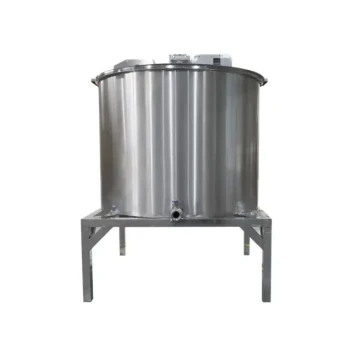
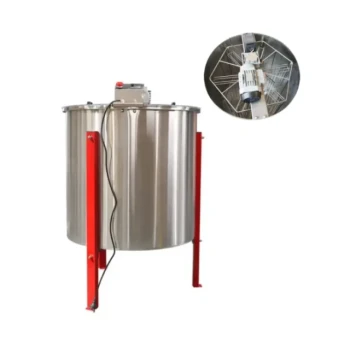
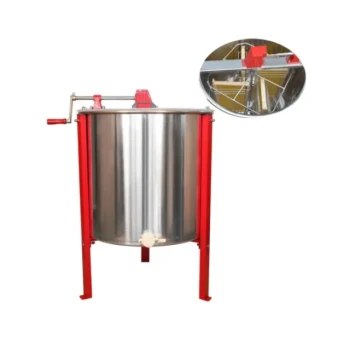
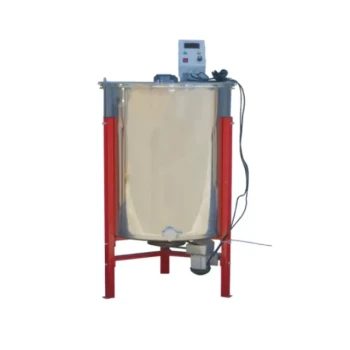
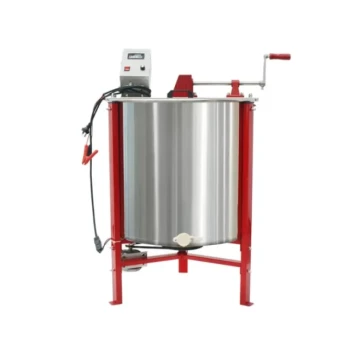
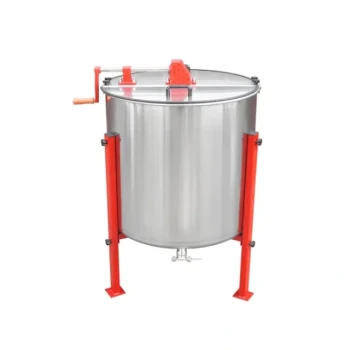
The fundamental mechanical difference is frame orientation. A tangential extractor positions frames with the flat side facing outward, extracting honey from only one side at a time and requiring the operator to stop and flip the frame. A radial extractor positions frames like the spokes of a wheel, using centrifugal force to extract honey from both sides simultaneously without manual intervention.
While both machines utilize centrifugal force, the frame setup dictates your workflow. Tangential extractors prioritize gentle handling at the cost of speed, while radial extractors prioritize efficiency by eliminating the need to flip frames mid-cycle.
How Frame Orientation Changes the Process
The distinction between these two extractors is not about the power source (manual vs. motorized), but rather how the frames sit inside the drum. This orientation dictates how the honey moves and how much labor is required.
The Tangential Mechanism (Basket Style)
In a tangential extractor, the frames are loaded into baskets with the comb face flat against the outer wall.
Because the frame sits flat, the centrifugal force pulls honey directly out of the cells on the side facing the wall. However, the side facing inward remains full.
To complete the process, the beekeeper must stop the machine, physically pull the frames out (or rotate the baskets), flip them over, and spin them again to clear the second side.
The Radial Mechanism (Spoke Style)
Radial extractors load the frames with the top bar facing the outer wall, arranged like spokes on a bicycle wheel.
The centrifugal force acts on both sides of the frame simultaneously. Because honey cells are naturally angled slightly upward, the force pulls the honey "up" and out of the cells toward the drum wall.
This design allows the machine to empty the entire frame in a single, uninterrupted cycle.
Understanding the Trade-offs
Choosing between these mechanisms requires balancing efficiency against the safety of your honeycomb.
Efficiency and Labor
Radial extractors are the clear winner for volume. Because you do not need to stop, remove, and flip frames, the total processing time is significantly lower.
Tangential extractors are more labor-intensive. The "stop-and-flip" requirement doubles the number of spin cycles needed and requires constant operator attention.
Comb Preservation
Tangential extractors are generally considered more gentle on the honeycomb. Because the frame rests flat against a basket grid, the wax structure is well-supported during the spin.
This support reduces the risk of "blowouts," where the centrifugal force tears the wax foundation apart. This is particularly important if you are extracting from delicate or newly drawn comb.
Making the Right Choice for Your Apiary
The decision ultimately depends on the scale of your operation and the time you are willing to invest.
- If your primary focus is preserving fragile comb or small-scale hobbyist beekeeping: Choose a Tangential extractor, as the basket support is gentler on wax and sufficient for low-volume harvests (typically 4 to 9 frames).
- If your primary focus is efficiency and volume: Choose a Radial extractor, as the simultaneous extraction of both sides significantly reduces labor and processing time.
Select the mechanical design that aligns with the value you place on your time versus the fragility of your comb.
Summary Table:
| Feature | Tangential Extractor | Radial Extractor |
|---|---|---|
| Frame Orientation | Flat against the drum wall | Like spokes on a wheel |
| Extraction Method | One side at a time | Both sides simultaneously |
| Manual Labor | High (requires stopping & flipping) | Low (uninterrupted cycle) |
| Comb Support | Excellent (prevents blowouts) | Moderate |
| Best For | Fragile comb & hobbyists | Large-scale volume & efficiency |
Maximize Your Honey Yield with HONESTBEE
Whether you are scaling a commercial apiary or supplying the next generation of beekeepers, HONESTBEE provides the professional-grade machinery you need to succeed. From high-efficiency radial extractors and specialized honey-filling machines to durable hive-making equipment and essential consumables, we are a one-stop wholesale partner for distributors and commercial operations worldwide.
Ready to upgrade your extraction workflow? Contact us today to discover how our comprehensive range of beekeeping tools and industrial machinery can drive your business growth.
Related Products
- HONESTBEE 72 Frame Industrial Electric Honey Extractor for Beekeeping
- Commercial Electric 12 Frame Honey Extractor Spinner Motorized Honey Extractor
- 32 Frame Commercial Electric Honey Extractor for Beekeeping and Honey Production
- HONESTBEE 3-Frame Manual Acrylic Honey Extractor
- HONESTBEE 6 Frame Self Reversing Electric Honey Extractor for Beekeeping
People Also Ask
- What is the importance of balancing honeycomb frames within a honey extractor? Ensure Stability and Protect Machinery
- How is honey separated from the frames after they are uncapped? Efficient Extraction Methods for High Yields
- What are the main benefits of using a honey extractor? Maximize Yields and Protect Your Honeycomb
- What are the recommended methods for removing honey from the honeycomb? Top Extraction Techniques for Maximum Efficiency
- How do manual honey extractors compare to electric honey extractors? Choosing the Right Tool for Your Apiary Growth