Standardized plastic queen starter cells are the fundamental infrastructure required for modern honeybee research and commercial queen production. These cells act as biomimetic, sterile, and highly controllable reaction vessels that ensure the repeatability of larval rearing and the precision of pathogen inoculation. By providing a uniform physical space, they allow researchers and commercial producers to move from unpredictable colony-based variables to a standardized, data-driven laboratory environment.
Standardized plastic queen cells serve as the essential hardware for scaling apicultural operations, enabling precise control over larval development while ensuring consistency across batch operations. They are the bridge between biological potential and high-yield, repeatable production results.
Precision Control in In Vitro Environments
Establishing a Biomimetic Physical Space
Plastic cells provide a biomimetic foundation that mimics the natural dimensions and geometry of a honeybee queen cell. This consistency is vital for maintaining the correct orientation of the larvae and ensuring they remain in constant contact with their liquid diet. For distributors, offering products that replicate these natural conditions is key to ensuring client success in delicate rearing phases.
Prevention of Microbes and Contamination
In laboratory settings, the use of sterilized plastic consumables is non-negotiable for preventing environmental microbes from compromising sensitive experiments. Unlike traditional wax cells, these plastic starters are easily cleaned and sterilized, allowing for the precise addition of quantitative pathogens to the larval diet without interference. This level of hygiene is essential for the integrity of in vitro inoculation studies.
Enabling Precise Individualized Monitoring
The independent structure of each cell allows for real-time monitoring of individual larval growth, metamorphosis, and survival rates. Because each larva is housed in its own standardized vessel, technical personnel can track developmental milestones such as molting and transition to the pupal stage with extreme accuracy. This granularity is impossible to achieve in a communal or non-standardized environment.
Driving Operational Efficiency in Commercial Chains
Streamlining Batch Operations and Grafting
Standardized dimensions ensure that these cells snap onto queen rearing frames with high precision, facilitating rapid batch operations. For B2B resellers, products that integrate seamlessly into existing hardware ecosystems reduce manual labor and improve the speed of the grafting process. This mechanical compatibility is a major selling point for high-volume commercial honeybee breeders.
Durability and Reusability in High-Throughput Systems
The inherent durability of high-quality plastic allows these cells to withstand the rigors of batch cleaning and repeated use. While traditional wax cells are often destroyed during the harvesting process, plastic cells maintain their structural integrity, offering a long-term cost advantage for commercial operations. This durability ensures a stable physical environment for larvae, even when being moved between colonies and laboratory incubators.
Facilitating Genetic Transmission
Plastic queen cups are essential for the continuous transmission of genetics from high-quality breeding stock. By providing a stable base for grafting larvae from specific genetic backgrounds, these cells induce worker bees to secrete large amounts of royal jelly. This process allows for the mass production of reproductive queens, which is the backbone of any large-scale apicultural distribution network.
Navigating the Trade-offs and Limitations
Thermal Management Challenges
Unlike natural beeswax, plastic does not possess significant insulating properties, making larvae more susceptible to rapid temperature fluctuations. Users must rely on sophisticated laboratory incubators to maintain a stable environment, as the plastic vessel will not buffer external temperature shifts effectively. Ensuring your clients have the technical expertise to manage these environments is critical for building long-term trust.
Material Quality and Surface Smoothness
Low-quality plastic consumables often feature micro-abrasions or manufacturing seams that can physically damage the delicate cuticle of the honeybee larvae during the grafting process. High-precision manufacturing is required to ensure the smooth internal walls necessary for successful larval transfer. Distributors must verify the finish of their inventory to prevent high mortality rates in their clients' rearing programs.
Optimizing Your Inventory for Market Demand
Strategies for B2B Success
Providing a comprehensive range of standardized consumables allows your clients to achieve "one-stop" sourcing for their entire rearing production line. Focusing on the technical superiority of these tools helps position your business as an expert partner rather than a mere supplier.
- If your primary focus is Laboratory Research Support: Prioritize sourcing medical-grade, autoclavable plastic cells that guarantee sterility and precise dimensions for pathogen inoculation studies.
- If your primary focus is Commercial Scaling: Focus on offering snap-fit cell designs that are compatible with standardized grafting frames to maximize operational throughput for large-scale breeders.
- If your primary focus is Rapid Order Fulfillment: Maintain a high-volume inventory of standardized cells to support the "ultra-fast delivery" expectations of commercial clients during peak grafting seasons.
Mastering the supply of high-quality, standardized queen cells empowers your clients to transform honeybee rearing from an artisanal craft into a predictable and high-yield industrial enterprise.
Summary Table:
| Key Feature | Functional Benefit | Commercial Value for B2B |
|---|---|---|
| Biomimetic Geometry | Ensures correct larval orientation and diet contact | Consistent, high-quality queen yields |
| Sterilizable Material | Prevents microbial contamination and pathogen interference | Reliable results for laboratory & research clients |
| Standardized Dimensions | Seamless integration with grafting frames | Increased operational speed and reduced labor |
| High Durability | Withstands high-throughput cleaning and reuse | Improved ROI and long-term cost efficiency |
Scale Your Apicultural Supply Chain with HONESTBEE
Are you looking to provide your commercial clients with the precision tools required for high-yield queen production? HONESTBEE is your premier partner, offering a one-stop sourcing solution for commercial apiaries and B2B distributors worldwide.
From medical-grade standardized queen cells to advanced honey-filling machines and specialized hive-making hardware, we supply the full spectrum of beekeeping equipment and consumables. We understand the needs of wholesalers: our services include OEM/ODM support, deep industry expertise, and ultra-fast delivery to ensure your inventory never runs dry during peak seasons.
Partner with HONESTBEE to enhance your profit margins and service reliability.
Contact Us Today to Request a Wholesale Catalog
References
- Daniela Grossar, Vincent Dietemann. Putative determinants of virulence in<i>Melissococcus plutonius</i>, the bacterial agent causing European foulbrood in honey bees. DOI: 10.1080/21505594.2020.1768338
This article is also based on technical information from HonestBee Knowledge Base .
Related Products
- JZBZ Type Wide Base Plastic Queen Cell Cups for Base Mounting and Queen Rearing
- Clear Black Plain Polystyrene Queen Bee Grafting Cell Cups No Lug for Bee Queen Cup
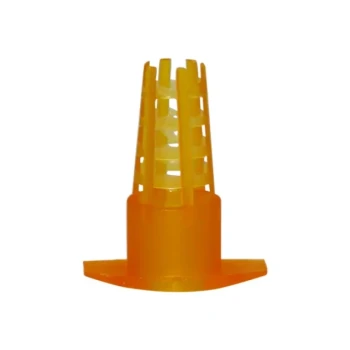
- Durable Plastic Push In Queen Bee Cage
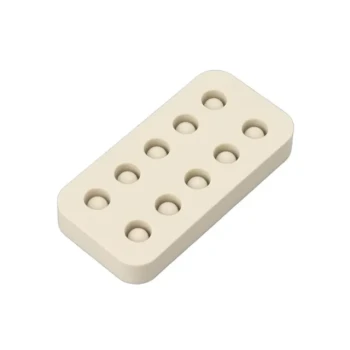
- 10-Cell Silicone Beeswax Bee Queen Cups Forming Mold
- Professional Plastic Queen Excluder for Modern Beekeeping
People Also Ask
- What are the primary advantages of using plastic queen cell cups? The Industrial Choice for High-Efficiency Apiaries
- What technical advantages do commercial plastic queen cell cups offer? Scale Your Queen Rearing for Maximum Efficiency
- What is the function of standardized plastic Queen Cell Cups? Boost Efficiency in Commercial Larval Grafting
- Why are standardized plastic queen cell cups preferred? Boost Commercial Queen Rearing Efficiency
- Why are standardized plastic queen cell cups typically used in large-scale queen bee production? Boosting Apiary Output