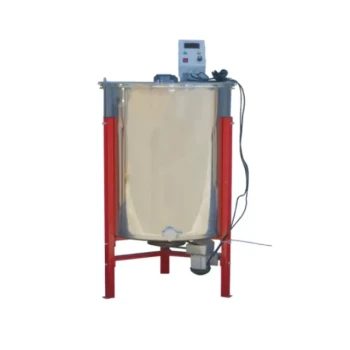
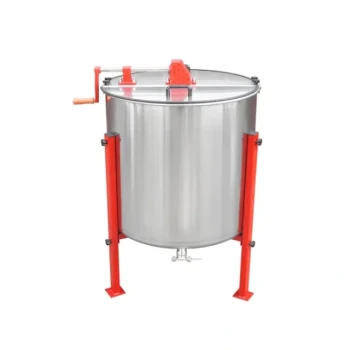
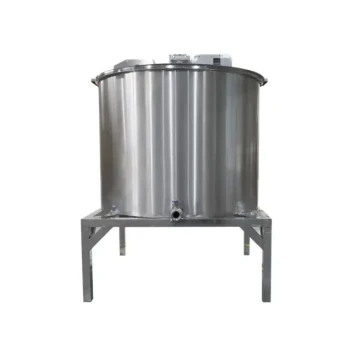
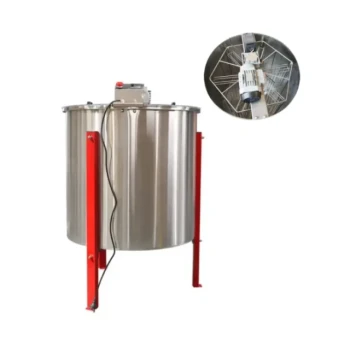
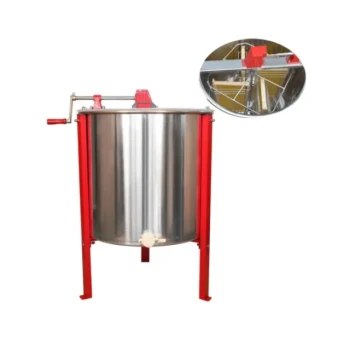
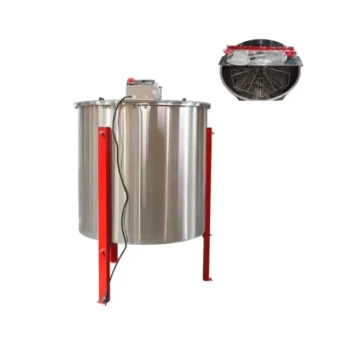
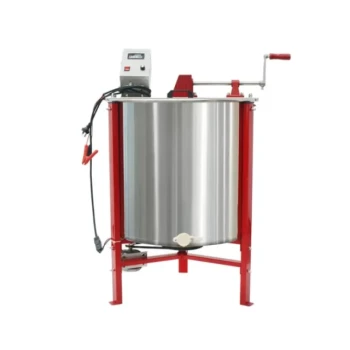
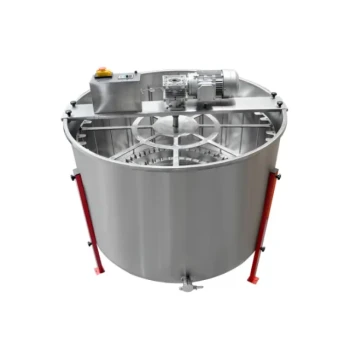
A centrifugal honey extractor is the fundamental tool for isolating beeswax structures from liquid honey. It utilizes high-speed centrifugal force to evacuate mature honey from the comb cells, resulting in a "dry comb." This mechanical separation is the prerequisite for creating standardized beeswax samples suitable for long-term storage or controlled biological research.
By utilizing centrifugal force, you simultaneously harvest a commercial product and stabilize the beeswax substrate. This separation is required to produce standardized, dry combs that allow researchers and apiarists to focus exclusively on preserving the wax against threats like moths, rather than managing contamination from residual honey.
The Mechanics of Comb Standardization
Achieving the "Dry Comb" State
To prepare beeswax for storage or research, you must eliminate variables. The primary variable in a natural comb is the mature honey stored within the cells.
Using an extractor allows you to subject the frame to high speeds, forcing the liquid out while leaving the solid wax structure intact. This results in dry combs, which act as a standardized baseline for any subsequent biological work.
Preserving Structural Integrity
Manual methods of honey removal often damage the delicate walls of the hexagonal cells.
Centrifugal extraction creates the necessary force to clear the cells without crushing them. This ensures the beeswax structure remains consistent, which is critical if you are comparing samples in a research setting.
Strategic Advantages for Management
Enabling Focused Biological Protection
Once the honey is removed, the biological risks change. Liquid honey attracts different pests and microbes than dry wax does.
By creating dry combs, you remove the risk of fermentation or honey-specific pests. This allows your biological protection efforts to focus entirely on preventing wax moth damage to the beeswax itself, simplifying your preservation protocol.
Maximizing Resource Efficiency
This process is not purely preparation for science or storage; it is also a harvest method.
The pre-treatment process allows for the efficient extraction of honey as a commercial product. You essentially gain a saleable asset (the honey) while simultaneously preparing your primary asset (the comb) for its next phase of use.
Understanding the Trade-offs
Equipment Reliance
The quality of the "dry comb" is entirely dependent on the mechanical capability of your extractor.
If the centrifugal force is insufficient, residual honey may remain in the cells. This compromises the "standardized" nature of the comb and may reintroduce biological risks you intended to eliminate.
Making the Right Choice for Your Goal
To determine if this process aligns with your objectives, consider your end-game for the beeswax combs:
- If your primary focus is Biological Research: You require the extractor to produce standardized, dry structures that isolate the wax from the honey variable.
- If your primary focus is Long-Term Storage: You need this process to remove food sources (honey) that attract general pests, allowing you to target specific threats like wax moths.
Standardization is the bridge between a raw biological product and a reliable scientific resource.
Summary Table:
| Feature | Manual Removal | Centrifugal Extraction | Impact on Research/Storage |
|---|---|---|---|
| Comb Integrity | Often crushed/damaged | Preserved cell structure | Ensures standardized baseline |
| Honey Removal | High residual honey | Maximum honey evacuation | Eliminates fermentation risks |
| Efficiency | Slow & labor-intensive | High-speed, high-volume | Enables commercial harvesting |
| Pest Risk | Attracts general pests | Focuses on wax-specific pests | Simplifies protection protocols |
Elevate Your Beekeeping Efficiency with HONESTBEE
At HONESTBEE, we specialize in empowering commercial apiaries and distributors with high-performance beekeeping solutions. Whether you are conducting precise biological research or managing large-scale honey production, our range of centrifugal honey extractors, hive-making machinery, and honey-filling equipment ensures your beeswax combs are standardized and your harvests are maximized.
From industrial-grade hardware to essential industry consumables and honey-themed cultural merchandise, we provide the full spectrum of tools needed to protect your biological assets and increase your commercial output.
Ready to upgrade your apiary’s capabilities? Contact HONESTBEE Today for Wholesale Solutions
References
- B. A. Chuchunov, M. A. Perepelitsa. The use of a Habrobracon blunted to protect bee honeycomb. DOI: 10.31677/2072-6724-2023-66-1-232-231
This article is also based on technical information from HonestBee Knowledge Base .
Related Products
- electric honey extractor honey centrifuge 3 frame honey extractor stainless steel honey frame extractor
- Manual Hand Crank 4 Frame Honey Extractor Centrifuge for Beekeeping
- Professional 4 Frame Self Reversing Electric Honey Extractor for Beekeeping
- Electric 4 Frame Tangential Honey Extractor
- 24 Frame Honey Extractor Commercial Radial Honey Frame Extraction Machine
People Also Ask
- What are the characteristics of electric honey extractors? Boost Your Apiary Efficiency with Automated Technology
- What are the disadvantages of using an electric honey extractor? Weighing Cost, Power, and Comb Safety
- What are the advantages of an electric honey extractor? Boost Efficiency and Scale Your Honey Production
- What are the technical advantages of electric honey extractors? Maximize Yield and Protect Your Bee Colony
- How does an electric honey extractor affect the quality of honey? Preserve Flavor & Purity with Precision Extraction