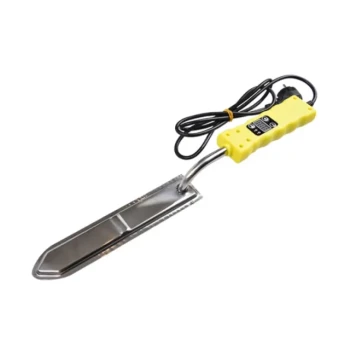
A heated sampling line is a non-negotiable component for accurate air measurement in beehive environments due to the stark temperature difference between the hive's interior and the outside air. By using internal heating elements and insulation, these lines maintain the sample temperature above the dew point, preventing the warm, humid air from the hive from condensing into liquid water as it travels to your analyzer.
Beehives are inherently warm, high-humidity environments. Failure to maintain the sample temperature during transport causes immediate condensation, which not only destroys mechanical components like pumps and filters but also chemically alters the sample by dissolving water-soluble volatile compounds.
The Threat to Data Integrity
The Dew Point Mechanism
The interior of a beehive creates a distinct microclimate that is significantly warmer and more humid than the ambient environment.
When this air is drawn into a standard, unheated tube, it cools rapidly. Once the temperature drops below the dew point, moisture creates liquid condensation within the sampling line.
Alteration of Chemical Composition
The most critical issue for researchers is the loss of sample representativeness.
When condensation forms, water droplets act as a solvent. They dissolve specific volatile components present in the air stream.
This effectively "washes" the sample, altering its chemical profile before it ever reaches the sensor. The data you record will no longer reflect the true reality of the hive environment.
The Threat to Hardware Stability
Mechanical Blockages
Condensation creates physical obstructions within the sampling train.
Water accumulation leads to saturated, clogged filters, which increases back-pressure and restricts airflow. This can cause measurement drifts or total cessation of sampling.
Equipment Failure
Downstream equipment is rarely designed to handle liquid water.
Moisture entry causes irreversible damage to pumps, leading to corrosion or mechanical seizure. Furthermore, if water reaches the analyzer's electronics, it creates a high risk of electrical failure and short circuits.
Operational Trade-offs
Power Consumption Requirements
While heated lines are essential for accuracy, they introduce a significant power load.
The internal heating elements require a continuous energy source to maintain the thermal gradient. In remote field deployments reliant on battery or solar power, this necessitates robust energy planning.
System Complexity and Cost
Implementing a heated line adds variables to your setup.
You must manage thermal controllers to ensure the line does not overheat or under-heat. This increases the initial equipment cost and adds a layer of complexity to field maintenance compared to passive tubing.
Making the Right Choice for Your Project
To ensure your data is valid and your equipment survives the season, assess your goals:
- If your primary focus is Chemical Analysis (Volatiles): You must use a heated line to prevent water-soluble compounds from dropping out of the vapor phase.
- If your primary focus is Equipment Longevity: You must use a heated line to prevent liquid water from destroying pumps, filters, and sensors.
The stability of your equipment and the truthfulness of your data depend entirely on keeping the sample in a vapor state from the hive to the sensor.
Summary Table:
| Feature | Impact Without Heated Line | Impact With Heated Line |
|---|---|---|
| Condensation | High: Liquid water forms in tube | None: Maintains vapor phase |
| Data Integrity | Lost: Volatiles dissolve in water | High: Accurate chemical profile |
| Hardware Risk | Critical: Corroded pumps & clogged filters | Protected: Dry sample flow |
| Energy Need | Passive (No power required) | Active (Requires power source) |
| Cost/Complexity | Low initial setup cost | Higher setup & power planning |
Protect Your Beehive Research with HONESTBEE Professional Solutions
In the demanding conditions of commercial apiaries, equipment failure is not an option. HONESTBEE provides the industry's most reliable beekeeping machinery, tools, and consumables designed to withstand high-humidity environments. Whether you are a commercial distributor or a large-scale apiary, we offer a comprehensive wholesale portfolio—from specialized hive-making machines to honey-filling equipment and essential industry supplies.
Don't let condensation compromise your data or destroy your hardware. Partner with HONESTBEE to equip your business with the professional-grade tools you need to succeed.
Ready to scale your apiary operations? Contact us today to discuss your wholesale requirements!
References
- Andrzej Szczurek, Monika Maciejewska. Beehive Air Sampling and Sensing Device Operation in Apicultural Applications—Methodological and Technical Aspects. DOI: 10.3390/s21124019
This article is also based on technical information from HonestBee Knowledge Base .
Related Products
- HONESTBEE AC Powered Wire Embedder with Alligator Clips
- Professional Stainless Steel Honey Filtering Machine with Water Bath Heating for Beekeeping
- Stainless Steel Round Beehive Air Vents for Ventilation
- Ergonomic Plastic Frame Spacer Tool for Rapid Hive Management Beekeeping
- Professional Electric Honey Uncapping Knife with Heated Digital Temperature Control for Beekeeping
People Also Ask
- How can combs be further strengthened? Embed Wires for Durable, High-Yield Hives
- What is an embedder in beekeeping? Essential Tool for Strengthening Wax Foundation & Hive Frames
- Why must strict sanitary and health prevention protocols be implemented for honeybee transport? Maximize Colony Survival
- What are the primary indicators of healthy honeybee colonies? Optimize Your Commercial Apiary for Peak Productivity
- Why must honeybee samples be stored in high-concentration ethanol and low temperatures? Ensure Genetic & Physical Integrity