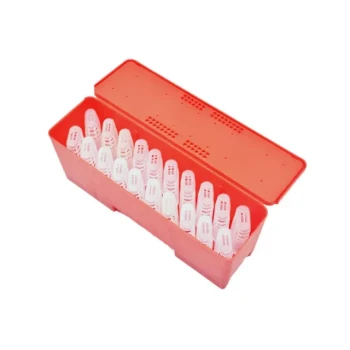
The use of temperature-controlled cooling boxes is non-negotiable for preserving the biological integrity of live honey bee samples during transport. By maintaining a strict internal temperature range of 8–14°C, these devices significantly reduce the bees' metabolic rate. This metabolic suppression is the primary mechanism required to stabilize the sample and prevent biological degradation before it reaches the laboratory.
The fundamental purpose of this temperature control is to inhibit the activity of ribonucleases, thereby preventing the breakdown of viral RNA and ensuring that subsequent testing reflects the true viral state of the colony.
The Biological Mechanisms of Preservation
Controlling Metabolic Rate
The immediate function of the cooling box is to lower the physical activity of the honey bees.
By keeping the environment between 8°C and 14°C, the bees enter a state of reduced metabolism. This state is critical because it slows down the biological processes that typically accelerate sample deterioration after collection.
Inhibiting Ribonuclease Activity
The deeper technical necessity involves the preservation of genetic material.
Honey bees contain ribonucleases, which are enzymes that catalyze the degradation of RNA. If the temperature rises, these enzymes become active and rapidly destroy viral RNA present in the sample.
Cooling boxes effectively inhibit these enzymes. This ensures that the fragile viral RNA remains intact throughout the duration of transport.
Implications for Laboratory Accuracy
Validating qPCR Results
The quality of the transport directly dictates the quality of the data.
Laboratories rely on quantitative PCR (qPCR) to detect and measure viruses within the bee samples. This method requires high-quality, non-degraded RNA to function correctly.
If the cooling chain is broken and RNA degrades, the qPCR results will be skewed. This leads to inaccurate readings that fail to represent the actual viral load, rendering the analysis useless.
Understanding Critical Thresholds
The Specific Temperature Window
It is not enough to simply keep the samples "cool"; precision is required.
The specific window of 8°C to 14°C is identified as the optimal range. Deviating above this range risks reactivating metabolic processes and enzymes.
The Risk of Data Corruption
Failure to use specialized cooling equipment introduces a high risk of false negatives.
Without this stabilization, a sample that tests "low" for a virus may actually be a highly infected sample that simply suffered from RNA degradation during transit.
Making the Right Choice for Your Goal
To ensure your laboratory analysis yields actionable data, consider the following recommendations:
- If your primary focus is viral load quantification: You must prioritize the inhibition of ribonucleases by strictly adhering to the 8–14°C temperature range to protect viral RNA.
- If your primary focus is diagnostic accuracy: You must view transport not as logistics, but as the first step of the laboratory process; any temperature fluctuation here invalidates the qPCR results.
Proper thermal regulation during transport is the only way to bridge the gap between field collection and reliable laboratory insight.
Summary Table:
| Feature | Requirement | Impact on Sample |
|---|---|---|
| Optimal Temperature | 8°C – 14°C | Reduces metabolic rate and stabilizes biological state. |
| Enzyme Control | Inhibits Ribonucleases | Prevents the degradation of viral RNA during transit. |
| Analysis Method | qPCR Compatible | Ensures high-quality RNA for accurate viral load detection. |
| Risk Mitigation | Prevents RNA Breakdown | Eliminates false negatives and data corruption from heat. |
Maximize Your Colony Health Monitoring with HONESTBEE
Preserving the integrity of your honey bee samples is the first step toward effective apiary management. At HONESTBEE, we understand the precision required by commercial apiaries and distributors. We provide a comprehensive range of professional beekeeping tools, specialized honey-filling machinery, and high-quality consumables designed to support your operations from the field to the lab.
Whether you are looking to scale your production with advanced hive-making equipment or need reliable supplies for your distribution network, our team is here to help you succeed.
Ready to elevate your beekeeping business?
Contact HONESTBEE Today to explore our wholesale solutions and discover how our expertise can drive your growth.
References
- Antoine Clermont, Marco Beyer. Virus Status, Varroa Levels, and Survival of 20 Managed Honey Bee Colonies Monitored in Luxembourg Between the Summer of 2011 and the Spring of 2013. DOI: 10.1515/jas-2015-0005
This article is also based on technical information from HonestBee Knowledge Base .
Related Products
- Automatic Heat Preservation 6 Frame Pro Nuc Box for Honey Bee Queen Mating
- Plastic Transporting Bee Packages and Nuc Boxes for Beekeeping
- Langstroth Honey Bee Box Hive Boxes for Different Depths
- Twin Queen Styrofoam Honey Bee Nucs Mating and Breeding Box
- JZBZ Style Professional Battery Box with 20 Shipping Cages
People Also Ask
- What are the options for adding frames to a nuc after taking two frames from the parent colony?
- How are nuc boxes used in queen rearing? The Essential Tool for Reliable Queen Mating
- What steps are involved in transferring frames from the nuc box to the hive? A Guide for a Smooth, Low-Stress Colony Move
- What is the process for managing a new bee colony started in a nuc box? Expert Tips for Hive Success
- How long can bees be kept in a nuc box? Expert Timeline for Hive Transfer