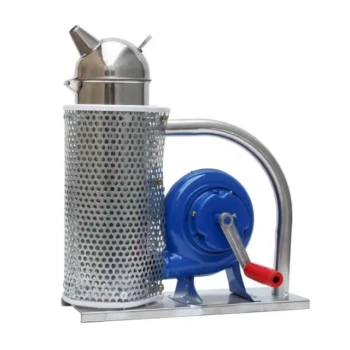
In experimental pest fumigation, a standard bee smoker functions as a precision instrument for controlled pyrolysis and directional delivery. Rather than serving its traditional role of calming colonies, it is utilized here to generate a standardized volume of smoke containing volatile insecticidal compounds from dried botanical materials. This enables researchers to quantify the diffusion characteristics and insecticidal efficacy of fumigants within a controlled environment.
Core Takeaway While typically viewed as a behavior management tool, in a research context, the bee smoker acts as a thermodynamic delivery system. It converts solid botanical treatments into a pervasive smoke, ensuring active ingredients are distributed evenly to measure their effectiveness against specific pests.
The Mechanics of Experimental Delivery
Controlled Pyrolysis
In fumigation experiments, the smoker operates as a combustion chamber. It burns dried botanical materials or carriers saturated with plant essential oils.
This process facilitates pyrolysis, chemically decomposing the solid material to release active volatile substances into a smoke cloud.
Standardized Quantification
For an experiment to be valid, the variables must be controlled. The key function of the smoker in this context is providing a quantitative output.
It allows researchers to introduce a measured amount of fumigant into a space. This is essential for calculating the exact dosage required to achieve specific mortality rates in pests.
Directional Targeting
The bellows mechanism transforms the smoker into a directional injection device.
This allows the smoke to be forced through hive entrances or into specific experimental chambers. It ensures the fumigant reaches deep into the structure, targeting areas where pests like Varroa destructor or wax moths reside.
Thermodynamic Permeation
Once injected, the device functions as a thermodynamic distribution system.
The heat and pressure from the smoker ensure the active ingredients permeate every corner of the hive or test box. This includes microscopic gaps within the bee cluster, ensuring full contact with the target parasites.
Critical Variables and Limitations
Manual Variability
While the smoker provides a mechanism for delivery, it is generally manually operated.
This introduces a margin of error regarding consistency. The volume of smoke generated can fluctuate based on the operator's pumping rhythm and force, potentially affecting data precision.
Thermal Degradation
The efficacy of botanical fumigants relies on the correct temperature during pyrolysis.
If the combustion temperature inside the smoker becomes too high, it may degrade the active chemical components of the essential oils or botanicals. This would render the smoke less effective before it even reaches the pest.
Optimizing the Smoker for Experimental Success
To ensure valid results in pest fumigation trials, the smoker must be used with a strict protocol.
- If your primary focus is Maximum Efficacy: Ensure the smoke is applied with enough pressure to permeate the entire bee cluster, contacting hidden parasites.
- If your primary focus is Data Integrity: Standardize the fuel mass and the frequency of bellows compression to ensure a consistent dosage across all test subjects.
By treating the smoker as a calibrated delivery system rather than a simple tool, you transform variable botanical materials into precise, measurable scientific data.
Summary Table:
| Mechanism | Experimental Function | Research Application |
|---|---|---|
| Controlled Pyrolysis | Combustion Chamber | Converts solid botanicals into volatile insecticidal smoke. |
| Bellows Action | Directional Injection | Ensures the fumigant reaches deep hive structures and clusters. |
| Pressure Flow | Thermodynamic Permeation | Facilitates even distribution of active ingredients across the test area. |
| Fuel Management | Quantitative Output | Allows for standardized dosage calculation and mortality rate measurement. |
Elevate Your Apiary Operations with HONESTBEE
At HONESTBEE, we understand that whether you are conducting precision research or managing thousands of colonies, the quality of your equipment determines your success. We cater specifically to commercial apiaries and global distributors, offering a comprehensive wholesale portfolio designed for professional-scale beekeeping.
Why partner with HONESTBEE?
- Precision Hardware: From heavy-duty bee smokers for consistent delivery to advanced hive-making and honey-filling machinery.
- Total Consumable Support: A wide array of essential industry consumables to keep your operations running smoothly.
- Global Distribution Scale: Reliable supply chains for high-volume equipment and unique honey-themed cultural merchandise.
Ready to scale your business or research with professional-grade tools? Contact us today to explore our wholesale offerings!
References
- Viyan Ghazi Mohameed. Influence of Some Naturally Growing Local Herbs in Duhok-kurdistan Region- Iraq on The Mortality of Wax Moth Galleriea Mellonella L. Larvae. DOI: 10.26682/ajuod.2020.23.2.8
This article is also based on technical information from HonestBee Knowledge Base .
Related Products
- Stainless Steel Honey Bee Smoker Hive and Honeycomb Smoker for Beekeeping
- Professional Bee Smoker with Elongated Spout and Durable Bellows for Beekeeping
- Premium Traditional Copper Bee Smoker with Bellows
- Heavy Duty Manual Bee Smoker Blower for Beekeeping
- European Stainless Steel Bee Smoker for Honey Bee Hive
People Also Ask
- What are bee smokers made out of? Choose the Right Material for Your Apiary
- What type of bee smoker is recommended for a beginner? Top Picks for Easy Hive Management
- Why is a stainless steel bee smoker considered indispensable? Master Hive Management with Cool Smoke Technology
- How should a beekeeper use a smoker when approaching a hive? A Guide to Calm, Safe Inspections
- What is the best material for a bee smoker? Choose the Right Fuel for a Calm Hive