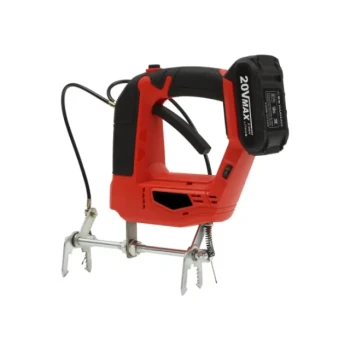
The physical mechanism of a cold vaporizing device relies on mechanical atomization. Rather than using heat to evaporate a substance, these devices mechanically break down an aqueous solution into micron-sized droplets. This process creates a "cold mist aerosol" designed to suspend the treatment agent within the hive's air.
The core objective of cold vaporization is to achieve broad, non-contact coverage across the hive by suspending agents in the air; however, the resulting physical deposition is often too light for treatments requiring high-dosage contact or ingestion.
The Physics of Cold Vaporization
Mechanical Breakdown
Unlike thermal foggers or vaporizers that rely on heat, cold vaporizers operate purely through mechanical force.
The device agitates or forces an aqueous (water-based) solution through a nozzle or emitter.
This physical stress shatters the liquid bulk into distinct, microscopic particles known as micron-sized droplets.
Aerosol Suspension
Once the solution is atomized, it forms a cold mist aerosol.
Because the droplets are so small, they do not immediately fall to the bottom board.
Instead, the mist remains suspended in the hive air, allowing it to drift and permeate the internal structure of the colony.
How the Treatment Reaches the Bees
Surface Deposition
The primary delivery method is deposition on body surfaces.
As the aerosol moves through the hive, the droplets settle gently onto the bees.
This achieves non-contact coverage across the entire colony, treating the bees without requiring them to physically walk through a liquid strip or pad.
Whole-Hive Distribution
The gas-like behavior of the mist allows the agent to reach areas that might be missed by localized traps or strips.
The goal is to coat the biological components of the hive—the bees themselves—evenly with the treatment agent.
Understanding the Trade-offs
The Dosage Limitation
While the mechanism excels at dispersion, it struggles with volume of deposition.
The amount of active ingredient that actually lands on the bee or the comb is often very low compared to other methods.
Suitability for Contact vs. Ingestion
This physical mechanism is generally insufficient for treatments requiring high-dosage physical contact.
If the specific treatment relies on the pest (such as a mite) ingesting the agent or contacting a lethal concentration, a cold mist may not deliver a high enough kill rate.
Making the Right Choice for Your Goal
To determine if a cold vaporizing device is the correct tool for your beekeeping strategy, consider the mode of action required by your specific treatment agent.
- If your primary focus is broad, non-invasive distribution: Cold vaporization effectively suspends the agent in the air to coat bee surfaces without using heat.
- If your primary focus is high-dosage eradication: Be cautious, as the physical deposition from cold mist is often insufficient for treatments requiring ingestion or heavy physical contact.
Success depends on matching the mechanical delivery system to the biological requirements of your treatment agent.
Summary Table:
| Feature | Description |
|---|---|
| Mechanism | Mechanical atomization (no heat involved) |
| Output Type | Micron-sized cold mist aerosol |
| Primary Goal | Broad, non-contact colony coverage |
| Delivery Method | Surface deposition via air suspension |
| Best Use Case | Treatments requiring uniform, low-dosage dispersion |
| Main Limitation | Lower active ingredient volume compared to thermal methods |
Elevate Your Apiary Operations with HONESTBEE
Are you looking to optimize your treatment protocols or scale your wholesale distribution? HONESTBEE provides professional-grade beekeeping tools and machinery designed for the rigors of commercial apiaries.
From advanced hive-making and honey-filling machines to essential consumables and specialized hardware, we offer a comprehensive portfolio tailored to the needs of distributors and large-scale beekeepers worldwide. Partner with us to access high-quality equipment that ensures efficiency and colony health.
Ready to upgrade your equipment? Contact us today to explore our wholesale offerings!
References
- Balázs Kolics, András Specziàr. Comparison of Alternative Application Methods for Anti-Varroa Lithium Chloride Treatments. DOI: 10.3390/insects13070633
This article is also based on technical information from HonestBee Knowledge Base .
Related Products
- Heavy Duty 12V Oxalic Acid Evaporator Vaporizer for Bee Varroa Mite Treatment Beekeeping Fumigator Atomizer
- Durable 12V Oxalic Acid Vaporizer for Varroa Mite Treatment Beehive Beekeeping Tool
- Oxalic Acid Vaporizer 12V for Bee Varroa Mite Treatment
- Heavy Duty Manual Bee Smoker Blower for Beekeeping
- 12V Bee Mite Removal Evaporator Oxalic Acid Vaporizer for Bee Fumigation Treatment 180W Atomization
People Also Ask
- How can oxalic acid treatment be applied effectively when capped brood is present? Master the 3-Stage Vapor Protocol
- What are the main advantages of using oxalic acid vaporization for Varroa mite control? Achieve 90%+ Efficacy Safely
- What is the process of using an oxalic acid vaporizer? A Step-by-Step Guide to Safe Varroa Control
- How can oxalic acid vaporization be used effectively in a hive that contains brood? Master Multi-Stage Mite Control
- Why is it necessary to control varroa mite infestations? Protect Your Colony with Oxalic Acid Vaporizers