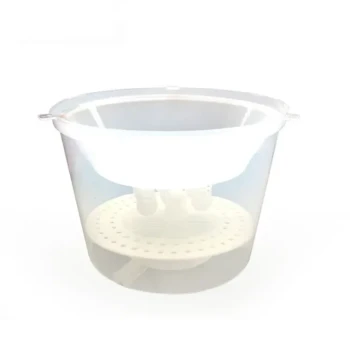
A Bottom-board Pollen Trap serves as a passive harvesting mechanism designed to intercept foraging bees as they return to the hive. Installed at the very base of the colony structure, it forces bees to crawl through mechanical grates before entering the main hive body. These grates dislodge pollen pellets from the bees' hind legs, causing them to fall into a collection drawer for easy retrieval by the beekeeper.
By transforming the hive entrance into a filtration point, this device allows for the non-invasive collection of pollen. Its primary value lies in harvesting resources for nutritional analysis or stockpiling natural supplemental feed for future colony support.
Mechanics of Operation
Physical Separation
The core function of the trap relies on precise mechanical obstruction. As worker bees attempt to enter the hive, they must squeeze through specific grids or screens.
The Dislodging Process
The clearance in these grids is calculated to allow the bee to pass, but not the pollen loads on their hind legs. The friction scrapes the pollen "baskets" off the bee.
Collection and Isolation
Once dislodged, the pollen falls through a secondary screen into a removable drawer below. This design isolates the pollen immediately, preventing it from being tracked into the brood nest or consumed.
Strategic Applications in Management
Nutritional Profiling
Commercial managers use these traps to assess the quality of the local environment. By analyzing the diversity of the pollen collected, beekeepers can gauge the nutritional value of current forage.
Creating Feed Reserves
The collected pollen is not merely a byproduct; it is a high-value resource. Beekeepers often freeze or dry this pollen to feed back to colonies during dearth periods as a natural protein supplement.
Distinguishing Between Bottom Board Tools
Pollen Traps vs. Sanitary Boards
It is critical not to confuse the pollen trap with a sanitary bottom board. While both occupy the same location, a sanitary board is designed to catch falling Varroa mites to monitor infestation levels and treatment efficacy.
The Functionality Gap
A sanitary board passively collects debris and parasites. A pollen trap actively interacts with the bees to strip resources. They serve entirely different diagnostic and management goals.
Potential Drawbacks
Because the pollen trap relies on physical obstruction, it naturally slows down traffic at the hive entrance. Overuse can potentially stress the colony or deprive it of necessary immediate protein if not managed on a schedule.
Making the Right Choice for Your Goal
To effectively utilize a Bottom-board Pollen Trap, align its usage with your specific management objectives:
- If your primary focus is nutritional analysis: Deploy the trap for short intervals to sample forage diversity without significantly impacting the colony's food stores.
- If your primary focus is feed production: Implement a rotation schedule that allows you to harvest surplus pollen while ensuring the colony retains enough protein for brood rearing.
- If your primary focus is pest management: Do not use a pollen trap; switch to a sanitary bottom board to monitor Varroa mite drop and medication efficacy.
Mastering the use of the bottom-board trap allows you to turn a standard structural component into a dynamic tool for nutritional control.
Summary Table:
| Feature | Bottom-board Pollen Trap | Sanitary (Screened) Bottom Board |
|---|---|---|
| Primary Goal | Passive pollen harvesting & nutritional analysis | Pest monitoring (Varroa mites) & hive hygiene |
| Mechanism | Mechanical grates to dislodge pollen pellets | Screen mesh for debris/parasite fall-through |
| Bee Interaction | Bees must crawl through specific filtration grids | Bees walk freely above the screen mesh |
| Output | High-protein bee pollen for feed or sale | Hive debris and mite count data |
| Management | Use on rotation to prevent colony protein stress | Generally kept in place for ventilation/monitoring |
Scaling Your Apiary Operations with HONESTBEE
Maximize your colony productivity and diversify your revenue streams with professional-grade harvesting solutions. HONESTBEE specializes in supporting commercial apiaries and distributors with a comprehensive wholesale range of beekeeping tools, machinery, and essential consumables.
Whether you need precision-engineered pollen traps, industrial honey-filling machines, or specialized hive-making equipment, we provide the hardware and expertise to streamline your workflow. Our portfolio is designed to help you maintain hive health while capturing every drop of value from your environment.
Ready to upgrade your equipment? Contact our expert team today to discuss wholesale pricing and how our equipment can drive your business growth.
References
- Amanda Ellis, Catherine M. Zettel Nalen. Benefits of Pollen to Honey Bees. DOI: 10.32473/edis-in868-2010
This article is also based on technical information from HonestBee Knowledge Base .
Related Products
- Removable Plastic Pollen Trap With Ventilated Tray for Bees Pollen Collector
- 30 cm Plastic Entrance Hole Bee Pollen Trap and Collector
- High-Efficiency Diamond Maze Bee Escape for Clearing Supers
- Plastic Bee Pollen Trap Strips Comb Catcher Collector
- Langstroth Screen Bottom Board for Beekeeping Wholesale
People Also Ask
- What are the design principles and advantages of pollen traps in the collection of bee pollen? Boost Your Apiary Yield
- What is the function of professional pollen traps in evaluating honey plants? Quantifying Pollination and Crop Potential
- What functions do pollen traps serve for bee bread production? Optimize Your Raw Material Collection
- What maintenance and pest prevention measures should be taken for pollen traps? Protect Your Hive and Harvest Quality
- How does the use of pollen traps in honeybee hives enhance crop fertilization? Boost Your Yield Through Induced Activity