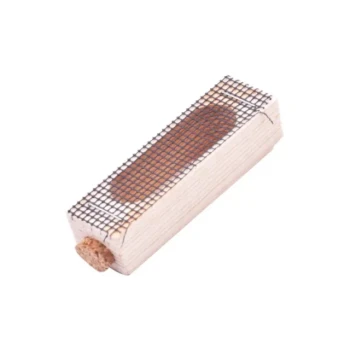
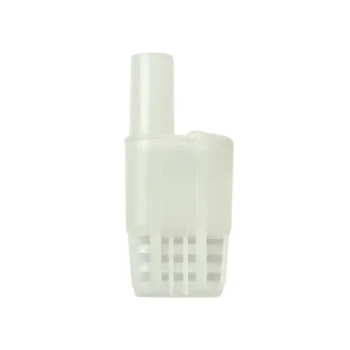
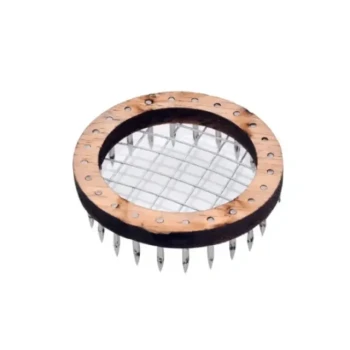
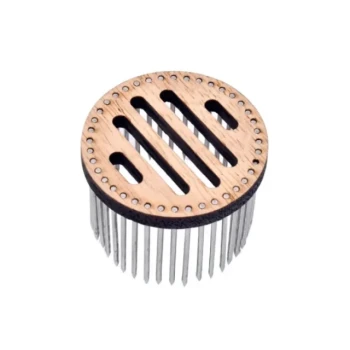
The primary function of a specialized queen cage during swarm capture is to secure the queen bee to act as a biological anchor for the rest of the colony. By physically confining the queen first, the beekeeper exploits the worker bees' powerful instinct to remain with their leader. This ensures the workers naturally congregate around the cage and enter the new hive, allowing for the efficient and complete relocation of the swarm to a managed environment.
Core Insight: The queen cage is not merely a transport container; it is a control tool that leverages the hive's social biology. Securing the queen transforms a chaotic cloud of bees into a manageable unit by creating a fixed pheromone source that the rest of the colony will not abandon.
The Mechanics of Swarm Anchoring
Leveraging Biological Instincts
Honeybees possess a deeply ingrained biological instinct to follow their queen. She is the heart of the colony, and her pheromones dictate the cohesion of the swarm.
When you isolate the queen in a specialized cage, you effectively trap the "mind" of the hive. The worker bees, detecting her presence inside the cage, will cease searching for a new home and focus on clustering around her.
Ensuring Complete Colony Transfer
Attempting to scoop or shake a swarm into a box without securing the queen is often futile. If the queen takes flight or is missed during the transfer, the entire swarm will march back out of the hive to rejoin her.
By placing the caged queen inside the designated hive, you guarantee that the worker bees will voluntarily enter and stay in the new equipment. This turns the relocation process from a chaotic chase into a predictable, orderly event.
Operational Context and Safety
Facilitating Relocation
Once the workers have congregated around the caged queen within the new hive, the colony is stabilized. This allows the beekeeper to transport the swarm from the capture site (such as a tree branch or building structure) to a managed apiary.
The cage serves as a secure holding cell during this transport, preventing the queen from being crushed or flying away during transit.
The Role of Quarantine
While the cage secures the bees physically, it does not secure the apiary biologically. Swarms from unknown sources are wild variables.
Beekeepers must assume these swarms carry pathogens or parasites, such as varroa mites. Therefore, the captured swarm should be kept in isolation away from the main bee yard until their health status is verified.
Critical Considerations and Trade-offs
Handling Risks
The process of capturing and caging a queen requires precision. The queen is delicate, and rough handling during the caging process can result in injury or death. If the queen is harmed, the swarm may fail to establish itself or abscond entirely.
Acceptance vs. Confinement
While the cage secures the queen, it also prevents her from laying eggs immediately or moving freely. In some scenarios involving shipping cages (as noted in supplementary contexts), a candy release system is used to slowly introduce a queen to a new colony.
However, in swarm capture, the primary goal is immediate retention. The trade-off is that the colony's growth is paused until she is manually released or the colony is settled enough to chew through a release mechanism.
Strategies for Successful Swarm Integration
To maximize success when utilizing a queen cage for swarm capture, align your approach with your specific objectives:
- If your primary focus is retention: Prioritize locating and caging the queen immediately; do not rely on lures or bait hives alone to keep the bees in the box if the queen is free to fly.
- If your primary focus is biosecurity: Utilize the isolation provided by the capture process to quarantine the new swarm, monitoring for mites and disease before integrating them into your main apiary.
- If your primary focus is colony expansion: Ensure the transition from the temporary capture box to the permanent hive is done gently, releasing the queen only once the workers have drawn out comb and established the new nest.
Mastering the use of the queen cage allows you to control the chaotic energy of a wild swarm, turning a natural phenomenon into a stable, productive asset for your apiary.
Summary Table:
| Feature | Purpose in Swarm Capture | Impact on Colony |
|---|---|---|
| Biological Anchor | Confines the queen to attract workers | Prevents the swarm from absconding |
| Pheromone Control | Concentrates scent in a fixed location | Encourages natural clustering around the hive |
| Physical Protection | Prevents queen from being crushed/lost | Ensures the survival of the colony's heart |
| Operational Safety | Secures the queen during transport | Facilitates orderly relocation to the apiary |
| Quarantine Support | Isolates wild swarms for health checks | Protects existing hives from pathogens |
Maximize Your Apiary’s Success with HONESTBEE
Successfully capturing a wild swarm is just the beginning. At HONESTBEE, we empower commercial apiaries and distributors with the high-quality tools needed to turn wild energy into stable productivity.
From specialized queen cages and durable beekeeping hardware to advanced honey-filling machines and hive-making equipment, we provide a comprehensive wholesale catalog designed for professional growth. Whether you are scaling your swarm-catching operations or sourcing industry-essential consumables, our expertise ensures your business stays ahead.
Ready to elevate your beekeeping operations? Contact us today to explore our full spectrum of professional tools and machinery.
References
- Asar Said Mahbub, A R Y Wijayanti. Local Knowledge of Beekeeping Activity in Bonto Karaeng Village, Sinoa Subdistrict, Bantaeng Regency. DOI: 10.1088/1755-1315/270/1/012027
This article is also based on technical information from HonestBee Knowledge Base .
Related Products
- Durable Galvanized Steel Spring Queen Bee Cage
- Professional Queen Cage with Sliding Gate and Feeder Plug
- Classic Wooden and Mesh California Queen Cage
- Professional Queen Bee Introduction and Transport Cage
- Professional Multi-Functional Queen Bee Cage
People Also Ask
- Why are specialized queen bee cages used for the banking of mated queen bees? Maximize Commercial Apiary Storage Efficiency
- What is the mechanism of action for using temporary queen bee cages? Master Successful Queen Introduction
- What is the step-by-step process for installing a queen bee's cage onto a frame? Ensure Hive Acceptance Safely
- What is the optimal placement for a queen bee cage? Essential Strategies for Successful Re-queening
- What are the advantages and disadvantages of introducing a queen bee by embedding the cage? Boost Your Queen Acceptance