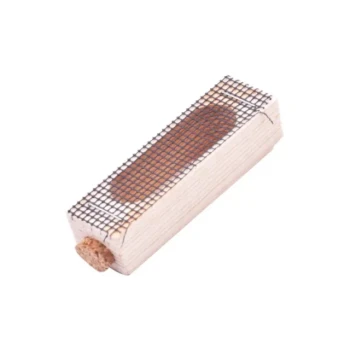
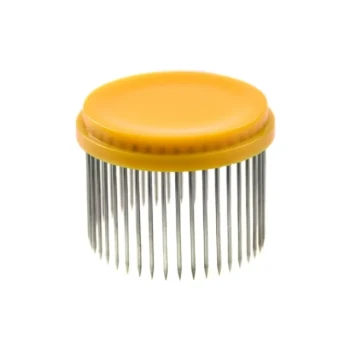
The primary function of a wooden Benton cage is to create a stable, protected micro-environment for a queen bee and her attendant workers. It serves as a temporary habitat that buffers the insects against external temperature fluctuations while allowing essential airflow and feeding access through a metal mesh screen.
The Benton cage is not merely a shipping container; it is a physiological stabilizer. It combines thermal insulation with controlled ventilation to ensure the queen arrives at her destination—whether a laboratory or a new hive—healthy and ready for acceptance.
The Architecture of Protection
To understand the Benton cage, you must look at how its two main materials work in tandem to solve the problem of insect fragility.
Buffering Environmental Stress
The wooden structure is the most critical component for stability. Unlike plastic, wood acts as a natural insulator.
It buffers the queen and her attendants against rapid environmental fluctuations, such as sudden spikes or drops in temperature during transport. This insulation is vital for maintaining the queen's physiological stability.
Ventilation and Access
A metal mesh surface covers the chambers carved into the wood. This mesh is permeable enough to ensure constant air circulation, preventing the buildup of heat or moisture that could prove fatal.
Crucially, the mesh allows researchers or apiarists to feed the bees without opening the cage. This minimizes disturbance and prevents accidental escape during the holding period.
Operational Roles in Research and Management
Beyond simple containment, the Benton cage serves specific functional roles in both scientific and practical beekeeping contexts.
Ensuring Experimental Viability
In research settings, the condition of the subject is paramount. The Benton cage is a critical tool for experimental preparation and laboratory observation.
By stabilizing the queen's environment, the cage helps maintain a high survival rate. This ensures that the data collected reflects a healthy specimen rather than one compromised by transport stress.
Facilitating Colony Introduction
While primarily a transport and holding tool, the cage also functions as a protective barrier during the introduction of a queen to a new colony.
The mesh allows the queen's pheromones to gradually circulate among the new workers. This chemical communication encourages the colony to accept the queen rather than attacking her, significantly improving the success of re-queening.
Understanding the Trade-offs
While effective, the wooden Benton cage has specific limitations that you must consider when comparing it to modern alternatives.
Visibility vs. Insulation
The primary trade-off is visibility. The wooden construction effectively hides the queen from view, except through the top mesh.
While this reduces visual stress on the bees, it makes it difficult for researchers to fully inspect the queen’s physical condition (such as leg movement or abdomen size) without opening the cage.
Hygiene and Sterilization
Wood is porous and organic. Unlike plastic cages, a wooden Benton cage absorbs fluids and is difficult to fully sterilize after use.
Therefore, these cages are generally treated as single-use or limited-use items to prevent the cross-contamination of pathogens between different colonies or experiments.
Making the Right Choice for Your Goal
When deciding how to utilize a Benton cage, consider your immediate objective.
- If your primary focus is Transportation: Rely on the wooden Benton cage for its superior thermal buffering capabilities to protect the queen from temperature shocks.
- If your primary focus is Colony Introduction: Utilize the cage as a slow-release mechanism, allowing pheromones to permeate the hive through the mesh before releasing the queen.
The Benton cage remains a standard in the industry because it prioritizes the one factor that matters most: the physiological stability of the queen.
Summary Table:
| Feature | Function & Purpose | Benefit |
|---|---|---|
| Wooden Frame | Natural thermal insulation | Buffers against temperature spikes/drops |
| Metal Mesh | Ventilation and feeding access | Prevents heat buildup; allows feeding without escape |
| Chambered Design | Micro-environment for queen/attendants | Reduces transport stress and maintains physiology |
| Porous Material | Pheromone diffusion | Facilitates colony acceptance during re-queening |
| Single-use Nature | Pathogen control | Prevents cross-contamination between colonies |
Elevate Your Apiary with Professional-Grade Equipment
At HONESTBEE, we understand that the health of your queen is the pulse of your colony. Whether you are a commercial apiary or a specialist distributor, we provide the precision tools you need to succeed.
Our extensive wholesale catalog includes:
- Specialized Hardware: High-performance hive-making and honey-filling machinery.
- Essential Consumables: Durable wooden Benton cages and a full spectrum of beekeeping tools.
- Custom Solutions: Tailored equipment to optimize your honey production and research efficiency.
Contact Honestbee Today to discover how our comprehensive beekeeping solutions can streamline your operations and enhance your productivity.
References
- Veeranan Chaimanee, Jeffery S. Pettis. Gene expression, sperm viability, and queen (Apis mellifera) loss following pesticide exposure under laboratory and field conditions. DOI: 10.1007/s13592-019-00645-4
This article is also based on technical information from HonestBee Knowledge Base .
Related Products
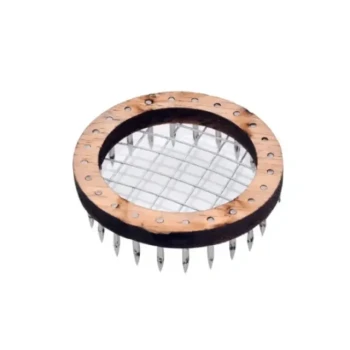
- Wood and Mesh Push-In Queen Cage
- Professional Queen Bee Introduction and Transport Cage
- Classic Wooden and Mesh California Queen Cage
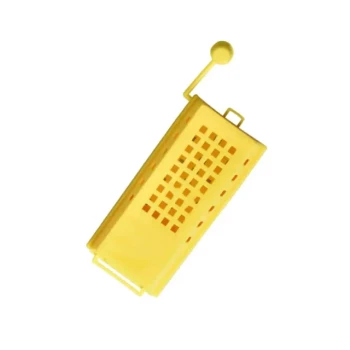
- Professional Queen Cage with Sliding Gate and Feeder Plug
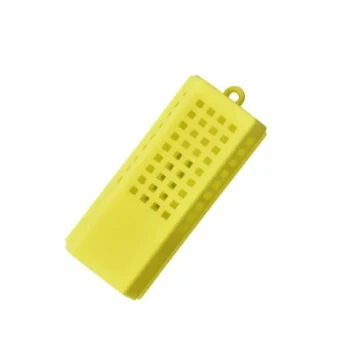
- Professional Multi-Compartment Queen Cage with Sliding Lid
People Also Ask
- When is a queen introduced with a push-in cage ready for full release? Key Signs for Maximum Colony Acceptance
- How are queen cages used to protect newly hatched queens? Secure Your Virgin Queens During Development
- Why are queen cages or grid cages used in bee studies? Achieve Precise Biological Data for Research
- What advantages do push-in queen cages offer? Boost Acceptance Rates for Artificially Inseminated Queens
- What is a push-in queen cage and how does it differ from a standard queen cage? Boosting Your Queen Acceptance Rates