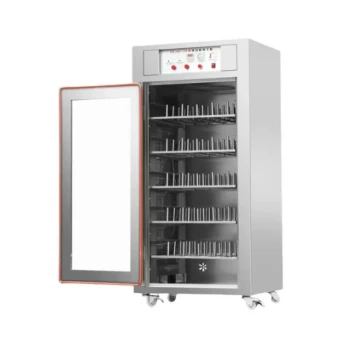
The primary function of convection drying equipment with forced ventilation is to rapidly reduce the moisture content of fresh bee pollen from an initial 20–30% to below 12.5%. By utilizing controlled air circulation and precise temperature regulation (typically maintained at 42 °C), this process stabilizes the pollen for safe long-distance transportation and long-term storage.
Core Takeaway Fresh bee pollen is an unstable product highly susceptible to spoilage due to its high water activity. Convection drying serves as the critical intervention that inhibits microbial growth and toxin formation, ensuring the product remains safe for consumption without destroying its physical integrity.
The Mechanics of Stabilization
Critical Moisture Reduction
Fresh bee pollen typically enters processing with a moisture content between 20% and 30%. The convection drying process must consistently lower this to below 12.5% to ensure stability. This reduction effectively lowers the water activity from approximately 0.7 to 0.3, creating an environment where biological degradation halts.
Inhibiting Microbial Growth
The removal of moisture is not merely for texture; it is a safety mandate. High moisture levels make pollen an ideal substrate for yeasts and fungi, including dangerous molds like Aspergillus. By rapidly drying the pollen, the equipment prevents the production of harmful mycotoxins, specifically Ochratoxin A.
Preserving Chemical Integrity
Unlike uncontrolled heating, forced ventilation drying aims to preserve the pollen's biochemical profile. By maintaining specific thermal parameters, the process stabilizes the pollen’s antioxidant concentrations. This ensures that the chemical composition and sensory characteristics remain consistent throughout the product's shelf life.
The Role of Controlled Temperature
The 42°C Threshold
The equipment typically operates at a precise temperature set point, often 42°C. This specific temperature is chosen to balance efficient evaporation with the preservation of heat-sensitive nutrients. It provides enough thermal energy to drive off moisture without "cooking" the pollen or degrading its bioactive substances.
Forced Ventilation Efficiency
Heat alone is often insufficient for rapid drying; the "forced ventilation" aspect is crucial. Continuous air circulation ensures that moisture-saturated air is constantly replaced with drier air. This accelerates the drying rate more effectively than static heating, reducing the time the pollen is exposed to heat.
Understanding the Trade-offs
Temperature vs. Nutrient Retention
While higher temperatures would dry the pollen faster, they pose a significant risk to quality. Exceeding the standard 42°C threshold can damage sensitive nutritional components and delicate pollen structures. Operators must resist the urge to increase heat for the sake of speed.
Energy Consumption
Compared to natural solutions like solar convection drying, forced ventilation units require a consistent power source for both heating elements and fans. While this incurs higher operational costs, it offers the necessary consistency and speed required for industrial-grade safety standards that natural methods cannot guarantee.
Making the Right Choice for Your Goal
To optimize your bee pollen processing, align your equipment settings with your specific objectives:
- If your primary focus is commercial safety: Prioritize equipment with high-precision airflow to reach <12.5% moisture rapidly, preventing any window for mycotoxin formation.
- If your primary focus is nutritional quality: Ensure your equipment has strict temperature governors to never exceed 42°C, protecting bioactives and antioxidants.
- If your primary focus is analytical accuracy: Use constant-temperature drying to create a stable physical state, ensuring consistent weight measurements for mineral analysis.
Effective drying is the bridge between a perishable raw material and a safe, marketable commodity.
Summary Table:
| Feature | Specification/Goal | Key Benefit |
|---|---|---|
| Primary Goal | Reduce moisture from 20-30% to <12.5% | Inhibits microbial growth & spoilage |
| Optimal Temp | 42°C (107.6°F) | Protects bioactive antioxidants |
| Mechanism | Forced Air Ventilation | Rapid moisture removal vs. static heating |
| Safety Target | Water activity reduction to ~0.3 | Prevents mold and mycotoxin formation |
| Outcome | Physical & Chemical Stability | Ensures safe long-distance transport |
Scale Your Pollen Processing with HONESTBEE
Transitioning from raw harvest to a stable, marketable commodity requires industrial-grade precision. HONESTBEE empowers commercial apiaries and global distributors with professional-tier beekeeping machinery and tools.
Whether you need advanced pollen drying solutions, hive-making hardware, or high-capacity honey-filling machines, we provide the full spectrum of equipment and consumables to optimize your production.
Ready to enhance your product quality and operational efficiency?
Contact HONESTBEE Today for a Quote
References
- Ingmārs Cinkmanis, Velga Miķelsone. Influence of Lyophilization and convective type drying on antioxidant properties, total phenols and flavonoids in pollens. DOI: 10.22616/foodbalt.2017.038
This article is also based on technical information from HonestBee Knowledge Base .
Related Products
- HONESTBEE Professional Cabinet Bottle Dryer
- 0.5T Capacity Honey Dehumidifier Dryer with Vacuum Heating and Thickening Filtering Machine
- High Quality Honey Dehumidifier Dryer Thickening Machine for Beekeeping
- Economy Small Scale Honey Dryer Dehumidifier Thickening Machine
People Also Ask
- Why use a Cabinet Drier for pollen at 38–41°С? Protect Sample Integrity and Heavy Metal Data Accuracy
- What is the role of an industrial forced-air drying oven in bee bread fermentation? Optimize Moisture and Nutrients
- What is the primary purpose of a constant temperature drying oven in bee bread production? Achieve Perfect Fermentation
- How do forced circulation drying ovens sterilize beekeeping tools? Efficient Oxidation for Metal Equipment Safety
- What are the technical requirements for using a constant temperature drying oven for raw propolis? Expert Guide