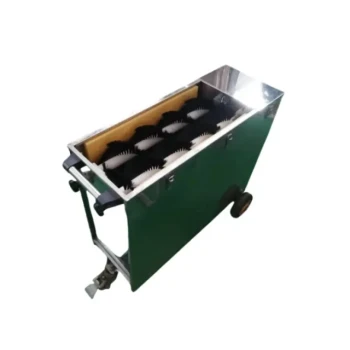
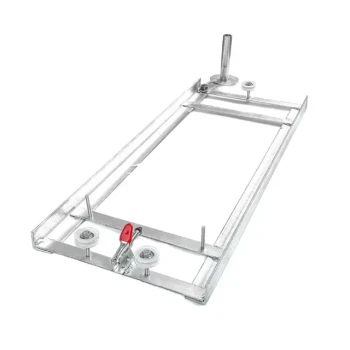
The primary function of industrial electronic beehive scales is to automate the recording of cumulative colony weight changes at high frequencies. By capturing data at granular intervals, such as every 15 minutes, these systems filter out temporary fluctuations caused by weather or handling to reveal the true trend of the hive's mass. This precision is critical for accurately evaluating how efficiently a bee colony utilizes the resources in its surrounding landscape.
The core value of these scales lies in their ability to translate raw, noisy data into a smooth, continuous weight curve. This enables technicians to distinguish between fleeting environmental changes and genuine biological productivity.
The Mechanics of High-Frequency Monitoring
Automated Data Collection
Industrial scales replace manual weighing with continuous, automated tracking.
They record data points rapidly—often every 15 minutes—to capture the nuances of hive activity throughout the day.
Filtering Operational Noise
Raw weight data is often distorted by external factors, such as beekeeper interventions or temporary weather shifts.
High-frequency monitoring allows the system to identify and filter out this "noise," isolating the actual biological data.
Creating a Continuous Trend
The result of this filtration is a smooth, continuous curve representing weight change.
This curve provides a clear visual representation of the colony's status, removing the guesswork associated with sporadic measurements.
Analyzing Colony Efficiency and Health
Evaluating Landscape Utilization
The most critical application of this data is measuring landscape resource utilization efficiency.
By tracking weight accumulation, you can determine how effectively the colony is gathering nectar and pollen from the available environment.
Tracking Colony Development
Beyond daily foraging, these scales track long-term health by calculating weekly weight gains.
This objective data helps technicians monitor foraging activity and general colony development over time.
Quantifying Technique Performance
Scales serve as essential detection devices for testing new beekeeping variables.
They allow operators to quantify the impact of specific bait materials or trapping techniques on honey production.
Understanding the Trade-offs
The Requirement for Accurate Baselines
Weight data is only valuable if the initial parameters are correct.
You must subtract the average weight of empty equipment (the tare weight) to estimate the real-time weight of the colony itself.
Differentiating Biomass from Stores
While weight gain usually indicates success, the raw number does not inherently distinguish between honey stores, pollen, or brood population.
Careful analysis is required to ensure that weight increases are interpreted correctly within the context of the season.
Balancing Initial Populations
To ensure data validity, especially in experimental settings, colony sizes must be balanced at the start.
Using scales to equalize initial weights prevents pre-existing population differences from biasing the data regarding yield or pollination efficiency.
Making the Right Choice for Your Goal
Whether you are conducting research or managing production, the application of this technology depends on your specific objective.
- If your primary focus is Ecological Research: Prioritize the analysis of the continuous weight curve to evaluate landscape resource utilization efficiency.
- If your primary focus is Production Management: Use weekly weight gain calculations to objectively track colony health and foraging activity.
- If your primary focus is Experimental Testing: Utilize the scales to balance initial colony sizes to ensure unbiased data on new techniques or baits.
Accurate monitoring transforms beekeeping from a practice of estimation into a science of precision.
Summary Table:
| Feature | Function & Benefit |
|---|---|
| High-Frequency Sampling | Records data every 15 mins to filter out environmental noise. |
| Trend Analysis | Creates a smooth weight curve to reveal true biological productivity. |
| Efficiency Tracking | Evaluates how effectively bees utilize surrounding landscape resources. |
| Development Monitoring | Quantifies weekly gains to track long-term colony health and foraging. |
| Experimental Control | Balances initial colony weights to ensure unbiased testing of new techniques. |
Elevate Your Apiary Operations with HONESTBEE
At HONESTBEE, we specialize in empowering commercial apiaries and distributors with the precision tools needed for modern, data-driven beekeeping. From industrial electronic beehive scales and honey-filling machines to a full spectrum of hive-making hardware and essential consumables, our wholesale offerings are designed to scale your productivity.
Whether you are looking to optimize honey yield, conduct rigorous ecological research, or stock high-quality machinery for your distribution network, HONESTBEE provides the expertise and equipment to help you succeed.
Ready to transform your beekeeping into a science of precision?
Contact Us Today to Explore Our Wholesale Catalog
References
- Gabriela M. Quinlan, Rufus Isaacs. Honey bee (Apis mellifera) colonies benefit from grassland/ pasture while bumble bee (Bombus impatiens) colonies in the same landscapes benefit from non-corn/soybean cropland. DOI: 10.1371/journal.pone.0257701
This article is also based on technical information from HonestBee Knowledge Base .
Related Products
- Professional Large-Format Hive Number Set for Beekeeping
- Modern Flat-Mount Hive Number Set for Beekeeping
- Commercial Grade Vertical Electric Bee Sweeper for Bee Removal
- Professional Grade Foldable Beehive Handles
- High-Efficiency Pneumatic Bee Hive Making Machine for Rapid Box Assembly
People Also Ask
- What are the structural advantages of bee hives with high-efficiency ventilation? Prevent Honeycomb Thermal Collapse
- How do different beekeeping hive structures influence productivity? Optimize Designs for Maximum Honey Yield
- Why Increase Hive Installation Quantity in Commercial Apiaries? Offset Climate Risks with Scalable Infrastructure
- How does the design of improved beekeeping hives contribute to maintaining honey quality and purity? Enhancing Purity
- What factors determine the necessary hive configuration for an apiary? Optimize Hive Setup for Better Colony Survival