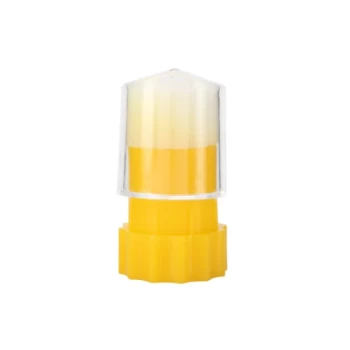
The primary function of specialized plastic capture containers is to simulate a sealed trap at the hive entrance, enabling the high-efficiency, safe collection of large numbers of worker bees. This physical capture mechanism prevents bees from escaping and secures a complete, representative biological sample without causing damage to the hive’s structure.
The core value of these containers lies in standardization and containment. They transform the chaotic variable of sampling live insects into a controlled process, ensuring the biological material collected is authentic and sufficient for rigorous biochemical analysis.
The Mechanics of Effective Capture
Simulating a Sealed Trap
The fundamental design of these containers functions as a simulated trap. This mechanism allows bees to enter the collection zone but prevents their exit.
This physical barrier is critical for gathering a sufficient volume of bees quickly. It eliminates the variables associated with manual collection, such as individual handling or selective sampling.
Ensuring Sample Completeness
To obtain valid data, the sample must be statistically representative of the colony. If bees are allowed to escape during the process, the sample becomes biased.
The capture container secures the entire cohort of targeted worker bees. This ensures the "complete" nature of the biological sample required for accurate downstream testing.
Protecting Hive Integrity
Field collection must be non-destructive to sustain the apiary. These specialized containers allow for extraction directly from the entrance.
This avoids the need to dismantle the hive or damage the comb structure. It allows for repeated sampling over time without adding stress to the colony infrastructure.
Critical Considerations for Analysis
The Sterility Factor
While the primary mechanism is capture, the cleanliness of the plastic determines the validity of microbiome data.
As noted in supplementary contexts, if the goal is analyzing internal bacteria, the capture container must be industrial-grade sterile. This prevents environmental microorganisms from contaminating the sample and skewing results.
Ventilation and Vitality
For specific diagnostic tests, such as viral RNA analysis, the capture container must support life temporarily.
In these scenarios, the plastic capture device must feature ventilation holes. Keeping the bees alive until they can be frozen in the laboratory is essential to prevent RNA degradation.
Common Pitfalls to Avoid
Overlooking the "Why" of Collection
A common mistake is using a generic container that traps bees but compromises the sample type.
If you use a non-sterile capture container for a microbiome study, your capture was successful, but your data is ruined by cross-contamination.
Ignoring Preservation Protocols
The capture container is often just the first step in the chain of custody.
Capturing bees successfully is futile if they are not immediately transitioned to the correct preservation medium, such as 70% ethanol for DNA fixation or ice tanks for inhibiting pathogen reproduction.
Making the Right Choice for Your Goal
To select the correct capture configuration, you must work backward from your intended laboratory analysis.
- If your primary focus is [Microbiome Analysis]: Ensure the capture container is industrial-grade sterile to guarantee bacteria detected originate solely from the honeybee.
- If your primary focus is [Viral RNA Quality]: Verify the capture container has ventilation to keep bees alive until laboratory freezing, preventing RNA degradation.
- If your primary focus is [Pathogen/DNA Integrity]: Plan to transfer captured bees immediately into 70% ethanol to dehydrate tissues and fix the biological sample.
Success in honeybee sampling relies not just on catching the bee, but on using a capture method that protects the specific biological data you need to measure.
Summary Table:
| Feature | Primary Function/Benefit | Critical Requirement |
|---|---|---|
| Physical Trap Design | Prevents escape and ensures sample completeness | Simulates sealed entrance |
| Non-Destructive Method | Protects hive structure and colony health | Entrance-based extraction |
| Industrial Sterility | Eliminates cross-contamination for microbiome data | Sterile-grade plastic |
| Ventilation Holes | Maintains bee vitality to prevent RNA degradation | Essential for viral analysis |
| Standardization | Removes sampling bias for statistical accuracy | Controlled containment |
Elevate Your Beekeeping Operations with HONESTBEE
At HONESTBEE, we understand that precision in the field leads to success in the lab. As a leading provider for commercial apiaries and global distributors, we offer a comprehensive wholesale range of beekeeping tools, specialized capture equipment, and high-capacity machinery designed for professional efficiency.
Why partner with us?
- Comprehensive Catalog: From hive-making and honey-filling machines to industrial-grade sampling consumables.
- Industry Expertise: We cater to the specific needs of large-scale operations, ensuring every tool meets rigorous field standards.
- Global Distribution: Reliable supply chains for all your essential industry hardware and honey-themed merchandise.
Ready to scale your apiary or distribution network? Contact us today to explore our wholesale offerings and discover how HONESTBEE can streamline your production from hive to market.
References
- Julius Akolawole Bamidele, Samson Rahman. Seasonal fluctuations of antioxidant enzymes and biochemical compositions of Apis mellifera adansonii L. from three ecological zones of Nigeria. DOI: 10.1186/s41936-023-00332-y
This article is also based on technical information from HonestBee Knowledge Base .
Related Products
- Plastic Transporting Bee Packages and Nuc Boxes for Beekeeping
- Food Grade Plastic Honey Bucket Pail for Beekeeping
- Squeezable No-Drip Beehive-Shaped Honey Jars with Flip-Top Cap
- Queen Bee Catcher Plastic Bee Marker Bottle with Piston Marking Tube
- Classic Beehive Honey Bottle Jar with Squeeze Dispenser Lid
People Also Ask
- What role do bee package boxes play in the commercial transport and expansion of honeybee colonies? - Logistic Essentials
- What are beekeeping boxes called? A Guide to Hive Bodies and Box Types
- How do standardized bee packages serve as a recovery mechanism for commercial beekeeping? Ensure Business Continuity
- What is the commercial value of using standardized bee packages? Drive Scalability in Large-Scale Apiaries
- Why is the timely introduction of high-quality bee packages critical? Save Your Apiary from Asian Hornet Invasions