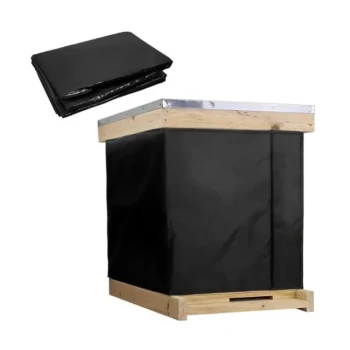
The primary purpose of using insulated beehives is to replicate the thermal environment of a natural tree cavity. By thickening the walls and reducing heat transfer, these hives stabilize internal temperatures year-round, significantly reducing the colony's metabolic workload.
Core Takeaway Insulated hives act as a thermal buffer that mimics nature. By minimizing the energy bees must waste on heating or cooling their environment, you free up the colony's limited resources for vital biological tasks like foraging and honey production.
Biomimicry: Returning to Nature's Design
Replicating the Tree Hollow
In the wild, honeybees prefer nesting in thick-walled cavities, such as hollow tree trunks. Standard wooden hives often fail to provide this level of protection.
Insulated hives bridge this gap by simulating those natural, thick walls. This design choice is not about luxury; it is about restoring the colony's natural defensive barrier against the elements.
Year-Round Temperature Regulation
A common misconception is that insulation is only for winter survival. However, the primary value is year-round thermal stability.
By reducing the rate at which heat enters or leaves the hive, insulation protects the colony from freezing winter winds and scorching summer heat alike.
The Energy Economy of the Hive
Reducing Metabolic Cost
Thermoregulation is "expensive" for a bee colony. When a hive loses heat, bees must consume honey stores to generate warmth.
Insulated hives significantly decrease this energy expenditure. Because the hive retains heat more efficiently, bees burn less fuel to maintain their optimum brood temperature.
Redirecting Resources to Productivity
Energy is a finite resource for a colony. Every calorie spent on climate control is a calorie not spent on growth or production.
When the thermal burden is lifted, bees can focus on essential activities. The energy saved is directly redirected toward foraging, comb building, and honey production.
Understanding the Limits of Insulation
Insulation Does Not Create Heat
It is critical to understand the distinction between retention and generation. Insulation limits heat transfer, but it does not generate warmth on its own.
The colony must still be healthy and populous enough to generate the initial heat required. Insulation simply makes their effort far more efficient, preventing that hard-earned warmth from escaping immediately.
Making the Right Choice for Your Goal
Deciding to use insulated hives often comes down to your specific objectives for the apiary.
- If your primary focus is Honey Production: Insulated hives allow bees to direct more energy into foraging and storage rather than metabolic heating.
- If your primary focus is Colony Health: The reduced stress from thermal fluctuations allows the colony to maintain a stable environment for brood rearing with less effort.
By mimicking the stable environment of a hollow tree, you transform the hive from a shelter into a tool for energy efficiency.
Summary Table:
| Feature | Standard Wooden Hive | Insulated Beehive | Benefit to Colony |
|---|---|---|---|
| Thermal Buffer | Low (thin walls) | High (thick/insulated walls) | Mimics natural hollow tree cavities |
| Energy Economy | High honey consumption | Low honey consumption | Less energy wasted on thermoregulation |
| Climate Stability | Fluctuates with weather | Maintains stable internal temp | Reduced stress from external temp spikes |
| Productivity | Energy spent on heating | Energy spent on foraging | Increased honey yield and brood health |
Optimize Your Apiary with HONESTBEE Professional Solutions
At HONESTBEE, we empower commercial apiaries and distributors with the high-performance tools needed to thrive. By utilizing insulated environments and advanced beekeeping technology, you can significantly reduce colony workload and increase seasonal yields.
We provide a comprehensive wholesale portfolio, including:
- High-Efficiency Machinery: From hive-making to honey-filling machines.
- Professional Equipment: A full spectrum of specialized hardware and beekeeping tools.
- Essential Consumables: Every supply needed for large-scale industry operations.
Ready to elevate your production and protect your colonies? Contact HONESTBEE today to explore our wholesale offerings and see how our expertise can grow your business.
Related Products
- Professional Insulated Plastic Bee Hives
- Professional Insulated Winter Hive Wrap for Beekeeping
- Inner Beehive Cover for Beekeeping Bee Hive Inner Cover
- Stainless Steel Round Beehive Air Vents for Ventilation
- Wholesales Dadant Size Wooden Bee Hives for Beekeeping
People Also Ask
- What are the advantages of plastic bee hives? Boost Efficiency & Durability for Your Apiary
- Are plastic bee hives any good? Unlock Durability & Efficiency for Your Apiary
- How do plastic bee hives compare to wooden hives in handling? Reduce Strain & Boost Efficiency
- Are plastic bee hives good? Durable, Low-Maintenance Hives for Modern Apiaries
- What are the disadvantages of plastic beehives? Key Operational and Environmental Risks Exposed