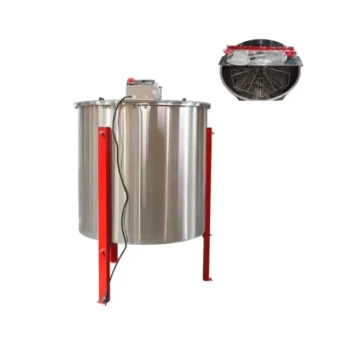
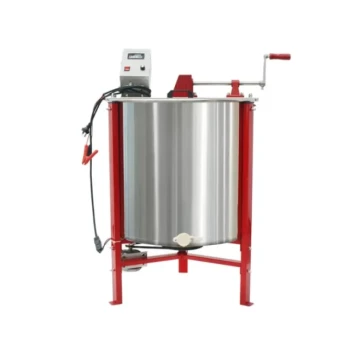
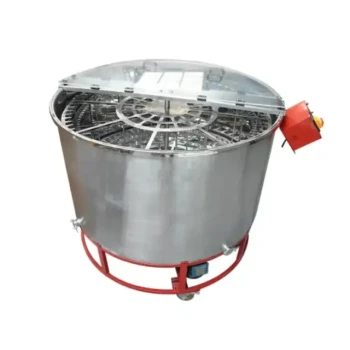
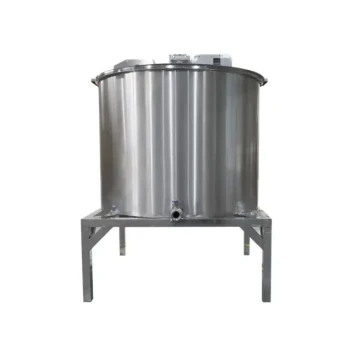
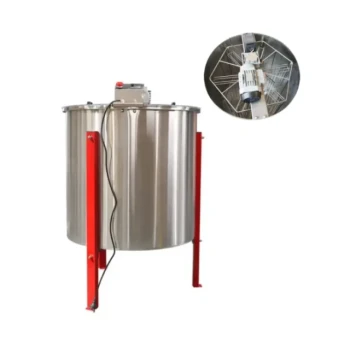
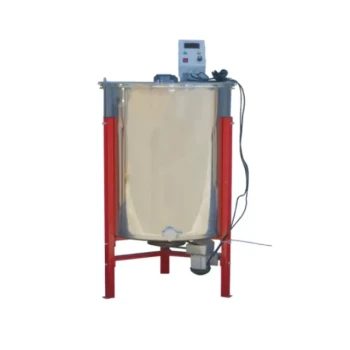
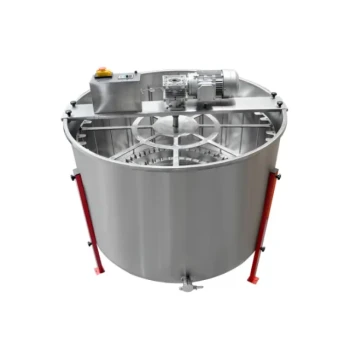
The primary role of a honey extractor motor is to automate the mechanical harvesting process through sustained rotational power.
It functions as the driving force behind the extractor, providing the necessary torque to spin a basket or drum containing honeycombs at high speeds. By maintaining a consistent velocity, the motor utilizes centrifugal force to pull liquid honey out of the comb cells, allowing it to drain into a holding tank without requiring manual labor.
A honey extractor motor transforms a physically demanding task into a streamlined operation, ensuring honey is removed cleanly while preserving the delicate wax comb for immediate reuse in the hive.
The Mechanics of Motorized Extraction
Generating Consistent Torque
The motor replaces the manual hand crank found on smaller or older units. Its main technical function is to deliver steady, reliable power to the central shaft of the extractor.
This torque is essential for spinning the internal basket, especially when it is fully loaded with heavy, honey-filled frames.
Applying Centrifugal Force
The motor drives the basket to rotate at high speeds. This creates centrifugal force, which acts outward from the center of rotation.
This physical force pulls the honey out of the uncapped cells and throws it against the inner walls of the drum. Gravity then pulls the honey down into a collection tray or tank at the bottom of the unit.
Strategic Benefits for Beekeepers
Preserving Comb Integrity
One of the most critical aspects of using a motor-driven extractor is its ability to remove honey without damaging the honeycombs.
Manual extraction can sometimes lead to uneven speeds that damage the wax. A smooth-running motor ensures the frame structure remains intact.
Enabling Comb Reuse
Because the wax comb is preserved during extraction, beekeepers can return the empty frames directly to the hive.
This is a massive efficiency gain for the colony. Instead of expending energy to rebuild the wax, the bees can immediately begin refilling the existing cells with nectar.
Understanding the Trade-offs
Power Dependency
Unlike manual extractors, a motorized unit requires a reliable power source. You must have access to an electrical outlet or a battery setup, which limits where you can perform the extraction.
Mechanical Complexity
Adding a motor introduces more moving parts to your setup. While generally reliable, motors require maintenance and introduce a potential point of failure that does not exist in simple hand-cranked models.
Assessing the Need for Motorized Extraction
While manual options exist, the motor becomes indispensable as the scale of your operation grows. Here is how to decide if it fits your needs:
- If your primary focus is efficiency and scale: A motor is essential to process multiple frames quickly without physical fatigue.
- If your primary focus is budget or off-grid harvesting: A manual extractor eliminates the need for electricity but increases the physical labor required.
A motorized extractor is not just a luxury; it is a tool that maximizes your harvest while minimizing stress on both the beekeeper and the hive.
Summary Table:
| Feature | Manual Extraction | Motorized Extraction |
|---|---|---|
| Primary Force | Manual Hand Cranking | Sustained Rotational Power |
| Processing Speed | Slow & Labor Intensive | Rapid & Automated |
| Comb Safety | High Risk of Manual Damage | Consistent Speed Preserves Wax |
| Labor Requirement | High Physical Effort | Minimal Monitoring |
| Power Source | None Required | Electrical Outlet or Battery |
| Ideal Scale | Hobbyists (1-5 Hives) | Commercial & Scaling Apiaries |
Streamline Your Honey Production with HONESTBEE
Transitioning to motorized extraction is the most effective way to scale your apiary operations. At HONESTBEE, we specialize in empowering commercial beekeepers and distributors with high-performance beekeeping machinery and tools.
From honey-filling machines and hive-making hardware to the most reliable motorized extractors and essential industry consumables, our comprehensive wholesale offering ensures your business remains competitive and efficient. Let us provide the industrial-grade equipment you need to maximize your harvest and preserve your combs for immediate reuse.
Ready to upgrade your equipment? Contact us today to explore our wholesale solutions!
Related Products
- Commercial Electric 12 Frame Honey Extractor Spinner Motorized Honey Extractor
- Vertical Motor Kits for 2 3 4 Frame Electric Honey Extractors
- 8-Frame Electric Self-Reversing Honey Extractor Spinner for Commercial Honey Extraction Equipment
- HONESTBEE 6 Frame Three Use Electric Honey Extractor for Beekeeping
- HONESTBEE 72 Frame Industrial Electric Honey Extractor for Beekeeping
People Also Ask
- Who are commercial honey extractors designed for? Scaling Your Industrial Beekeeping Success
- What is a commercial honey extractor? The Essential High-Volume Solution for Large Apiaries
- How is honey extracted commercially? Maximize Your Apiary's Efficiency and Honey Yield
- What are commercial honey extractors used for? Boost Your Apiary's Efficiency & Profitability
- What are the advantages of motorized extractors? Boost Honey Production and Save Time