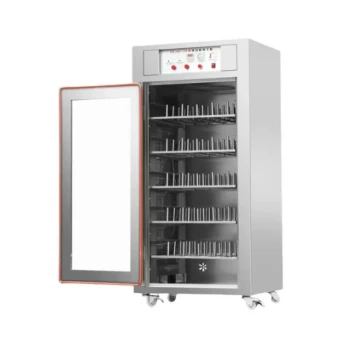
The primary role of a vacuum drying oven in bee pollen post-processing is to ensure biological stabilization and food safety through controlled moisture removal. While simple freezing merely halts biochemical reactions temporarily, vacuum drying actively reduces pathogenic microorganisms, eliminates mold and yeast, and lowers moisture content to a level that prevents future spoilage.
Core Takeaway Freezing acts as a "pause button" for biological activity, whereas vacuum drying is a stabilization process that transforms raw pollen into a commercially safe product. By reducing moisture to 10–12% under vacuum, drying ensures long-term shelf stability and compliance with safety standards while preserving sensitive nutrients.
The Mechanism of Stabilization
Microbial Reduction and Safety
The most critical function of the vacuum drying oven is the reduction of microbial indicators.
According to standard safety protocols, this process significantly lowers the count of pathogenic and opportunistic microorganisms. Unlike freezing, which leaves microbes dormant but alive, vacuum drying effectively eliminates mold and yeast to meet strict food safety requirements.
Moisture Control
Raw bee pollen is highly susceptible to spoilage due to its high water content.
Industrial vacuum ovens reduce this moisture to a precise, stable range of 10% to 12%. By removing the water required for bacterial life, the equipment creates an environment where microbial growth is physically inhibited.
Preserving Bioactivity During Processing
Controlled Temperature Regulation
Heat sensitivity is a major concern when processing bee pollen.
Vacuum drying ovens operate at gentle, controlled temperatures, typically between 40°C and 45°C. This specific range allows for dehydration without subjecting the pollen to the high heat that would degrade its nutritional profile.
Protection of Nutrients
Standardized dehydration preserves the chemical stability of the pollen.
This method ensures that heat-sensitive bioactive substances, particularly enzymes, carotenoids, and Vitamin B complexes, remain intact. Research suggests that this concentration of solids can even enhance the density of antioxidant substances.
The Role of Freezing vs. Drying
Freezing: The "Pause Button"
Freezing, typically at -20°C, serves a fundamentally different purpose than drying.
Its primary role is to immediately terminate biochemical reactions to preserve the pollen's original characteristics. It prevents degradation but does not alter the physical composition of the sample.
Drying: The Stabilization Solution
While freezing maintains the "raw" state, it requires a constant cold chain to prevent spoilage.
Vacuum drying provides a stable physical state for the pollen. This allows for accurate weighing, packaging, and long-term preservation without the need for continuous refrigeration.
Understanding the Trade-offs
Logistics and Shelf Life
The choice between these methods often dictates the product's logistical requirements.
Freezing requires expensive cold-chain logistics; once the product thaws, microbial degradation restarts immediately. Vacuum dried pollen is shelf-stable at room temperature, making it the superior choice for commercial distribution.
Texture and Volume
Freezing retains the original plumpness and texture of the fresh pollen grain.
Drying reduces the water volume, resulting in a harder, dehydrated granule. While this changes the mouthfeel, it is a necessary trade-off for ensuring the product remains free of mold and pathogens during storage.
Making the Right Choice for Your Goal
To select the correct processing method, you must determine the end-use of the bee pollen.
- If your primary focus is Commercial Distribution: Utilize vacuum drying to achieve a moisture content of 10-12%, ensuring the product is safe from mold and stable on retail shelves.
- If your primary focus is Laboratory Analysis: Utilize freezing at -20°C to immediately stop biochemical reactions and analyze the pollen in its raw, unaltered state.
- If your primary focus is Nutrient Density: Utilize vacuum drying at 40-45°C to concentrate antioxidants and preserve Vitamin B complexes without thermal degradation.
Select the method that aligns with your safety requirements and your supply chain capabilities.
Summary Table:
| Feature | Simple Freezing (-20°C) | Vacuum Drying (40-45°C) |
|---|---|---|
| Primary Role | Halts biochemical reactions | Biological stabilization & safety |
| Moisture Content | Remains high (raw state) | Reduced to 10–12% |
| Microbial Impact | Dormant but alive | Effectively eliminates mold & yeast |
| Shelf Life | Requires constant cold chain | Shelf-stable at room temperature |
| Nutrient Preservation | Maintains original profile | Preserves enzymes & concentrates antioxidants |
| Logistics | Expensive & complex | Cost-effective for distribution |
Elevate Your Apiary Production with HONESTBEE
Transitioning from raw harvest to commercial success requires the right equipment. HONESTBEE specializes in empowering commercial apiaries and distributors with high-performance beekeeping tools and machinery.
Whether you need precision vacuum drying ovens to ensure food safety, honey-filling machines for efficient packaging, or high-quality beekeeping consumables, our comprehensive wholesale offering is designed to scale your business.
Partner with HONESTBEE to optimize your processing workflow and deliver premium-grade pollen products to the global market.
→ Contact Our Experts for a Custom Equipment Quote
References
- М.А. Попкова, Н.В. Будникова. ЕVALUATION OF MICROBIOLOGICAL OBSEMINATION OF BEE POLLEN. DOI: 10.36508/rsatu.2022.47.50.006
This article is also based on technical information from HonestBee Knowledge Base .
Related Products
- 0.5T Capacity Honey Dehumidifier Dryer with Vacuum Heating and Thickening Filtering Machine
- HONESTBEE Professional Cabinet Bottle Dryer
People Also Ask
- What is the primary function of professional dehumidification equipment in honey processing? Stability & Quality
- How to dry up honey? The Safe Guide to Stabilizing Honey and Preventing Fermentation
- What is the process for using a dehumidifier to lower honey's moisture content? Expert Drying Techniques
- How to decrease moisture in honey? Prevent Fermentation and Ensure Long-Term Quality
- How to remove humidity from honey? Protect Your Harvest from Fermentation