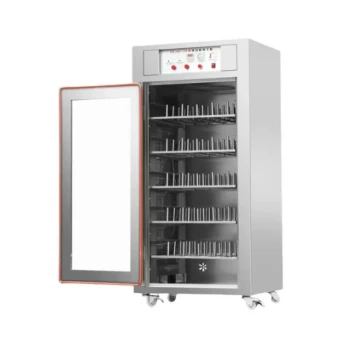
The drying cabinet functions as a critical stabilization tool in the pollen sample processing workflow. It utilizes constant-temperature drying—often set to 55°C—to remove excess moisture from homogenized samples, ensuring they are chemically prepared for downstream analysis.
By eliminating residual water, the drying cabinet prevents the unintended dilution of chemical reagents. This step is fundamental to maximizing the efficiency of chemical lysis and ensuring high-quality DNA purification results.
Optimizing for Chemical Analysis and DNA Extraction
Preventing Reagent Dilution
The primary technical objective of the drying cabinet is to control the water content within the pollen sample.
If a sample retains excess moisture, that water will release into the solutions used during processing, effectively watering them down.
By drying the sample first, you ensure that the concentrations of subsequent chemical reagents remain accurate and effective.
Enhancing Lysis Efficiency
Effective chemical lysis (the breaking down of cells) relies on precise chemical conditions.
The primary reference indicates that drying homogenized samples at 55°C creates a stable state that improves the efficiency of this lysis step.
Without this stabilization, the extraction of genetic material may be inconsistent or incomplete.
Ensuring Sample Homogeneity
Before drying, pollen samples are often homogenized to create a uniform mixture.
The drying cabinet locks this uniformity in place by bringing the entire batch to a stable, dry state.
This consistency is vital for reproducibility across multiple experiments or extraction cycles.
Biological Stability and Preservation
Inhibiting Microbial Growth
Fresh pollen is naturally high in moisture (often 20%–30%), making it highly susceptible to spoilage.
Drying cabinets rapidly reduce this moisture content (often to below 10%), removing the environment required for mold and bacteria to reproduce.
Extending Shelf Life
Beyond immediate processing, drying is a preservation technique.
By maintaining a controlled thermal environment, the equipment ensures the pollen remains safe for storage without degrading.
This allows for a longer window between collection and analysis without compromising the sample's integrity.
Understanding the Trade-offs
Temperature Sensitivity
Selecting the correct temperature is a balance between speed and preservation.
While 55°C is cited for DNA workflow efficiency, lower temperatures (37°C–42°C) are often preferred if preserving heat-sensitive bioactive substances or antioxidants is the priority.
Risk of Over-Drying or Thermal Degradation
Excessive heat or prolonged exposure can degrade certain delicate compounds within the pollen.
It is critical to adhere to the specific temperature protocols (e.g., constant 55°C) to avoid damaging the target analytes, whether they are DNA strands or mineral components.
Making the Right Choice for Your Goal
The specific settings you use on a drying cabinet depend heavily on your downstream applications.
- If your primary focus is DNA Purification: Utilize a constant temperature of 55°C to maximize lysis efficiency and prevent reagent dilution.
- If your primary focus is Bioactive Preservation: Opt for lower temperatures (around 37°C–40°C) to inhibit microbial growth while protecting antioxidant levels.
- If your primary focus is Mineral Analysis: Maintain a stable environment (around 42°C) to dehydrate the sample sufficiently for accurate compositional testing.
Ultimately, the drying cabinet transforms a variable, moisture-rich biological raw material into a stable, consistent analyte ready for precise scientific measurement.
Summary Table:
| Process Phase | Goal of Drying Cabinet | Technical Benefit |
|---|---|---|
| Pre-Analysis | Moisture Removal | Prevents dilution of chemical reagents |
| Chemical Lysis | Thermal Stabilization | Maximizes cell breakdown efficiency at 55°C |
| Sample Preservation | Microbial Inhibition | Extends shelf life by reducing water activity |
| Bioactive Recovery | Low-Temp Dehydration | Protects antioxidants at 37°C–40°C |
| Mineral Analysis | Constant Dehydration | Ensures accurate compositional measurement |
Maximize Your Apiary Productivity with HONESTBEE
At HONESTBEE, we understand that precision is paramount for commercial apiaries and distributors. Whether you are processing pollen for high-purity DNA analysis or preparing it for retail, our comprehensive range of specialized hardware—including honey-filling machines, hive-making equipment, and essential beekeeping tools—is designed to enhance your efficiency and output.
Partner with us to access professional-grade machinery and industry consumables tailored to your wholesale needs. Contact HONESTBEE today to discover how our equipment can streamline your workflow and grow your honey-themed business!
References
- Marie L. Davey, Graciela M. Rusch. Seasonal variation in urban pollen resource use by north temperate European honeybees. DOI: 10.1007/s11252-023-01458-1
This article is also based on technical information from HonestBee Knowledge Base .
Related Products
- HONESTBEE Professional Cabinet Bottle Dryer
- High Quality Honey Dehumidifier Dryer Thickening Machine for Beekeeping
- Removable Plastic Pollen Trap With Ventilated Tray for Bees Pollen Collector
- 0.5T Capacity Honey Dehumidifier Dryer with Vacuum Heating and Thickening Filtering Machine
People Also Ask
- Why use a Cabinet Drier for pollen at 38–41°С? Protect Sample Integrity and Heavy Metal Data Accuracy
- What is the role of an industrial forced-air drying oven in bee bread fermentation? Optimize Moisture and Nutrients
- What is the primary purpose of a constant temperature drying oven in bee bread production? Achieve Perfect Fermentation
- How do forced circulation drying ovens sterilize beekeeping tools? Efficient Oxidation for Metal Equipment Safety
- What are the technical requirements for using a constant temperature drying oven for raw propolis? Expert Guide