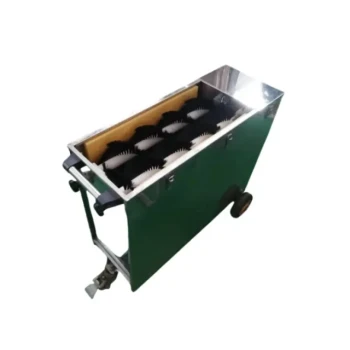
The primary purpose of using industrial dehumidifiers in the pretreatment of stingless bee pot-pollen is to achieve controlled drying that stabilizes the sample. By maintaining a constant, moderate temperature (typically 30°C), this process effectively reduces water activity ($a_w$) to preserve the material's integrity without using excessive heat.
The core objective of this process is biological and chemical stabilization. By removing moisture at low temperatures, you inhibit the growth of spoilage microorganisms and arrest biochemical degradation, ensuring the sample remains chemically representative during transport and analysis.
The Science of Stabilization
To understand why industrial dehumidifiers are necessary, one must look beyond simple drying and understand the biological imperatives of the sample.
Reducing Water Activity ($a_w$)
The fundamental goal of using a dehumidifier is the reduction of water activity. Water activity represents the amount of free water available for biological functions, which is distinct from total moisture content.
Inhibiting Microbial Spoilage
Freshly collected pot-pollen is highly susceptible to biological contaminants. By lowering the water activity, the dehumidification process creates an environment where spoilage microorganisms cannot survive or proliferate.
Controlled Temperature Regulation
Unlike standard heating ovens, industrial dehumidifiers in this context operate at a controlled, constant temperature, such as 30°C. This specific thermal regulation is critical to removing moisture without "cooking" the sample.
Preserving Chemical Integrity
The value of stingless bee pot-pollen lies in its complex chemical and physical properties. Preserving these properties is the "deep need" addressed by dehumidification.
Slowing Biochemical Degradation
Biological samples are dynamic; they naturally degrade over time through enzymatic and chemical reactions. Prolonged dehumidification slows these biochemical processes down significantly.
Ensuring Analytical Accuracy
For researchers and producers, the end goal is often detailed analysis. This pretreatment ensures that the physical and chemical properties observed in the lab accurately reflect the original sample, rather than artifacts of degradation.
Stability During Logistics
Samples often require transportation before they can be processed or analyzed. The stability provided by this drying method ensures the pot-pollen withstands the duration of transport without spoiling.
Understanding the Trade-offs
While industrial dehumidification is highly effective for preservation, it involves specific operational considerations that distinguish it from other drying methods.
The Time vs. Temperature Exchange
The primary trade-off in this process is time. Because the process relies on a low temperature (30°C) to protect the sample's chemical structure, the drying period must be "prolonged" to be effective.
Throughput Limitations
This is not a rapid-fire processing method. If speed is the only priority, higher heat would be faster, but it would compromise the sample's quality. You are trading processing speed for higher retention of bio-active properties.
How to Apply This to Your Project
When establishing a pretreatment protocol for stingless bee pot-pollen, your specific end-goals should dictate your strict adherence to these parameters.
- If your primary focus is Sample Preservation: Prioritize achieving a sufficiently low water activity ($a_w$) above all else to strictly inhibit microbial growth.
- If your primary focus is Chemical Analysis: Strictly monitor the temperature to ensure it remains constant (e.g., 30°C) to prevent thermal degradation of sensitive compounds.
Effective pretreatment balances moisture removal with thermal protection to deliver a stable, high-quality product.
Summary Table:
| Feature | Purpose | Impact on Pot-Pollen |
|---|---|---|
| Temperature Control | Constant 30°C setting | Prevents thermal degradation and "cooking" of samples |
| Water Activity ($a_w$) | Reduction of free water | Inhibits microbial spoilage and biological growth |
| Dehumidification | Controlled moisture removal | Arrests biochemical degradation for stable transport |
| Processing Time | Prolonged low-heat drying | Ensures maximum retention of sensitive bio-active properties |
Elevate Your Beekeeping Operation with HONESTBEE
At HONESTBEE, we understand that preserving the delicate properties of hive products like stingless bee pot-pollen requires precision. Whether you are a commercial apiary or a global distributor, our comprehensive wholesale solutions are designed to support your success.
Why partner with HONESTBEE?
- Specialized Machinery: From honey-filling machines to advanced hive-making equipment.
- Premium Tools & Consumables: A full spectrum of beekeeping hardware and essential industry supplies.
- Cultural Merchandise: Unique honey-themed products to expand your market reach.
Ready to enhance your production quality and scale your business? Contact our expert team today to discover how our tailored equipment and wholesale offerings can optimize your apiary's efficiency.
References
- Ma. Desiree Belina‐Aldemita, Stefano D’Amico. Safety aspects of stingless bee pot-pollen from the Philippines. DOI: 10.2478/boku-2020-0009
This article is also based on technical information from HonestBee Knowledge Base .
Related Products
- High Quality Honey Dehumidifier Dryer Thickening Machine for Beekeeping
- Economy Small Scale Honey Dryer Dehumidifier Thickening Machine
- Honey Concentrating and Filtering Dehumidifier Machine 2T Capacity for Honey
- 0.5T Capacity Honey Dehumidifier Dryer with Vacuum Heating and Thickening Filtering Machine
- High Performance Cordless Electric Bee Shaker for Beekeeping
People Also Ask
- Can you dehumidify honey? A Beekeeper's Guide to Preventing Fermentation
- How to dry up honey? The Safe Guide to Stabilizing Honey and Preventing Fermentation
- How can the moisture content of honey be reduced? A Guide to Safe, Effective Drying Methods
- How to remove humidity from honey? Protect Your Harvest from Fermentation
- What is the process for using a dehumidifier to lower honey's moisture content? Expert Drying Techniques