The primary working principle of a pollen trap is mechanical separation via a physical barrier. Specifically, these devices utilize grids or screens with precise hole sizes installed at the hive entrance. As foraging bees return and attempt to squeeze through these apertures, the pollen pellets stored on their hind legs are physically scraped off and fall into a collection tray, leaving the bee unharmed.
The mechanism relies entirely on aperture precision: the grid openings must be perfectly calibrated to allow the worker bee's body to pass through while being just narrow enough to dislodge the pollen load carried in the pollen baskets.
The Mechanics of Extraction
The Physical Barrier
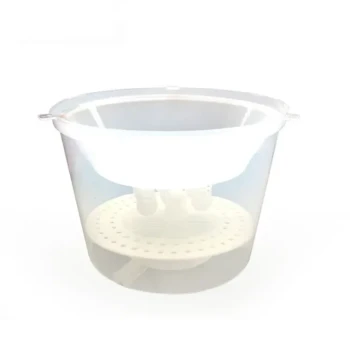
The core component of any pollen trap is a grid or screen containing a matrix of small holes. This hardware is installed directly at the entrance of the beehive, acting as a mandatory gateway for returning foragers.
The Stripping Action
As a bee navigates the grid, it must force its body through the narrow opening. This "squeeze" creates friction against the hind legs, where pollen pellets are stored.
The grid effectively acts as a scraper. It mechanically dislodges the pollen balls from the bee's legs without damaging the insect's body or wings.
Gravity-Fed Collection
Once the pellets are stripped from the bee, they are no longer supported by the insect. Gravity takes over, causing the dislodged pollen to fall through a secondary screen or directly into a collection drawer located beneath the main grid.
Operational Efficiency and Context
Ensuring Purity and Quality
By mechanically separating the pollen at the point of entry, the trap ensures the raw material remains clean. This method provides the necessary preliminary purity required for commercial bee pollen or scientific analysis.
Batch Processing
This design allows for the mechanized, batch collection of pollen. Rather than harvesting from individual frames inside the hive, the beekeeper can collect the aggregate yield of the entire colony from the external tray.
Timing and Deployment
To maximize efficiency, these traps are often deployed during peak foraging periods, typically between 6:00 AM and 11:00 AM. This captures the bulk of the incoming resources while minimizing disruption to the colony during the rest of the day.
Understanding the Trade-offs
Impact on Colony Nutrition
While the trap is designed to be harmless, it literally removes food from the hive. Over-use of the trap can negatively impact the development of the colony by depriving it of essential proteins.
Drone Access Limitations
The grid holes are sized for worker bees. Drones (male bees) are physically larger and cannot pass through the stripping grid.
Therefore, the trap must have a mechanism to be disabled or opened. Beekeepers must regularly slide out the grille or lift the barrier to provide unimpeded access for drones and to allow the colony to replenish its own stores.
Making the Right Choice for Your Goal
When implementing pollen traps in your apiary, your approach should shift based on your end goal.
- If your primary focus is Commercial Production: Deploy traps strictly during peak foraging hours (morning) to maximize yield while allowing the colony to feed itself in the afternoon.
- If your primary focus is Colony Health: Ensure the trap design allows for easy removal or "open" modes to prevent trapping drones inside or locking them out.
- If your primary focus is Scientific Sampling: Use the trap intermittently to gather diet samples for plant species identification without compromising the long-term viability of the test colony.
Mastering the use of pollen traps requires balancing the mechanical efficiency of the grid with the biological needs of the hive.
Summary Table:
| Component | Function | Material/Action |
|---|---|---|
| Stripping Grid | Physical barrier that dislodges pollen | Precision-calibrated apertures |
| Squeeze Mechanism | Creates friction against hind legs | Mechanical stripping action |
| Collection Tray | Gathers falling pollen pellets | Gravity-fed drawer |
| Bypass Mode | Allows drone access and colony feeding | Removable/Slide-out grille |
Maximize Your Harvest Efficiency with HONESTBEE
At HONESTBEE, we specialize in empowering commercial apiaries and distributors with the industry's most reliable beekeeping machinery and tools. Whether you are scaling up production with automated honey-filling machines or optimizing your harvest with precision pollen traps and hive-making equipment, we provide the full spectrum of essential consumables and hardware to grow your business.
Ready to elevate your apiary's productivity? Contact us today to explore our comprehensive wholesale offerings and discover how our expert-grade equipment can streamline your operations and boost your yield.
References
- Gianluigi Mauriello, Emilio Caprio. Microbial characterization of bee pollen from the Vesuvius area collected by using three different traps. DOI: 10.1371/journal.pone.0183208
This article is also based on technical information from HonestBee Knowledge Base .
Related Products
- Removable Plastic Pollen Trap With Ventilated Tray for Bees Pollen Collector
- 30 cm Plastic Entrance Hole Bee Pollen Trap and Collector
- Plastic Bee Pollen Trap Strips Comb Catcher Collector
- High-Efficiency Diamond Maze Bee Escape for Clearing Supers
- Professional Bucket Style Wasp and Moth Pheromone Trap
People Also Ask
- What are the design principles and advantages of pollen traps in the collection of bee pollen? Boost Your Apiary Yield
- What is the function of professional pollen traps in evaluating honey plants? Quantifying Pollination and Crop Potential
- What functions do pollen traps serve for bee bread production? Optimize Your Raw Material Collection
- What maintenance and pest prevention measures should be taken for pollen traps? Protect Your Hive and Harvest Quality
- How does the use of pollen traps in honeybee hives enhance crop fertilization? Boost Your Yield Through Induced Activity