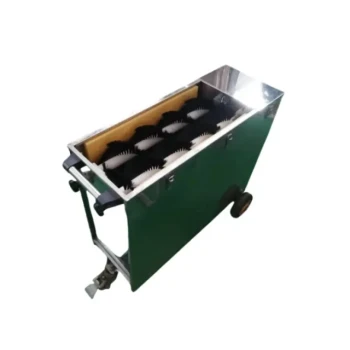
The electronic honeybee venom collector functions by utilizing controlled, low-voltage electrical impulses to stimulate a defensive reaction in worker bees. When placed within or at the entrance of a hive, these weak pulses irritate the bees, provoking them to sting a specific collection surface—typically a glass plate—where the venom is safely deposited.
The device allows for the large-scale extraction of bee venom by triggering a natural stinging reflex without causing the bee to lose its stinger. This non-lethal method ensures the venom dries rapidly for industrial processing while preserving the life of the colony.
The Mechanics of Electrical Stimulation
Inducing the Defensive Reflex
The core operating principle involves generating a series of weak electrical pulses. These pulses act as a stressor, simulating an external threat to the colony.
The electrical current is carefully calibrated. It must be strong enough to annoy the bees and trigger an immediate stinging response, yet weak enough to prevent physical injury to the insects.
The Function of the Collection Plate
Once stimulated, the bees attack the source of the irritation: the collection plate. This plate is almost exclusively made of glass or a similar hard, smooth material.
Because the surface is impenetrable, the bee's barbed stinger cannot become embedded. This is the critical innovation that prevents the bee from eviscerating itself, allowing it to retract its stinger and survive the encounter.
Venom Preservation and Harvesting
Rapid Drying and Crystallization
As the bees sting the glass plate, they deposit droplets of fresh, liquid venom. This venom is immediately exposed to the air at room temperature.
The liquid quickly loses its moisture and transforms into a crystalline solid. This rapid drying process prevents degradation and stabilizes the venom for long-term storage.
Preparation for Purification
Once the collection cycle is complete, the plates are removed from the hive. The dried, crystallized venom is scraped off the glass surface.
This raw material is then ready for industrial purification. It is subsequently used in various pharmaceutical and cosmetic applications without requiring the destruction of the hives.
Understanding the Trade-offs
Non-Lethal Extraction vs. Colony Stress
The primary advantage of this technology is ethical and economic: it does not kill the bees. Traditional manual methods or older techniques often resulted in the death of the bee.
However, the process relies entirely on inducing stress. The electrical stimulation agitates the hive, temporarily increasing aggression levels among the worker bees.
Balancing Yield and Health
While the bees survive, the energy expenditure required to produce venom and the stress of the "attack" can be taxing. Overuse of the collector can potentially weaken the colony or disrupt other hive activities, such as foraging or honey production.
Optimizing Collection for Sustainability
To utilize this technology effectively, one must balance the demand for venom with the biological needs of the hive.
- If your primary focus is maximum yield: Ensure the collector is active during peak hive activity hours to expose the highest number of worker bees to the electrical stimulus.
- If your primary focus is colony longevity: Limit the duration and frequency of electrical stimulation to preventing exhausting the bees or causing permanent aggressive behavioral changes.
Electronic collection represents the industry standard for ethical venom harvesting, balancing commercial yield with the biological preservation of the hive.
Summary Table:
| Feature | Description |
|---|---|
| Mechanism | Low-voltage electrical stimulation |
| Surface | Impenetrable glass plate (prevents stinger loss) |
| Bee Impact | Non-lethal; triggers natural defensive reflex |
| Harvest State | Rapidly dried crystalline venom |
| Applications | Pharmaceutical and cosmetic industries |
Scale Your Apiary Operations with HONESTBEE
Are you looking to expand your commercial venom production or optimize your hive productivity? HONESTBEE specializes in serving commercial apiaries and distributors with high-performance beekeeping machinery and tools.
From advanced electronic venom collectors and honey-filling machines to specialized hive-making hardware and essential industry consumables, we provide everything needed to run a professional-scale operation. Our mission is to deliver durable, efficient solutions that maximize your yield while protecting your bees.
Ready to upgrade your equipment? Contact us today to discuss our wholesale offerings and discover how HONESTBEE can support your business growth.
References
- Merzban Fatma., Abd El-Gayed Atef. EFFECT OF VENOM COLLECTION ON HYGIENIC AND HOARDING BEHAVIOR IN HONEYBEE. DOI: 10.21608/fjard.2021.222902
This article is also based on technical information from HonestBee Knowledge Base .
Related Products
- Full Set Beekeeping Electronic Bee Venom Collector Machine Device for Bee Venom Collecting
- Portable Electric Bee Vacuum with Lithium Battery and 20L Collection Bucket
- Commercial Grade Vertical Electric Bee Sweeper for Bee Removal
- HONESTBEE Collapsible Tiered Bee Swarm Catcher for Beekeeping
- Electric Bee Smoker European Style Bee Hive Smoker for Beekeeping
People Also Ask
- How does the glass plate integrated into a bee venom collector contribute to maintaining quality and purity?
- What is the function of specialized collection equipment in the production process of bee venom? Expert Guide
- What is the significance of using specialized bee venom collection devices in commercial beekeeping operations?
- Why are bee venom collection devices typically mounted on specialized wooden carrier boards? Maximize Yield & Purity.
- How does a dedicated bee venom collection device operate? Extract Pure Venom Safely Without Harming Your Bees