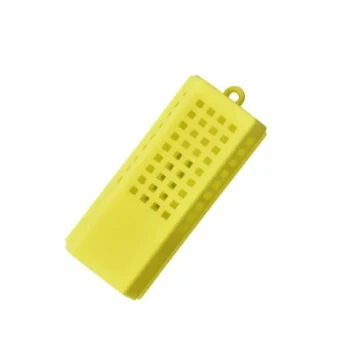
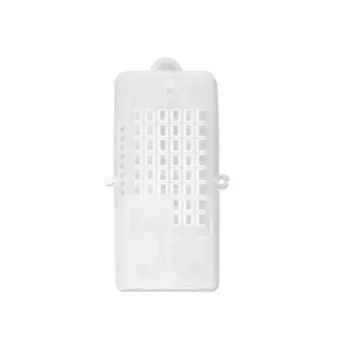
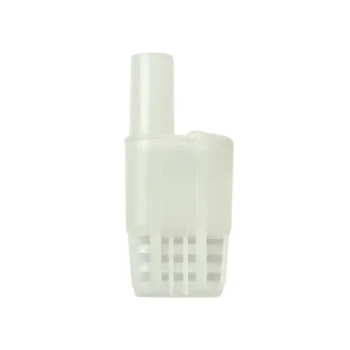
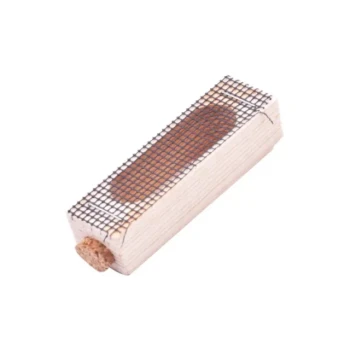
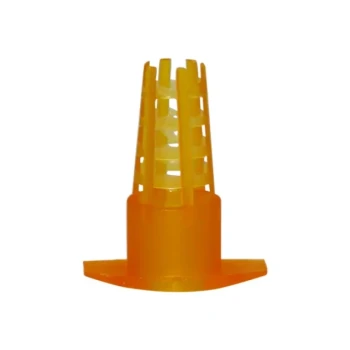
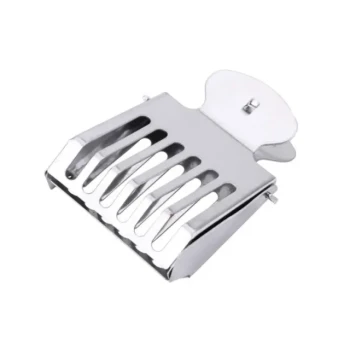
To introduce a purchased queen bee using a transport box, the procedure requires preparing the candy plug to act as a timed release mechanism. You must remove the cork covering the candy end, use a pin to poke a small hole through the sugar, and then place the box inside the hive to allow workers to release her over a period of approximately two days.
The candy plug is not merely food; it is a biological timer. By forcing the colony to chew through the barrier over 48 hours, you provide the critical duration necessary for the new queen's pheromones to permeate the hive, ensuring she is accepted rather than attacked.
The Mechanics of a Successful Introduction
Preparing the Transport Box
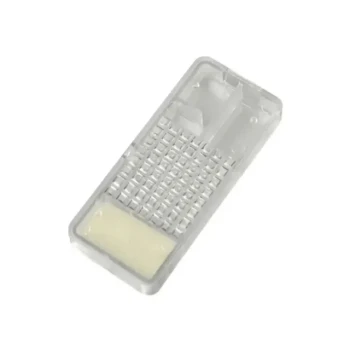
Your new queen arrives in a specialized transport box. One end of this box features a candy plug, which serves as both a food source and the door for her eventual release.
Typically, this candy plug is sealed with a cork or cap during shipping. You must identify this specific end of the cage before proceeding.
Initiating the Release Sequence
To begin the introduction, physically remove the cork that covers the candy plug.
Do not remove the screen or the cork on the opposite end, as this would release the queen immediately, likely resulting in her rejection or death.
Creating the Access Path
Once the cork is removed, take a pin or small nail and poke a small hole directly through the center of the candy plug.
This step is vital because it creates a scent channel and gives the worker bees a clear starting point. It encourages them to begin eating through the sugar barrier immediately.
Placement and Timing
Place the prepared box into the hive structure. Over the next two days, the worker bees will eat through the candy to widen the hole you created.
This specific duration is deliberate. It facilitates the slow integration of the queen, allowing the colony to acclimate to her presence before she walks out onto the combs.
Understanding the Necessity of Delay
The Risk of Immediate Contact
The primary reason for using a candy plug is to prevent immediate physical contact between the new queen and the colony.
If a queen is released instantly, the colony will likely identify her as a foreign intruder. This usually leads to the workers attacking and killing her.
The Role of the Pin Hole
Poking the hole is a small but critical detail in the procedure.
Without this pilot hole, the workers may be slow to recognize the candy as a release route. This could leave the queen trapped in the box for too long, potentially stressing or starving her.
Ensuring a Smooth Transition
If your primary focus is maximum acceptance probability: Always check that the candy plug is thick enough to require roughly 48 hours of chewing; this time buffer is your best defense against aggression.
If your primary focus is procedure verification: Return to the hive after two to three days to verify the candy is gone and the queen has successfully exited the transport box.
The candy plug transforms a hostile introduction into a gradual, pheromone-driven acceptance process.
Summary Table:
| Step | Action Item | Critical Success Factor |
|---|---|---|
| 1. Preparation | Identify the candy plug end | Do not remove the screen or secondary cork |
| 2. Unsealing | Remove the candy-end cork | Ensures bees can access the sugar barrier |
| 3. Initiation | Poke a hole with a pin | Creates a scent channel for pheromone exchange |
| 4. Placement | Secure box in the hive | Position between frames where workers are active |
| 5. Release | Wait 48 hours for entry | Allows colony to acclimate to the new pheromones |
Maximize Your Apiary Productivity with HONESTBEE
Successful queen introduction is just the beginning of a thriving apiary. At HONESTBEE, we understand the precision required by commercial beekeeping operations and distributors. We provide a comprehensive wholesale range of high-quality tools designed for professionals—from durable queen transport systems and hive-making machinery to advanced honey-filling equipment and essential consumables.
Whether you are scaling your honey production or supplying the next generation of beekeepers, our expert team is here to support your growth with reliable hardware and industry-leading expertise.
Ready to elevate your beekeeping business? Contact us today to explore our wholesale solutions!
Related Products
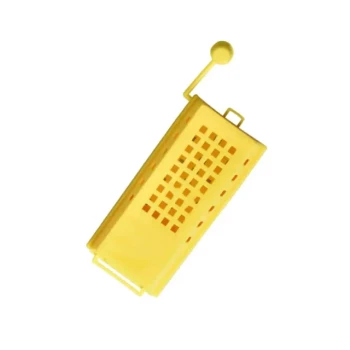
- Professional Queen Cage with Sliding Gate and Feeder Plug
- Professional Queen Bee Introduction and Transport Cage
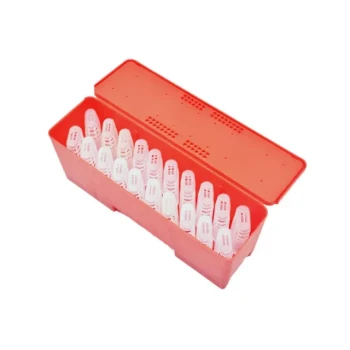
- JZBZ Style Professional Battery Box with 20 Shipping Cages
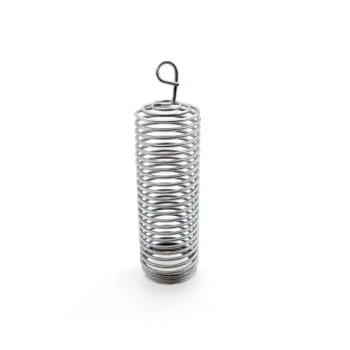
- Durable Galvanized Steel Spring Queen Bee Cage
- Professional Multi-Compartment Queen Cage with Sliding Lid
People Also Ask
- Why are specialized queen bee cages used for the banking of mated queen bees? Maximize Commercial Apiary Storage Efficiency
- What is the mechanism of action for using temporary queen bee cages? Master Successful Queen Introduction
- How is a queen bee released from a queen cage? Ensure Safe Colony Integration & Hive Success
- What is the step-by-step process for installing a queen bee's cage onto a frame? Ensure Hive Acceptance Safely
- What technical precaution must be taken regarding the mesh or grill side of a queen bee cage? Ensure Queen Survival