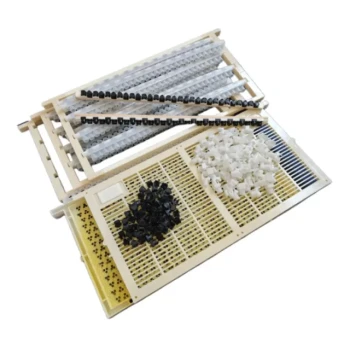
On Day 2, the focus shifts to constructing a high-density cell-building nucleus colony. This procedure requires transferring one frame of young larvae and capped brood along with three frames of food stores into a five-frame nuc box, then shaking in a surplus of nurse bees to ensure the population is sufficient to care for future queen cells.
The primary objective on Day 2 is to engineer a localized environment of "queenlessness" and resource abundance. By concentrating nurse bees and food in a confined space, you trigger the biological drive necessary to raise high-quality queens.
Constructing the Cell-Building Colony
The physical composition of the colony is the most critical variable on Day 2. You are essentially creating a specialized nursery designed to accept grafts.
Frame Selection
You must transfer specific resources from a strong colony into a five-frame nuc box.
Select one frame containing young larvae and capped brood.
Select three frames rich in pollen and honey stores.
Increasing Nurse Bee Density
Mere transfer of frames is insufficient for queen rearing; you need an overabundance of young bees.
Shake nurse bees from four to five additional brood frames into the nuc box.
This ensures the colony has a high population of young bees capable of producing the royal jelly required for the larvae.
Environmental Controls
Once the colony is assembled, you must manage its environment to retain the population and secure the resources.
Relocation to Prevent Drifting
The nuc box must be moved to a different location from the parent colony.
If left near the original site, older foraging bees will drift back to their original hive, depleting the nuc's population.
Entrance and Diet Management
Reduce the entrance of the nuc box to defend against robbers and conserve heat.
Provide feed immediately to stimulate wax production and glandular secretion in the nurse bees.
Equipment Preparation
While the biological unit is settling, you must prepare the physical equipment for the grafting process.
Preparing the Cell Bar Frame
Separately from the colony setup, you must prepare the frame that will hold the future queens.
Insert pin cell cups into a cell bar frame.
Ensure these cups are spaced approximately three-fourths of an inch apart to allow room for the queen cells to develop without fusing.
Critical Considerations for Success
There are specific operational risks involved in the Day 2 procedure that can undermine the entire grafting process.
The Risk of Population Loss
The most common point of failure is an insufficient population of nurse bees.
If you do not move the colony or fail to shake enough bees, the nuc will lack the "bee density" required to warm the brood and accept the grafts. The relocation step is not optional; it is the mechanism that forces the bees to reorient and stay with the new unit.
Resource Balancing
Using only one frame of brood limits the amount of pheromone present, which encourages the bees to build emergency queen cells.
However, you must balance this with ample food stores (three frames). Without immediate access to pollen and honey, the nurse bees cannot produce the rich nutrition required for the larvae.
Making the Right Choice for Your Goal
The precision of your Day 2 setup dictates the acceptance rate of your grafts later in the process.
- If your primary focus is maximum acceptance: Prioritize shaking bees from at least five brood frames to ensure the nuc box is overflowing with nurse bees.
- If your primary focus is graft quality: Ensure the three food frames are heavy with fresh pollen, as this is the raw material for royal jelly production.
Success on Day 2 comes down to creating a crowded, resource-rich environment that is desperate to raise a queen.
Summary Table:
| Step | Action Item | Requirement/Specification |
|---|---|---|
| Frame Selection | Brood & Larvae | 1 frame of young larvae and capped brood |
| Food Stores | Pollen & Honey | 3 frames rich in essential food resources |
| Bee Density | Nurse Bees | Shake bees from 4-5 additional brood frames |
| Environmental | Relocation | Move to a different site to prevent drifting |
| Equipment | Cell Bar Frame | Space pin cell cups 3/4 inch apart |
| Maintenance | Feed & Security | Provide immediate feed and reduce entrance |
Scaling Your Apiary? Partner with HONESTBEE for Professional Solutions
At HONESTBEE, we specialize in empowering commercial apiaries and distributors with the high-performance tools necessary for successful queen rearing and honey production. From specialized hive-making machinery and honey-filling systems to a comprehensive range of beekeeping tools and consumables, we provide the industrial-grade equipment your business demands.
Whether you are expanding your queen-rearing operations or sourcing wholesale supplies for your distribution network, our expertise ensures your success. Contact HONESTBEE today to discuss how our tailored wholesale solutions can enhance your efficiency and elevate your apiary's productivity.
Related Products
- 5 Frame Wooden Nuc Box for Beekeeping
- Retractable Chinese Queen Rearing Grafting Tools Equipment
- Clear Black Plain Polystyrene Queen Bee Grafting Cell Cups No Lug for Bee Queen Cup
- Premium Nicot Style Cell Bar Holder and Queen Cell Cup Holder System
- Nicot Queen Rearing Kit for Beekeeping and Grafting in Nicot System
People Also Ask
- What are the options for adding frames to a nuc after taking two frames from the parent colony?
- What frames should be moved into the queenless hive when requeening with a nuc? Ensure a Successful Queen Introduction
- What roles do five-frame nucleus boxes and ten-frame Langstroth hive boxes play in colony standardization?
- What is the primary function of five-frame nuclei boxes? Master Early Colony Establishment for Stronger Hives
- What is the typical composition of frames in a nuc? A 5-Frame Blueprint for a Thriving Hive