Cooling propolis collection tools is a critical preparatory step for efficient material recovery. At room temperature, propolis acts as a sticky, plastic adhesive that clings stubbornly to collection grids and tools. Lowering the temperature to approximately +5 degrees Celsius triggers a physical phase change, transforming the substance from a gummy state to a brittle one that fractures cleanly during separation.
By chilling the tools for roughly 60 minutes, you effectively alter the material properties of the propolis, allowing it to be stripped away cleanly rather than smearing, which maximizes yield and prepares the raw material for deep processing.
The Physics of Propolis Extraction
The Challenge of Viscoelasticity
At standard ambient temperatures, propolis exhibits viscoelastic properties. This means it behaves like a sticky dough or glue.
Trying to scrape or remove it in this state requires significant force. It often results in the material stretching and smearing across the collection equipment rather than separating.
The Brittle Transition
When cooled to +5 degrees Celsius, propolis undergoes a glass transition-like change. It loses its plasticity and becomes rigid.
In this brittle state, the bond between the propolis and the substrate (the tool or grid) is easier to break. Instead of bending, the material snaps and flakes off.
Operational Benefits of Cooling
Enhancing Separation Speed
The primary reference indicates that a cooling duration of about 60 minutes is ideal. This ensures the cold penetrates the entire mass of the tool and the propolis accumulation.
Once chilled, specialized cleaning equipment or manual hive tools can dislodge the propolis rapidly. This significantly reduces the labor hours required to clean collection grids.
Preserving Particle Integrity
Scraping warm propolis often creates a compressed, gummy mass. Cooling allows the material to be collected as distinct particles or flakes.
Maintaining the integrity of these particles is essential for the next steps. It ensures the raw material is in the optimal physical form for subsequent deep processing or refinement.
Understanding the Trade-offs
The Window of Opportunity
The brittleness of propolis is temporary and temperature-dependent. As soon as the tools are removed from the refrigerated environment, they begin to warm up.
Operators have a limited time window to process the grids before the propolis reverts to its sticky, plastic state. Efficiency is paramount; delays will result in the material becoming unworkable again.
Energy and Equipment Demands
While +5 degrees Celsius is sufficient for separation, it requires dedicated refrigeration space large enough to house the collection tools, not just the raw product.
Furthermore, while +5 degrees Celsius is perfect for separation, it may not be cold enough for aggressive processing like pulverization. Supplementary data suggests grinding often requires even lower temperatures (around -6 degrees Celsius) to prevent heat-induced clumping.
Making the Right Choice for Your Workflow
To maximize the efficiency of your propolis harvest, align your temperature controls with your specific processing stage.
- If your primary focus is Separation Efficiency: Ensure your collection grids soak at +5 degrees Celsius for a full 60 minutes to guarantee the material is uniformly brittle before cleaning.
- If your primary focus is Workflow Continuity: Process small batches of tools at a time so they do not return to room temperature before you can clean them.
Temperature control is not just a storage requirement; it is the most effective lever you have to change the physical behavior of propolis for easier handling.
Summary Table:
| Process Stage | Target Temperature | Propolis Physical State | Benefit/Outcome |
|---|---|---|---|
| Collection/Storage | Room Temp (>20°C) | Viscoelastic & Sticky | Difficult to remove; smears on tools |
| Separation Preparation | +5°C (for 60 mins) | Brittle & Fragile | Clean snapping; high separation speed |
| Pulverization/Grinding | -6°C or lower | Frozen/Hard | Prevents heat-induced clumping |
| Deep Processing | Variable | Refined Particles | High-quality raw material integrity |
Maximize Your Propolis Harvest with HONESTBEE
Efficient propolis recovery starts with the right equipment and the right technique. As a dedicated partner to commercial apiaries and global distributors, HONESTBEE provides the full spectrum of professional beekeeping machinery—from specialized hive-making tools to high-precision honey-filling lines.
Whether you need advanced collection grids that withstand rigorous temperature cycles or essential consumables for your processing facility, we deliver wholesale solutions tailored to your scale. Let us help you optimize your workflow and increase your yield.
Contact HONESTBEE Today for Custom Wholesale Solutions
References
- Roman Dvykaliuk. Exploring the composition of propolis as a subject of processing into food products. DOI: 10.15587/2706-5448.2023.282467
This article is also based on technical information from HonestBee Knowledge Base .
Related Products
- 8 Frame and 10 Frame Propolis Trap Collector Screen for Propolis Collection
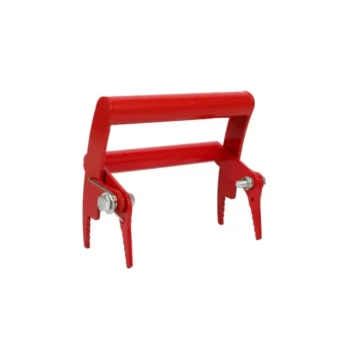
- Heavy-Duty Plier Action Frame Grip
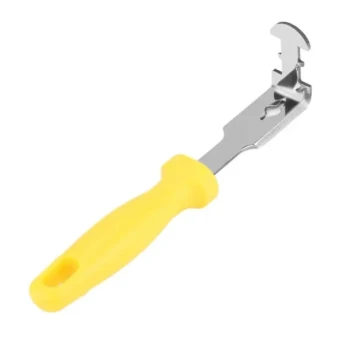
- Heavy Duty Stainless Steel Frame Cleaner with Plastic Handle
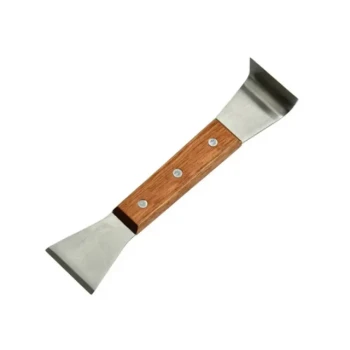
- Stainless Steel Pollen Shovel with Wooden Handle
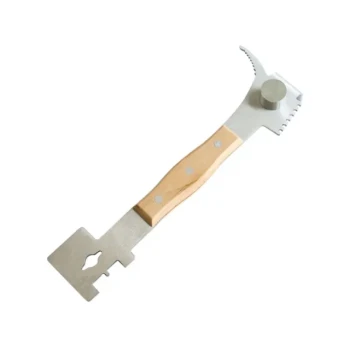
- 5 Gallon Pail Opener Bucket Opener Tool for Honey Bucket
People Also Ask
- Why is a specific wooden frame required when installing a propolis screen? Optimize Your Propolis Harvest Efficiency
- What are the advantages of using propolis collector screens? Elevate Your Harvest to Pharmaceutical Purity
- How do propolis collection screens work? Discover material specs for commercial harvesting equipment
- How does the mesh size of a propolis collection screen influence the efficiency of propolis harvesting? Optimize Yields!
- How do commercial-grade plastic screens compare to custom fine-mesh screens? Maximize Your Propolis Yield & ROI