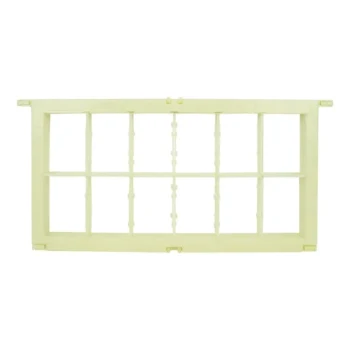
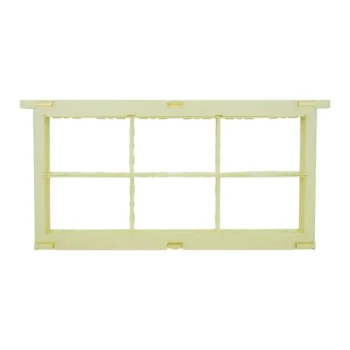
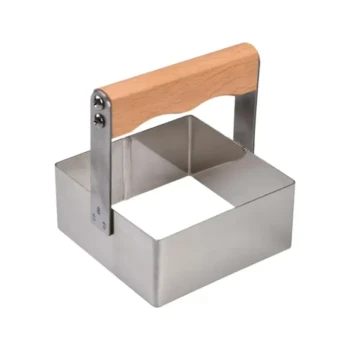
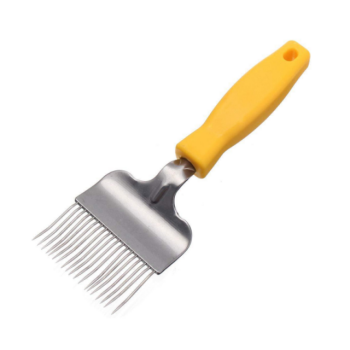
Specialized cutting frames and packaging molds are engineered to safeguard the delicate structural integrity of honeycomb during harvest and distribution. Their primary purpose is to prevent honey leakage and maintain the natural, capped architecture of the comb, distinguishing the product from standard processed liquid honey.
By utilizing specific frames and molds, producers ensure the honey retains its original biological structure and aesthetic purity, effectively preventing moisture absorption and spoilage while positioning the product for premium high-end markets.
Preserving Structural Integrity
The defining characteristic of raw comb honey is its physical structure. Specialized equipment is required to maintain this state from the hive to the consumer.
Preventing Honey Loss
The primary function of specialized cutting frames is to ensure the natural comb structure remains intact. Unlike liquid honey extraction, which often involves uncapping or centrifuging, these tools allow for the collection of honey without destroying the wax cells, significantly reducing leakage and waste.
Guiding Colony Construction
Specialized frames work in tandem with high-quality standardized nest foundations. These act as a guide for the colony, prompting bees to build neat, uniform beeswax cells and cap the honey within the specific boundaries of the artificial frame.
Uniformity for Harvest
Standardized beehives and frames provide a preset framework for construction. This ensures that the resulting comb honey has a uniform appearance and specification, which is critical for facilitating precise cutting and minimizing damage during the harvest.
Ensuring Stability and Shelf Life
Once the honeycomb is harvested, it becomes vulnerable to environmental factors. Specialized packaging molds are essential for preserving the product's chemistry and quality.
Protection Against Fermentation
Raw honey is hygroscopic, meaning it attracts water. Specialized packaging materials offer superior sealing properties that prevent the honey from absorbing moisture from the air, which is the primary cause of fermentation and spoilage.
Secure Transportation
Honeycomb is fragile and prone to physical collapse. Standardized packaging molds act as a necessary carrier, protecting the honey's quality during long-distance transportation and ensuring it arrives at retail locations without deformation.
Anti-Adhesive Storage
Food-grade shallow trays often serve as direct-contact containers. These are designed to support the cut block and allow for a small amount of liquid honey at the bottom, which prevents the honeycomb from physically sticking to the tray and enhances visual fullness.
Targeting the Premium Market
Beyond physical preservation, this equipment serves a distinct economic purpose by elevating the product's market positioning.
Displaying Purity
The use of clear, specific packaging molds allows producers to display the purity and unprocessed state of the honey. This transparency caters directly to consumers seeking natural, minimally processed foods.
Enhancing Brand Image
The aesthetic consistency provided by standardized frames and molds helps meet the rigorous requirements of high-end retail and export markets. This visual appeal allows raw comb honey to command a significantly higher price premium compared to bulk liquid honey.
Understanding the Operational Trade-offs
While specialized equipment enhances quality, it introduces specific operational considerations that differ from standard liquid honey production.
Specificity vs. Reusability
Standard frames allow for centrifugal extraction and the reuse of old combs, shortening the production cycle. In contrast, producing cut comb honey consumes the wax, requiring the bees to rebuild comb for every harvest, which is a more resource-intensive process for the colony.
Equipment Dependency
Achieving a premium result requires strict adherence to standardized dimensions. Mismatched frames or molds can lead to irregular comb structures that do not fit packaging specifications, potentially leading to product waste or a lower-tier classification.
Making the Right Choice for Your Goal
To maximize the value of your apiary products, align your equipment choices with your specific market targets.
- If your primary focus is Premium Export: Prioritize high-quality packaging molds with superior sealing properties to prevent fermentation during long shipping durations.
- If your primary focus is Operational Efficiency: Utilize standardized frames with nest foundations to guide bees into building uniform combs that reduce labor during the cutting and packaging phase.
- If your primary focus is Retail Aesthetics: Invest in food-grade shallow trays that prevent sticking, ensuring the honeycomb looks full and pristine on the shelf.
Ultimately, specialized frames and molds are not just storage tools; they are essential preservation systems that transform a fragile raw ingredient into a stable, high-value commercial product.
Summary Table:
| Feature | Purpose | Benefit for Producers |
|---|---|---|
| Cutting Frames | Guides bee construction & ensures uniform size | Minimizes waste during harvest & simplifies cutting |
| Packaging Molds | Provides airtight sealing & structural support | Prevents fermentation & ensures safe long-distance transport |
| Nest Foundations | Promotes neat, standardized wax cell building | Higher aesthetic appeal for high-end retail markets |
| Shallow Trays | Prevents sticking and honey deformation | Maintains pristine appearance & premium shelf presence |
Elevate Your Apiary's Commercial Success with HONESTBEE
Transform your raw honey into a premium, high-value product with professional-grade equipment. HONESTBEE specializes in catering to commercial apiaries and distributors, offering a comprehensive wholesale range of:
- Precision Machinery: Hive-making and honey-filling machines for high-efficiency production.
- Specialized Hardware: Standardized frames and molds designed for perfect honeycomb integrity.
- Essential Consumables: A full spectrum of beekeeping tools and industry-standard supplies.
- Cultural Merchandise: Unique honey-themed products to diversify your brand.
Ready to scale your operations and capture the high-end market? Contact us today to explore our wholesale solutions and see how our expertise can grow your beekeeping business.
References
- P.J. Batt, Aijun Liu. Consumer behaviour towards honey products in Western Australia. DOI: 10.1108/00070701211202449
This article is also based on technical information from HonestBee Knowledge Base .
Related Products
- Plastic Honey Comb Frames Cassette Box for Honey
- Heart-Shaped Comb Honey Frame and Honeycomb Cassette
- Professional Sectional Comb Honey Frame with 250g Cassette System for Beekeeping
- Professional 500g Sectional Comb Honey Frame System for Beekeeping
- Heavy Duty Stainless Steel Honeycomb Cutter
People Also Ask
- How are honeybee combs utilized for non-destructive colony monitoring? Master Population Density Tracking
- What is the significance of sampling honeycomb frames and hive bottoms? A Guide to Scientific Sanitation Monitoring
- What is a honeycomb frame? The Key to Modern, Sustainable Beekeeping
- What is the technical purpose of exchanging honeycomb frames? Master Apiary Equalization for Growth
- What frame to use for honeycomb? Choose the Right System for Pure, Edible Comb