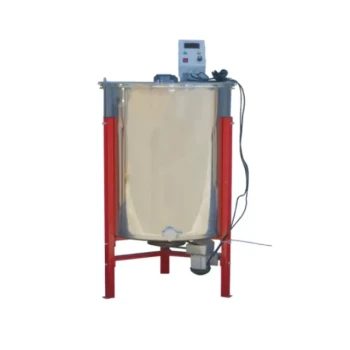
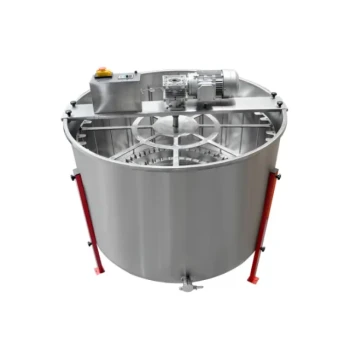
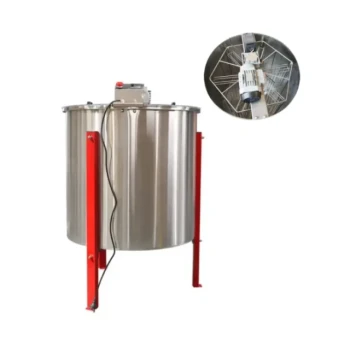
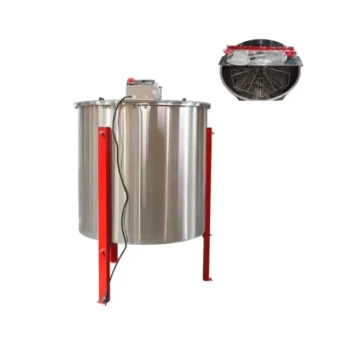
The primary purpose of using a high-capacity centrifuge is to mechanically separate suspended solids from diluted honey solutions to ensure optical clarity. By generating high-speed rotation, the centrifuge applies force that settles insoluble particles to the bottom of the vessel. This process removes physical obstructions that would otherwise interfere with light transmission, allowing for a precise measurement of the honey's inherent color.
Core Takeaway Optical density measurements rely on light passing cleanly through a liquid; however, suspended particles scatter light and distort these readings. Centrifugation eliminates this "noise" by removing insoluble matter, ensuring the spectrophotometer measures the absorbance of the honey itself rather than the turbidity caused by debris.
The Mechanics of Sample Clarification
Removing Light Scattering Interference
The accuracy of a spectrophotometer depends on its ability to measure how much light is absorbed by the liquid. Suspended particles do not absorb light in the same way; they scatter it.
Without centrifugation, these scattering effects create false absorbance data. The instrument interprets the scattered light as darkness or color intensity, leading to inaccurate color grading.
Utilizing Centrifugal Force
A high-capacity centrifuge creates a G-force strong enough to act on particles that are too small to settle by gravity alone.
This force drives insoluble matter—such as pollen, wax bits, or dust—out of suspension and packs it firmly at the bottom of the tube. This leaves the supernatant (the liquid honey solution) clear and ready for analysis.
Targeting Insoluble vs. Soluble Matter
It is critical to distinguish what the centrifuge removes. It specifically targets insoluble matter that affects clarity.
It does not remove dissolved components that contribute to the actual chemical profile or color of the honey. This ensures the sample remains chemically representative while being physically clear.
Understanding the Scope and Limitations
Centrifugation vs. Heating
While centrifugation is essential for removing solids, it is not a "catch-all" for sample preparation. It does not dissolve sugar crystals or remove air bubbles.
As noted in standard laboratory protocols, heating (typically to 40°C) is required to dissolve crystals and eliminate bubbles. Centrifugation is a distinct step strictly for removing solid particulate matter that heating cannot resolve.
The Necessity of Dilution
The primary reference notes that this process applies to diluted honey solutions. Raw honey is often too viscous for effective centrifugation of fine particles.
Dilution lowers the viscosity, allowing the centrifugal force to effectively move particles through the fluid to the bottom of the container.
Making the Right Choice for Your Goal
To ensure your honey color analysis meets laboratory standards, you must apply the correct pre-treatment step to the specific interference you are facing.
- If your primary focus is Eliminating Turbidity: Use high-capacity centrifugation to settle suspended solids and stop light scattering.
- If your primary focus is Removing Crystals or Bubbles: Rely on gentle heating (40°C) or ultrasonic baths, as centrifugation alone will not dissolve crystals or degas the sample.
Summary: High-capacity centrifugation is the definitive method for removing particulate interference, ensuring that optical density readings reflect the true pigmentation of the honey rather than its impurities.
Summary Table:
| Interference Type | Removal Method | Effect on Measurement |
|---|---|---|
| Suspended Solids (Pollen, Wax) | High-Capacity Centrifugation | Eliminates light scattering and turbidity |
| Sugar Crystals | Gentle Heating (40°C) | Dissolves solids into the liquid phase |
| Air Bubbles | Heating / Ultrasonic Bath | Removes physical gas obstructions |
| Dissolved Pigments | None (Retained) | Provides the true color absorbance value |
Elevate Your Honey Processing with HONESTBEE
At HONESTBEE, we understand that precision in honey analysis is just as critical as efficiency in production. Whether you are a commercial apiary or a global distributor, our comprehensive wholesale offering provides the specialized tools you need to maintain industry-leading standards.
From high-performance honey-filling machines and hive-making hardware to a full spectrum of laboratory-grade beekeeping equipment and consumables, we supply the infrastructure for your success.
Ready to scale your operations? Contact us today to discover how our professional machinery and honey-themed cultural merchandise can add value to your business.
References
- Osuagwu OS. Comparative Studies of the Physicochemical Properties and Mineral Elements of Honey Produced in the Guinea Savannah Zones of Nigeria. DOI: 10.26717/bjstr.2020.24.004105
This article is also based on technical information from HonestBee Knowledge Base .
Related Products
- Manual Hand Crank 4 Frame Honey Extractor Centrifuge for Beekeeping
- Honey Concentrating and Filtering Dehumidifier Machine 2T Capacity for Honey
- 32 Frame Commercial Electric Honey Extractor for Beekeeping and Honey Production
- electric honey extractor honey centrifuge 3 frame honey extractor stainless steel honey frame extractor
- Professional 4 Frame Self Reversing Electric Honey Extractor for Beekeeping
People Also Ask
- What are some tips for achieving efficient honey extraction with a centrifuge extractor? Maximize Your Yield & Efficiency
- What is the proper procedure for maintaining a centrifuge honey extractor? Expert Tips for Longevity and Hygiene
- What are the advantages of using a centrifuge honey extractor? Maximize Yields and Protect Your Honeycombs
- Which type of honey extractor is generally more durable? Focus on Material & Build Quality for Longevity
- What is a manual honey extractor? The Essential Guide to Cost-Effective Beekeeping for Beginners