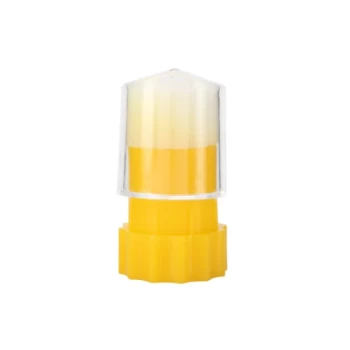
A queen marking pen is a specialized tool used to apply a dot of colorfast ink to a queen bee's thorax. Its primary purpose is to provide a permanent visual record of the specific year the queen was introduced into the hive.
By marking the queen, you transform her from a cryptic insect hidden among thousands into a trackable asset, allowing for instant verification of her age, identity, and the stability of the colony.
The Strategic Importance of Marking
While the physical act involves applying ink, the objective is strictly data management. A marked queen provides immediate answers to questions regarding hive history and genetics.
Tracking Age and Productivity
The core function of the marking pen is to record the year of introduction.
Queen bees have a finite lifespan of high productivity. By using a standardized color code for each year, a beekeeper can tell at a glance how old the queen is and determine if her laying patterns are declining due to age.
Validating Colony Continuity
A mark confirms the identity of the specific queen you installed.
If you open a hive and find an unmarked queen where a marked one previously existed, you immediately know the colony has changed. This indicates the bees have either swarmed or superseded (replaced) the original queen, which is critical information for colony management.
Enhancing Visual Efficiency
Locating a single queen among tens of thousands of workers is challenging, particularly for beginners or those with poor eyesight.
The colored dot serves as a beacon, significantly reducing the time required to find the queen. This allows for faster inspections, which disrupts the colony less than a prolonged search.
Safety and Application Methodology
Using a marking pen requires precision to ensure the data is recorded without harming the colony's most valuable member.
Controlled Immobilization
You cannot safely mark a moving target. Beekeepers use specific tools, such as a marking tube or handheld cage, to secure the queen.
These devices use a soft foam plunger to gently push the queen against a plastic mesh. This immobilizes her thorax in an upward position, protecting her from being crushed while keeping her still for the application.
Proper Handling Techniques
Before the queen enters the marking device, she is often lifted from the frame by her wings.
Once she is inside the cylinder, the mesh screen allows the pen tip to pass through and deposit the ink on the thorax. The ink must be colorfast to ensure the mark remains visible for the duration of her life.
Common Pitfalls to Avoid
While marking is beneficial, improper application can compromise the queen or the hive's acceptance of her.
Risk of Injury
The most significant risk occurs during the immobilization phase. Pushing the plunger too hard against the mesh can damage the queen's internal organs or legs.
Paint Placement
The mark must be applied strictly to the thorax (the upper back).
Getting paint on the queen's head can obscure her vision or sensory organs. Paint on the wings can inhibit her ability to fly if swarming becomes necessary.
Optimizing Your Hive Management
To get the most value from a queen marking pen, align your usage with your specific management goals.
- If your primary focus is Age Tracking: strict adherence to the international color standard for the current year is required to monitor longevity.
- If your primary focus is Inspection Speed: use high-contrast colors like yellow or white to make the queen instantly visible against the comb.
- If your primary focus is Queen Safety: always pair the pen with a plunger-style marking tube to prevent injury during application.
Effective hive management relies on accurate data, and a marked queen is the most reliable data point in the colony.
Summary Table:
| Feature | Purpose | Benefit |
|---|---|---|
| Color Coding | Records the year of introduction | Instant verification of queen age and productivity |
| Visual Beacon | Makes the queen stand out from workers | Faster inspections and reduced hive disruption |
| Identity Verification | Confirms the original queen is present | Detects swarming or supersedure immediately |
| Thorax Application | Safe ink placement on the upper back | Ensures long-term tracking without harming the bee |
Optimize Your Apiary with Professional Tools
As a commercial beekeeper or distributor, efficiency and data accuracy are vital to your success. HONESTBEE is your dedicated partner, providing a comprehensive wholesale range of beekeeping equipment designed for large-scale operations. From precision queen marking tools and hive-making machinery to honey-filling systems and cultural merchandise, we deliver the quality you need to thrive.
Ready to elevate your inventory or apiary productivity? Contact HONESTBEE today to discuss our wholesale offerings and how we can support your business growth.
Related Products
- Queen Bee Marking Pen POSCA Queen Marking Pens for Beekeeping Bee Markers
- Queen Bee Marking Pen UNI Medium Point for Queen and Bee Marking
- One Hand Yellow Queen Marking Catcher Tube Cage Beekeeper Tool Accessory for Queen Bee
- Queen Bee Marking Tube Cage Bottle Catcher Holder with Clear Plastic Plunger Marker
- Plastic Long Marker Device for Catching and Marking Bees Queen Bee Marking Tube and Cage
People Also Ask
- What role do specialized marking pens and color-coding systems play in honeybee tracking? Enhance Research Precision
- Why are specialized marking pens used for stingless bee queens? Essential Tools for Large-Scale Breeding Success
- How should a new paint pen be primed before marking a queen bee? Essential Tips for Safe & Clear Markings
- How should a queen bee marking pen tip be properly primed? Master the Art of Safe Queen Marking
- What specifications are required for a high-quality queen bee marking pen? Ensure Safety and Precision for Your Colony