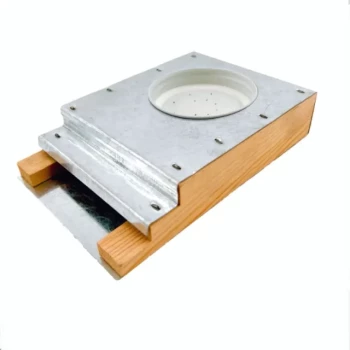
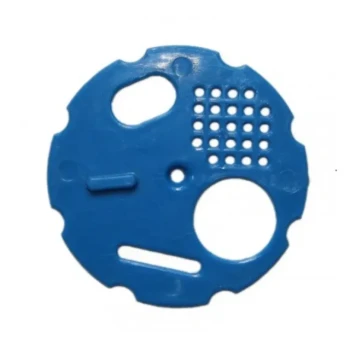
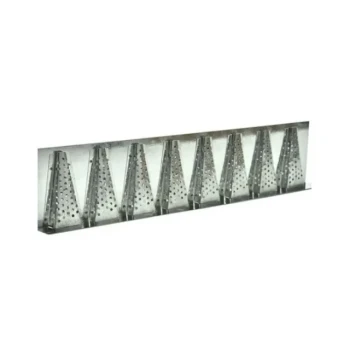
An entrance reducer is a physical barrier, typically a notched wooden strip, used to decrease the size of the opening at the bottom of a beehive. Its primary function is to restrict access to the hive, making the colony easier to defend against predators and helping the bees regulate their internal environment.
The entrance reducer is not merely a winter accessory; it is a force multiplier for the colony. By artificially narrowing the threshold, you allow a smaller population of bees to defend their resources as effectively as a large colony, while simultaneously conserving the thermal energy required for survival.
Enhancing Colony Security
The most immediate function of an entrance reducer is defense. In the wild, bees prefer smaller entrances; standard Langstroth hives have wide openings that can leave a colony exposed.
Prevention of Robbing
When a colony is weak or nectar is scarce (a dearth), bees from stronger hives may attempt to steal honey. A reducer narrows the "front door," allowing the colony's guard bees to concentrate their defense in a small area rather than spreading thinly across a wide landing board.
Exclusion of Pests and Rodents
Larger animals, particularly mice, view hives as warm shelters during colder months. An entrance reducer physically blocks these intruders from entering the bottom board, preventing them from destroying comb and nesting inside the hive.
Protection for Young Colonies
New packages, swarms, or "nucs" (nucleus colonies) lack the population numbers to guard a full-sized entrance. Installing a reducer allows these developing colonies to focus their energy on comb building and brood rearing rather than defending a massive perimeter.
Climate and Environmental Control
Beyond security, the reducer plays a vital role in the thermodynamics of the hive.
Retaining Hive Warmth
In colder climates, maintaining the internal temperature is critical for the survival of the cluster. A wide-open entrance creates a "chimney effect," drafting heat out of the top and pulling cold air in the bottom. A reducer minimizes this airflow, helping the bees conserve heat energy.
Preventing Wind Entry
Strong winds blowing directly into the hive can chill the brood nest. By shrinking the aperture, the reducer limits the volume of cold air that can be forced into the hive structure.
Understanding the Trade-offs
While essential for protection, the entrance reducer is not a "set it and forget it" tool. Improper use can hinder the colony's productivity or health.
Ventilation Constraints
In hot climates or during the peak of summer, a reducer can restrict airflow too severely. If the hive cannot vent excess heat and moisture, the brood may overheat, or the colony may attempt to swarm.
Forager Traffic Jams
During a strong nectar flow, thousands of bees enter and exit the hive daily. A reducer set to the smallest opening can create congestion at the entrance, slowing down foraging efficiency and knocking pollen off incoming bees' legs.
Making the Right Choice for Your Goal
The decision to use a reducer—and which setting to use—depends entirely on the current state of the colony and the season.
- If your primary focus is Overwintering: Use the smallest opening (or a specialized metal mouse guard) to maximize heat retention and prevent rodent entry.
- If your primary focus is Starting a New Colony: Keep the entrance reduced to the medium or small setting until the bees have drawn out most of the frames in the first box.
- If your primary focus is Maximum Honey Production: Remove the reducer entirely or use the largest setting during the peak summer flow to prevent traffic congestion.
Proper management of the hive entrance is one of the simplest, yet most effective ways to align the physical hive environment with the colony's immediate needs.
Summary Table:
| Feature | Purpose | Best Time to Use |
|---|---|---|
| Defense | Prevents robbing and excludes pests like mice | Weak colonies, nectar dearth, or winter |
| Thermodynamics | Retains hive warmth and prevents wind drafts | Late autumn through early spring |
| Colony Growth | Reduces guarding area for new packages/nucs | Initial installation until colony is established |
| Airflow | Limits moisture and heat loss | Cold climates or high-wind environments |
Maximize Your Colony's Success with HONESTBEE
At HONESTBEE, we understand that proper hive management requires the right tools at the right time. Whether you are a commercial apiary scaling up or a distributor seeking high-quality supplies, we provide the full spectrum of beekeeping solutions to help your business thrive.
Our Value to You:
- Comprehensive Inventory: From precision-made entrance reducers and hive hardware to advanced honey-filling machines.
- Industrial Strength: We specialize in durable machinery and essential consumables designed for the rigors of professional beekeeping.
- Wholesale Expertise: Tailored support for distributors and large-scale operations looking for reliable, high-performance equipment.
Protect your bees and optimize your production today. Contact us now to explore our wholesale offerings and see how HONESTBEE can power your apiary's growth.
Related Products
- Steel Round Disc Entrance Reducer for Flexzion Bee Hive Nuc Box Gate
- Beehive Entrance Reducer Guardian Metal Hive Entrance for Bees
- HONESTBEE Entrance Bee Feeder Professional Hive Nutrition Solution for Beekeeping
- Beehive Entrance Discs Plastic Bee Entrance Disc for Bee Hives
- Professional Hive Front Entrance Bee Feeder
People Also Ask
- What is the purpose of an entrance reducer for a beehive? Strengthen Colony Defense and Prevent Robbery
- Why are entrance reducers used to counter hornet infestations? Protect Your Hive with Strategic Choke Points
- Why is it critical to maintain a smaller entrance for a newly established bee hive? Boost Colony Growth and Security
- Under what conditions should a beekeeper adjust the size of a beehive entrance? Seasonal & Defense Management Tips
- What is the function of an entrance reducer on a beehive? Strengthen Colony Defense and Climate Control