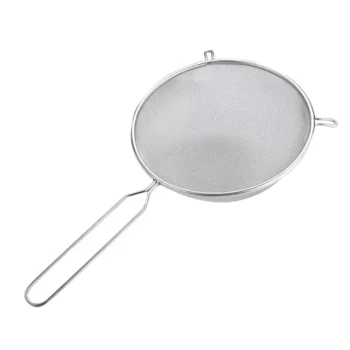
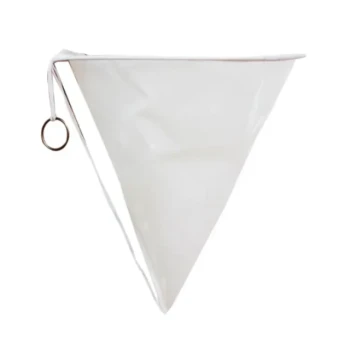
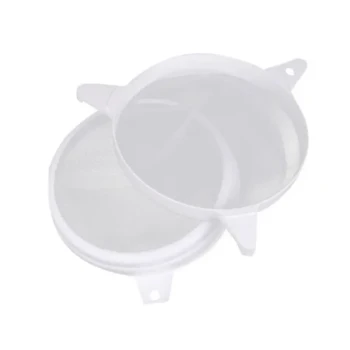
The primary purpose of this equipment is to secure the product's purity and longevity. Handheld filtering equipment is utilized to physically remove wax debris and impurities to elevate the sensory quality of the honey, while standardized glass storage bottles create a sealed, light-protected environment that effectively delays fermentation and prevents spoilage.
Use these tools to transform raw extraction into a market-ready commodity: filtration guarantees the immediate visual and textural appeal, while glass storage ensures the long-term chemical stability required for distribution.
Ensuring Sensory Quality Through Filtration
Removing Physical Impurities
Handheld equipment, such as mesh strainers, serves the critical function of mechanical separation. This process physically removes wax residue, bee body fragments, and large pollen grains that accumulate during extraction.
Meeting Market Definitions
By eliminating these particles, you align the product with standard quality definitions set by wholesalers and processors. This step is non-negotiable for ensuring the honey is considered "clean" enough for commercial sale.
Enhancing Consumer Appeal
Filtration directly impacts the sensory quality of the final product. It ensures a smooth texture and clear appearance, which are primary drivers of consumer preference and product value.
Preserving Integrity with Glass Storage
Protection from Environmental Factors
Honey is hygroscopic, meaning it absorbs moisture from the air, which can lead to spoilage. Standardized glass bottles provide a hermetic seal that locks out environmental contaminants and ambient moisture.
Delaying Spoilage and Fermentation
The primary reference highlights that glass provides a light-protected environment. This protection, combined with an airtight seal, is essential for delaying fermentation and maintaining the honey's chemical stability over time.
Facilitating Market Distribution
Using standardized glass containers transforms raw honey into a high-value commercial commodity. It ensures hygiene during transport and allows access to strict distribution channels, such as supermarkets, that require consistent packaging standards.
Understanding the Trade-offs
Manual vs. Industrial Filtration
Handheld filtration is effective for macroscopic debris but has limitations. Unlike professional facilities mentioned in supplementary contexts, handheld tools may not fully eliminate fermenting yeasts, which require more advanced filtration or heating systems.
Fragility and Weight
While glass offers superior inertness and light protection, it presents logistical challenges compared to plastic. Glass is heavier and more fragile, increasing transportation costs and the risk of breakage during the supply chain journey.
Making the Right Choice for Your Goal
To maximize the value of your post-harvest processing, align your equipment choice with your specific production scale.
- If your primary focus is Artisanal Quality: Prioritize handheld filtration and dark glass bottling to preserve the raw sensory profile while offering premium shelf appeal.
- If your primary focus is Shelf Stability: Ensure your glass containers are rigorously sealed and stored away from light to maximize the delay of fermentation.
By combining precise mechanical filtration with protective storage, you safeguard both the immediate value and the future integrity of your harvest.
Summary Table:
| Process Component | Primary Purpose | Key Benefits |
|---|---|---|
| Handheld Filtration | Mechanical impurity removal | Enhances sensory appeal, clears wax debris, meets quality standards |
| Glass Storage | Environmental protection | Airtight seal, light protection, prevents moisture absorption |
| Post-Harvest Goal | Longevity & Purity | Delays fermentation, ensures chemical stability, enables distribution |
Elevate Your Beekeeping Operation with HONESTBEE
Transition from raw extraction to premium commercial commodities with ease. HONESTBEE provides commercial apiaries and distributors with high-performance honey-processing machinery and durable hardware tailored for scale. From specialized honey-filling machines to professional-grade consumables, we empower your business to meet the highest market standards.
Ready to scale your production? Contact us today to discover how our wholesale beekeeping tools and industry-leading equipment can maximize your harvest's value.
References
- Cooper Schouten, Heather Lloyd. Beekeeping With the Asian Honey Bee (<i>Apis cerana javana</i>Fabr) in the Indonesian Islands of Java, Bali, Nusa Penida, and Sumbawa. DOI: 10.1080/0005772x.2018.1564497
This article is also based on technical information from HonestBee Knowledge Base .
Related Products
- Professional Stainless Steel Honey Filter with Support Handle
- Electric Double Wall Honey Filtering Machine Purifier Equipment for Honey Processing Plant
- Automatic Honey Filling and Filtering Machine for Beekeeping Bottle Filling
- Professional Stainless Steel Honey Filtering Machine with Water Bath Heating for Beekeeping
- 0.5T Capacity Honey Dehumidifier Dryer with Vacuum Heating and Thickening Filtering Machine
People Also Ask
- Why are stainless steel filters essential during the initial purification phase of honey processing? Ensure Purity
- What are the benefits of using a high-quality honey filter? Elevate Purity and Preserve Natural Flavor
- What is the primary purpose of honey filters? Achieve Professional Clarity & Pure Honey Quality
- What micron filter should I use for honey? Choose the Right Filter for Sales or Competitions
- Why do people filter honey? For Clarity, Stability, and Consumer Appeal