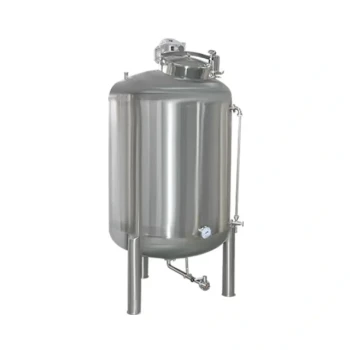
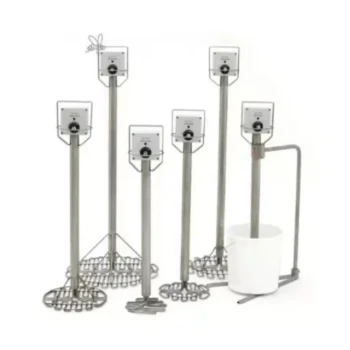
Precise temperature control is essential for optimizing honey flow and ensuring purity. Heating tanks and constant temperature water baths reduce honey viscosity and reliquefy crystals, enabling rapid filtration and efficient dehydration. These systems are engineered to provide uniform heat, which protects the honey’s delicate enzymes and prevents the formation of harmful chemical markers like Hydroxymethylfurfural (HMF).
Core Takeaway: Advanced temperature control systems allow honey processors to achieve high-speed filtration and moisture reduction while maintaining the bioactivity and regulatory compliance required for premium global markets.
Enhancing Operational Efficiency through Viscosity Management
Optimizing Flow for Rapid Filtration
Raw honey is naturally viscous, which can significantly slow down industrial filtration and bottling lines. Heating tanks moderately raise the temperature to reduce this viscosity, allowing the honey to pass through fine mesh filters with minimal resistance.
Eliminating Crystallization for Homogeneous Processing
Crystallized honey presents a major challenge for uniform dehydration and clear packaging. Constant temperature water baths provide a stable environment (typically around 45°C) to reliquefy sugar crystals without scorching the product.
Streamlining the Dehydration Process
By maintaining a stable thermal environment, these systems simulate industrial dehydration stages, allowing for accurate moisture reduction. This ensures the final product reaches the specific water content required for long-term shelf stability and fermentation prevention.
Safeguarding Product Integrity and Regulatory Compliance
Preventing Heat-Induced Chemical Degradation
Excessive or direct heat can trigger the production of Hydroxymethylfurfural (HMF), a primary indicator of honey aging or overheating. High-precision systems strictly limit heating levels to ensure HMF levels remain within international quality standards, protecting the product's export value.
Protecting Bioactive Compounds and Enzymes
Honey contains heat-sensitive enzymes and antioxidants that define its nutritional value. Controlled heating environments prevent localized overheating, ensuring that the honey retains its natural enzyme activity and "fresh" physicochemical indicators.
Maintaining Pollen Morphology and Microstructure
For distributors specializing in premium or floral-specific honey, protecting pollen is vital for palynological analysis. Water bath equipment allows for complete dissolution and homogenization without damaging the ultra-microstructure of the pollen walls.
Facilitating Impurity Removal and Aesthetic Quality
Strategic Separation of Debris
Gently warming raw comb honey in a heating tank causes impurities like wax fragments, bee parts, and pollen clumps to float to the surface. This physical separation is a prerequisite for professional-grade mechanical filtration and the extraction of pure honey.
Achieving Visual Clarity for Retail
Controlled heating results in a clearer, more visually appealing product that meets consumer expectations. By effectively removing micro-bubbles and fine debris, the honey achieves a brilliant transparency that commands a higher market price.
Understanding the Trade-offs and Risks
Uniform Heating vs. Direct Flame
The primary risk in honey processing is localized overheating. While direct heating methods are faster, they often lead to "hot spots" that carbonize sugar and destroy nutrients; water baths mitigate this by providing indirect, uniform thermal distribution.
Processing Speed vs. Enzyme Retention
There is a constant tension between the need for high-throughput processing and the preservation of honey quality. Higher temperatures speed up filtration but risk degrading diastase activity, requiring a calibrated balance that only high-precision sensors can provide.
Making the Right Choice for Your Business Model
Choosing the right thermal equipment depends on your specific position in the supply chain and your clients' quality requirements.
- If your primary focus is High-Volume Wholesale: Prioritize large-capacity heating tanks with automated temperature logging to ensure consistency across massive batches.
- If your primary focus is Premium/Organic Distribution: Invest in constant temperature water baths that offer the highest precision to guarantee the preservation of raw enzymes and low HMF levels.
- If your primary focus is Laboratory and Analysis Services: Utilize thermostatic water bath equipment capable of maintaining exact temperatures (such as 70°C) for acetolysis and chemical composition testing.
By integrating high-precision thermal solutions, you ensure a superior product that meets the rigorous demands of the global honey trade.
Summary Table:
| Key Function | Technical Purpose | Impact on Honey Quality |
|---|---|---|
| Viscosity Management | Reduces thickness for flow | Facilitates rapid, fine mesh filtration |
| Crystal Reliquefaction | Dissolves sugar crystals | Ensures a smooth, homogeneous texture |
| Thermal Regulation | Prevents localized overheating | Minimizes HMF levels & protects enzymes |
| Impurity Separation | Floats wax/debris to surface | Enhances visual clarity and purity |
| Moisture Control | Prepares honey for dehydration | Prevents fermentation; ensures shelf stability |
Scale Your Honey Business with HONESTBEE
Maximize your profit margins and operational efficiency with HONESTBEE, your premium one-stop sourcing partner for commercial beekeeping. We cater specifically to distributors, wholesalers, and B2B resellers, providing a comprehensive full-spectrum portfolio that includes:
- High-Precision Machinery: From advanced honey-filling systems to industrial hive-making machines.
- Complete Equipment Range: Every tool and consumable required for large-scale apiary management.
- Premium Trading Services: Rapid response times, dedicated customer support, and ultra-fast order fulfillment.
Leverage our deep industry expertise and OEM/ODM capabilities to ensure your inventory meets the highest international standards. Contact us today to explore our wholesale offerings!
References
- Victoria Atieno Kimindu, Soon‐Ok Woo. Apis mellifera Honey Varieties in Kenya: Legislation, Production, Processing, and Labeling. DOI: 10.3390/agriculture15222400
This article is also based on technical information from HonestBee Knowledge Base .
Related Products
- Stainless Steel Heated Honey Tank Warming Heating Tank
- Honey Tank Heater Drum Heating Blanket for Honey Barrel
- Heavy Duty Stainless Steel Honey Processing Machine Decrystallizing Tank
- Stainless Steel Honey Storage Tank with Lid for Honey
- Professional Honey Storage Tank with Agitation System
People Also Ask
- What are the benefits of precise temperature control in honey heating tanks? Preserve Quality and Efficiency
- How do honey heating tanks offer scalability for growing beekeeping operations? Strategic Equipment Growth Solutions
- What features of a honey heating tank contribute to hygiene? Ensure Purity with Stainless Steel & Sanitary Design
- What is the primary role of a honey heating tank? Enhance Your Honey Processing Flow and Quality
- What are the overall benefits of using a honey heating tank in honey processing? Ensure Quality & Boost Efficiency