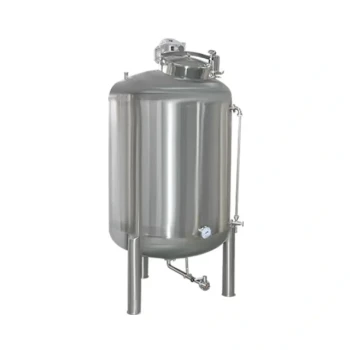
Honey heating tanks facilitate scalability primarily through their extensive range of available capacities and configurations. Manufacturers design these units to span from small, entry-level models suitable for hobbyists to massive vessels engineered for commercial throughput. This diversity allows operators to align their equipment investment directly with their current production volume, upgrading to larger or more advanced models only as their operation expands.
The Core Insight Scalability in honey processing is defined by the ability to increase volume without fundamentally changing your workflow. Heating tanks support this by offering a clear upgrade path, ensuring that as your yield increases, your ability to process, settle, and bottle that honey keeps pace.
The Mechanics of Scalable Heating
Volume Flexibility
The primary driver of scalability is the physical capacity of the tank. The market offers a graduated spectrum of sizes, allowing a seamless transition from backyard beekeeping to industrial production.
Small-scale apiaries can utilize compact units designed for managing the output of a few hives. Conversely, commercial operations can procure large-scale tanks capable of processing tons of honey simultaneously.
Seamless Equipment Upgrades
As an operation's honey production increases, the equipment can be swapped or augmented without disrupting the core process.
You are not locked into a single static system; rather, you can upgrade to larger models to meet growing demands. This prevents the need to overhaul your entire facility layout every time you add more hives.
Integrating Tanks into a Commercial Line
Supporting Increased Extraction Speed
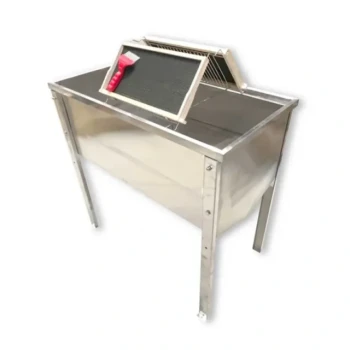
While heating tanks manage the processing, they must keep up with the extraction phase. Specialized extracting machines significantly reduce processing time and physical labor compared to manual methods.
A scalable heating tank system ensures that this increased influx of raw honey does not create a backlog. The tank capacity must be sufficient to accept the faster output from mechanical extractors.
Facilitating Standardization and Hygiene
Scaling is not just about volume; it is about maintaining quality at speed. Advanced heating tanks often pair with filling machines to ensure high hygiene standards and consistent filling accuracy.
By maintaining the honey at the correct viscosity and temperature, these tanks ensure that downstream equipment, such as centrifugal extractors and precision fillers, function optimally. This integration is essential for meeting the standardization requirements of commercial markets.
Understanding the Trade-offs
The Cost of "Future-Proofing"
A common pitfall is purchasing a tank significantly larger than your current needs in anticipation of future growth.
While this theoretically prepares you for scale, heating a small amount of honey in a massive tank is energy-inefficient and can lead to uneven heating. It is often more prudent to match the tank size to your current maximum capacity plus a modest margin.
Infrastructure Demands
Scaling up your heating tank capacity has implications beyond the cost of the unit itself.
Larger commercial tanks require significantly more floor space and often necessitate upgraded electrical infrastructure to power larger heating elements. You must verify that your facility can physically support the larger equipment before upgrading.
Making the Right Choice for Your Goal
To select the right heating tank strategy, you must assess your current growth trajectory.
- If your primary focus is gradual growth: Start with a tank that matches your current peak harvest, as you can easily upgrade to a larger model later without losing operational continuity.
- If your primary focus is rapid commercialization: Invest in a tank capacity that aligns with the maximum throughput of your mechanical extractors to prevent processing bottlenecks.
The most successful operations treat their heating tanks not just as storage vessels, but as the central regulating component that allows the rest of the production line to run at full speed.
Summary Table:
| Scalability Feature | Small-Scale Operation | Commercial/Industrial Operation |
|---|---|---|
| Tank Capacity | Compact (entry-level) units | Massive vessels for multi-ton processing |
| Workflow Impact | Manual handling & small batches | Automated extraction & high-speed filling |
| Equipment Focus | Basic temperature control | Integrated sensors & energy-efficient heating |
| Infrastructure | Standard electrical/small space | Specialized power & large facility footprint |
| Growth Strategy | Match current peak harvest | Align with extractor throughput capacity |
Scale Your Honey Production with HONESTBEE
Transitioning from a hobbyist apiary to a large-scale commercial enterprise requires equipment that grows with you. HONESTBEE specializes in supporting commercial apiaries and distributors with a complete range of professional beekeeping machinery. Whether you need precise honey heating tanks, high-capacity honey-filling machines, or robust hive-making equipment, our wholesale solutions are designed for durability and efficiency.
From industrial-grade consumables to specialized hardware, we provide the tools you need to standardize quality and maximize yield. Contact us today to explore our full spectrum of beekeeping tools and machinery and see how we can streamline your path to commercial success.
Related Products
- Stainless Steel Heated Honey Tank Warming Heating Tank
- Honey Tank Heater Drum Heating Blanket for Honey Barrel
- Heavy Duty Stainless Steel Honey Processing Machine Decrystallizing Tank
- Stainless Steel Honey Storage Tank with Lid for Honey
- Professional Honey Storage Tank with Agitation System
People Also Ask
- What are the benefits of precise temperature control in honey heating tanks? Preserve Quality and Efficiency
- What features of a honey heating tank contribute to hygiene? Ensure Purity with Stainless Steel & Sanitary Design
- What is the primary role of a honey heating tank? Enhance Your Honey Processing Flow and Quality
- What is the purpose of using heating tanks or constant temperature water baths in honey dehydration? Optimize Purity & Flow
- What are the overall benefits of using a honey heating tank in honey processing? Ensure Quality & Boost Efficiency