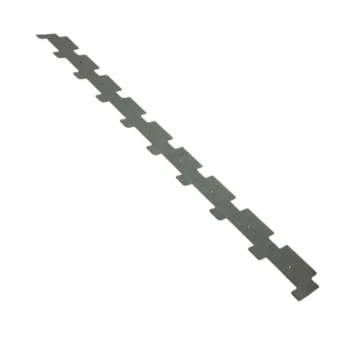
The use of honey supers and precise hive weighing serves as a critical verification step in breeding programs. While the primary goal is selecting for disease resistance, these tools allow breeders to accurately quantify honey production, ensuring that improvements in colony health do not inadvertently decrease commercial yield or economic viability.
Core Takeaway Successful breeding requires balancing biological resilience with economic utility. By measuring output via honey supers and pre-weighed components, breeders verify that traits selected for disease resistance, such as hygienic behavior, have not compromised the colony's ability to produce surplus honey.
The Dual Objective of Breeding Programs
Verifying Economic Viability
The primary reference highlights that disease resistance alone does not make a honey bee breed successful. Breeders must use honey supers to capture surplus nectar, ensuring the bees remain economically viable for industrial application.
detecting Negative Traits
Selecting for specific behaviors, such as hygienic responses to disease, can sometimes lead to unintended consequences. Weighing hive components allows breeders to determine if these health-focused traits have caused a negative impact on commercial performance, such as reduced foraging drive or lower honey yields.
The Role of Standardization in Measurement
Eliminating Environmental Variables
To accurately assess genetic potential, the physical environment must be controlled. Using standardized full-size hives ensures that differences in honey yield are due to the queen's genetics, not differences in available space or hive structure.
Isolating Honey Stores
Dedicated honey supers utilize a modular design to separate honey storage from the brood nest. This separation is essential for accurate weighing because it allows breeders to measure surplus production distinct from the resources the colony needs for its own reproduction and survival.
Precision Through Pre-weighing
Accurate data relies on knowing the tare weight of equipment. By using pre-weighed hive components, breeders can calculate the exact mass of honey added during a flow, removing guesswork from the evaluation of a lineage's productivity.
Understanding the Trade-offs
The Risk of Behavioral Errors
Without standardized equipment and weighing protocols, behavioral errors can skew data. For example, a colony might appear to produce less honey simply because it lacked sufficient storage space during a peak flow, not because of inferior genetics.
Balancing Correlations
There is a complex genetic correlation between various traits. Breeders must be careful not to optimize for Varroa Sensitive Hygiene (VSH) at the total expense of honey yield or gentleness; weighing systems provide the hard data needed to navigate this balance.
Making the Right Choice for Your Goal
When evaluating breeding results or setting up a selection program, consider your end goals:
- If your primary focus is Commercial Application: Prioritize lineages that show high disease resistance but maintain honey yields comparable to standard commercial stocks.
- If your primary focus is Genetic Research: rigorous standardization of hive dimensions and weighing protocols is required to accurately calculate correlations between hygienic behavior and productivity.
Ultimately, a disease-resistant bee is only valuable if it retains the vitality and capacity to produce a harvest.
Summary Table:
| Evaluation Component | Primary Function in Breeding | Key Measurement Objective |
|---|---|---|
| Honey Supers | Separates surplus stores from brood nest | Quantifies commercial honey yield potential |
| Hive Weighing | Tracks mass changes during nectar flows | Calculates exact productivity per lineage |
| Pre-weighing | Establishes equipment tare weight | Eliminates data noise from hardware variables |
| Standardization | Normalizes the physical environment | Ensures performance is linked to genetics, not space |
Maximize Your Apiary's Productivity with HONESTBEE
At HONESTBEE, we understand that commercial success requires a perfect balance between colony health and high yields. As a premier partner for commercial apiaries and distributors, we provide the precision tools necessary to evaluate and scale your operations.
Our comprehensive wholesale range includes:
- High-Performance Machinery: Professional honey-filling and hive-making machines for industrial efficiency.
- Precision Equipment: Specialized hardware and standardized beekeeping tools designed for accurate data collection.
- Essential Consumables: A full spectrum of supplies to maintain hive vitality across your entire operation.
Whether you are refining disease-resistant lineages or scaling a commercial honey business, HONESTBEE delivers the expertise and equipment you need to succeed.
Contact our team today to explore our wholesale solutions!
References
- M. Marta Guarna, Leonard J. Foster. Peptide biomarkers used for the selective breeding of a complex polygenic trait in honey bees. DOI: 10.1038/s41598-017-08464-2
This article is also based on technical information from HonestBee Knowledge Base .
Related Products
- Heavy Duty Castellated Iron Frame Spacer for Honey Supers
- Durable 16 Way Circular Bee Escape for Efficient Honey Harvesting
- Double Wall Honey Heating Stirring Homogenizer Mixing Machine with Various Capacity
- Professional Honey Filter with Tripod Support Stand
- Professional Plastic Honey Dipper for Easy Honey Drizzling
People Also Ask
- What are honey super frames and what foundation options are available? Choose the Best Support for Your Bees
- What are the reasons and drawbacks of using nine frames in a ten-frame honey super? Boost Extraction Speed Today
- What are honey super frames and how many are needed per box? A Beekeeper's Essential Guide
- What are honey super frames and their foundation options? Choose the Best Support for Your Hive's Honey Production
- Why might a beekeeper use fewer than the standard number of frames in a honey super? Boost Extraction Efficiency