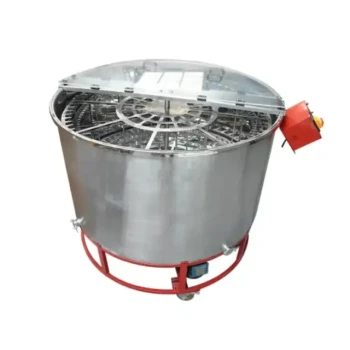
The primary purpose of industrial honey drying is to mechanically reduce the water content of honey harvested in humid environments to prevent spoilage. Because honey is hygroscopic (absorbs moisture), extracting it in high-humidity regions often results in moisture levels that exceed safe limits, requiring intervention to stabilize the product for storage and sale.
Core Takeaway In humid climates, natural evaporation in the hive is often insufficient to reach safe moisture levels. Industrial dehydration is the essential processing step that lowers water content to prevent fermentation, ensuring the honey remains shelf-stable and compliant with quality regulations.
Addressing the Moisture Challenge
The Impact of High Humidity
In regions with high ambient humidity, honey often retains a higher water content even after being capped by bees. Furthermore, extracted honey can re-absorb moisture from the damp air during processing. This results in a product that exceeds the thresholds required for stability.
Reducing Water Content
Industrial-grade drying equipment is designed to remove this excess water efficiently. The equipment processes the honey to lower its moisture percentage to a target "safe level." This creates a consistent product regardless of the external weather conditions during harvest.
Why Stabilization is Non-Negotiable
Preventing Fermentation
The most critical function of dehydration is the prevention of fermentation. Yeasts naturally present in honey thrive when water content is high. By removing the excess moisture, you create an environment where these yeasts cannot reproduce, effectively halting spoilage mechanisms.
Extending Shelf Life
Reducing moisture is directly linked to the longevity of the product. Honey that has been properly dehydrated can be stored for long periods without degrading. This allows producers to manage inventory and distribution without the risk of the product souring on the shelf.
Meeting Industry Standards
Commercial honey is subject to strict quality regulations regarding water content. Industrial drying ensures that every batch complies with these legal and industry standards. This compliance is mandatory for selling honey through formal commercial channels.
Understanding the Risks of Inaction
The Certainty of Spoilage
The primary trade-off in humid environments is between processing effort and product loss. Without the use of dehydration equipment, honey harvested in these conditions is chemically unstable. The cost of equipment operation is negligible compared to the total loss of revenue caused by fermented, unsellable stock.
Making the Right Choice for Your Goal
To secure the value of your harvest, align your processing steps with your end goals:
- If your primary focus is Product Longevity: Prioritize dehydration to inhibit yeast activity and prevent fermentation during storage.
- If your primary focus is Market Compliance: Use drying equipment to ensure your specific moisture content falls strictly within the limits set by industry quality standards.
Controlling moisture through industrial drying is the definitive safeguard between a high-value harvest and a spoiled product.
Summary Table:
| Feature | Purpose in Dehydration | Benefit to Producer |
|---|---|---|
| Moisture Reduction | Removes excess water from hygroscopic honey | Prevents yeast growth and spoilage |
| Fermentation Control | Inhibits natural yeast reproduction | Ensures product remains shelf-stable |
| Standardization | Reaches precise target water percentages | Guarantees compliance with industry regulations |
| Quality Preservation | Stabilizes honey in high-humidity regions | Protects harvest value and marketability |
Maximize the Value of Your Harvest with HONESTBEE
Don't let humidity compromise your honey quality. HONESTBEE provides professional-grade honey-filling and processing machinery designed to meet the rigorous demands of commercial apiaries and distributors. From advanced dehydration equipment to a full spectrum of beekeeping tools and essential consumables, we offer the end-to-end solutions you need to ensure every batch is market-ready.
Ready to scale your production? Contact us today to discover how our wholesale machinery and industry expertise can streamline your operations and protect your inventory.
References
- Scott Bremer, Etienne Dunn‐Sigouin. Adapting seasonal beekeeping patterns in western Norway. DOI: 10.1177/0961463x241275003
This article is also based on technical information from HonestBee Knowledge Base .
Related Products
- 0.5T Capacity Honey Dehumidifier Dryer with Vacuum Heating and Thickening Filtering Machine
- High Quality Honey Dehumidifier Dryer Thickening Machine for Beekeeping
- Economy Small Scale Honey Dryer Dehumidifier Thickening Machine
- Stainless Steel Pail Perch Bucket Bench
- Electric Honey Press Machine for Squeezing Honey Comb Press Equipment
People Also Ask
- What is the primary function of professional dehumidification equipment in honey processing? Stability & Quality
- How to dry up honey? The Safe Guide to Stabilizing Honey and Preventing Fermentation
- What is the process for using a dehumidifier to lower honey's moisture content? Expert Drying Techniques
- How to decrease moisture in honey? Prevent Fermentation and Ensure Long-Term Quality
- How to remove humidity from honey? Protect Your Harvest from Fermentation