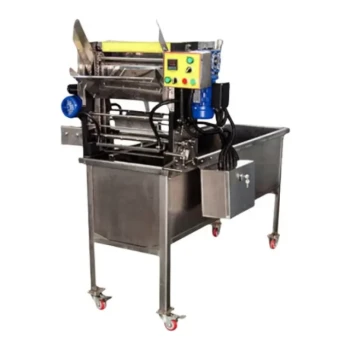
The primary purpose of professional dehumidifiers in honey production is to prevent spoilage by lowering moisture content. Because honey is naturally hygroscopic (it absorbs water from the air), excess moisture creates an environment where yeast can thrive. Dehumidifiers strictly control the facility's humidity to extract this excess water, preventing fermentation and ensuring the honey is stable enough for packaging and long-term storage.
Core Takeaway By neutralizing honey’s natural tendency to absorb atmospheric moisture, professional dehumidifiers protect the product from fermentation. This process is essential for maintaining consistent viscosity, preserving taste, and meeting the rigorous quality standards required for international distribution.
Combating the Risks of Moisture
Honey is a delicate biological product that interacts constantly with its environment. The use of dehumidifiers addresses the specific chemical and physical risks associated with this interaction.
Managing Hygroscopic Properties
Honey is hygroscopic, meaning it naturally pulls moisture from the surrounding air. Without intervention, ambient humidity in a processing plant will increase the water content of the honey during extraction and filtration.
Preventing Fermentation and Spoilage
The most critical function of the dehumidifier is preventing the activation of yeasts. High water content triggers fermentation, which sours the honey and ruins the batch; reducing moisture renders these yeasts inactive.
Ensuring Long-Term Shelf Life
For honey to be viable for retail or export, it must remain stable over time. By reducing water content to precise levels, producers ensure the product is suitable for long-term storage without degrading.
Achieving Commercial Consistency
Beyond basic preservation, dehumidifiers are tools for quality assurance. They allow producers to standardize a natural, variable product for the high-end market.
Standardizing Viscosity and Texture
Water content dictates the thickness (viscosity) of the final product. Dehumidifiers ensure that every batch has the consistent mouthfeel and flow expected by consumers and industrial buyers.
Meeting Global Quality Standards
Premium markets, including pharmaceutical and confectionery sectors, enforce strict limits on moisture percentages. Controlled dehumidification allows producers to meet certifications like AGMARK and adhere to international export regulations.
Understanding the Operational Trade-offs
While dehumidification is vital, it must be applied with precision to avoid diminishing the product's value.
The Risk of Over-Drying
Removing too much moisture can be detrimental. Extremely low water content may accelerate crystallization or make the honey too viscous to process and package efficiently.
Integration with Heat and Filtration
Dehumidification does not remove physical impurities; that is the job of filtration systems. To produce high-value honey, moisture control must be synchronized with heating and filtration steps to purify the honey without damaging its nutritional structure.
Making the Right Choice for Your Goal
The application of dehumidification depends on your specific production targets and market requirements.
- If your primary focus is Shelf Stability: Prioritize reaching a moisture content low enough to inhibit all yeast activity to prevent fermentation during storage.
- If your primary focus is Premium Export: Calibrate your humidity control to meet the specific viscosity and moisture percentage regulations of your target country or industry (e.g., pharmaceutical grade).
Precise environmental control is the difference between a perishable raw ingredient and a high-value commercial product.
Summary Table:
| Key Benefit | Primary Function | Impact on Quality |
|---|---|---|
| Moisture Control | Neutralizes honey's hygroscopic nature | Prevents water absorption from the air |
| Fermentation Prevention | Inhibits yeast activation | Stops spoilage and preserves taste |
| Viscosity Management | Standardizes thickness and flow | Ensures consistent texture for buyers |
| Regulatory Compliance | Meets moisture limits (e.g., AGMARK) | Facilitates international export and retail |
Elevate Your Honey Production with HONESTBEE Professional Solutions
Maximize the value of your harvest and ensure long-term shelf stability with high-performance processing equipment. HONESTBEE provides commercial apiaries and distributors with a comprehensive range of professional tools, including honey-filling machines, moisture control solutions, and specialized beekeeping hardware.
Whether you are scaling your operation or sourcing for a distribution network, our wholesale portfolio is designed to help you meet the most rigorous international standards. Contact us today to discover how our equipment and machinery can optimize your production efficiency and product quality!
References
- Raden Isma Anggraini, M. Syamsul Maarif. Strategic Business Development For Honey Bee Farming in KTH Sadar Tani Muda Forest Farmers Group. DOI: 10.17358/brcs.6.1.1
This article is also based on technical information from HonestBee Knowledge Base .
Related Products
- High Quality Honey Dehumidifier Dryer Thickening Machine for Beekeeping
- 0.5T Capacity Honey Dehumidifier Dryer with Vacuum Heating and Thickening Filtering Machine
- Honey Concentrating Vacuum Heating Thickening Machine Dehumidifier for Honey
- Honey Concentrating and Filtering Dehumidifier Machine 2T Capacity for Honey
- Economy Small Scale Honey Dryer Dehumidifier Thickening Machine
People Also Ask
- Can you dehumidify honey? A Beekeeper's Guide to Preventing Fermentation
- How to dry up honey? The Safe Guide to Stabilizing Honey and Preventing Fermentation
- How can the moisture content of honey be reduced? A Guide to Safe, Effective Drying Methods
- How to remove humidity from honey? Protect Your Harvest from Fermentation
- What is the process for using a dehumidifier to lower honey's moisture content? Expert Drying Techniques