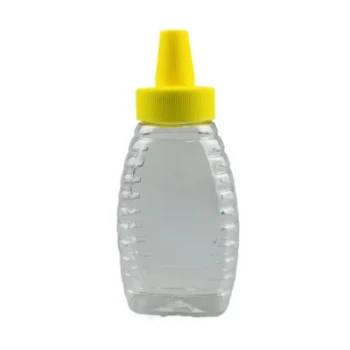
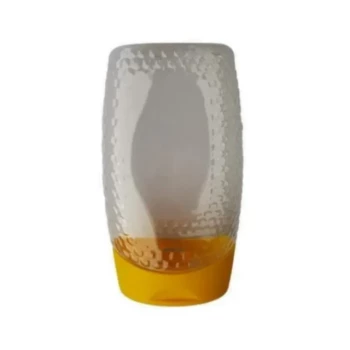
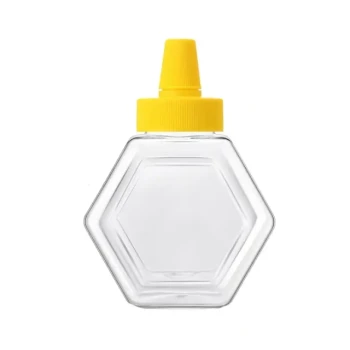
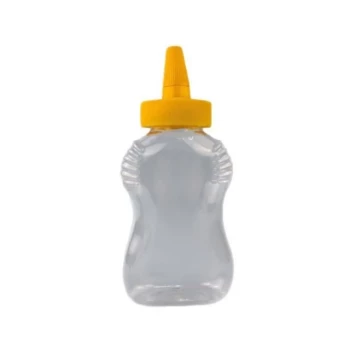
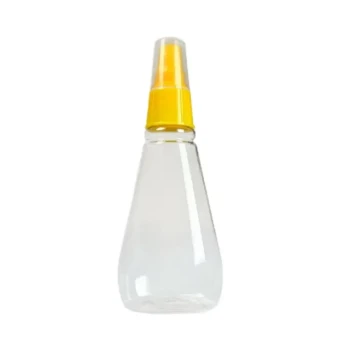
Pouches and tubes are specialized honey packaging formats designed primarily for single-serving portability and convenience. Unlike bulk containers, these compact options are engineered for on-the-go consumption or precise portion control in food service environments, such as restaurants and cafes.
While glass dominates the bulk retail market for its preservation qualities, pouches and tubes fill a critical niche for immediate consumption. They prioritize lightweight durability and portion control, making them the standard for travel, athletic use, and commercial food service.
The Strategic Role of Flexible Packaging
Optimized for Mobility
The primary driver for using tubes and pouches is portability. Consumers increasingly demand products that fit active lifestyles, such as hiking or athletic events.
Small plastic tubes, often called "honey sticks," allow for a quick energy boost without the mess of a jar. This format eliminates the bulk and fragility associated with traditional packaging.
Precision for Food Service
For restaurants and cafes, "tear-off" pouches serve a functional role in inventory and portion control.
These single-serve units prevent the waste and mess associated with communal jars. They ensure every customer receives a hygienic, specific amount of product, streamlining operations in high-volume settings.
Evolving Sustainability
Recent innovations in packaging technology are addressing the environmental impact of single-use plastics.
Manufacturers are increasingly utilizing post-consumer recycled resin (PCR) for plastic containers. Additionally, modern pouch production often generates less waste compared to rigid containers, and new materials are improving recyclability profiles.
Understanding the Trade-offs
While pouches and tubes excel at convenience, they lack the superior preservation characteristics of glass.
Chemical Inertness and Barrier Properties
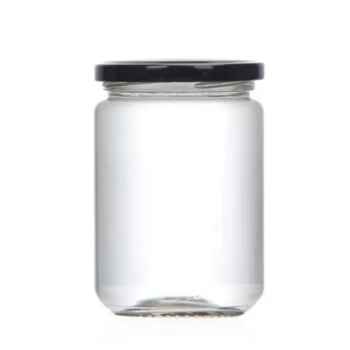
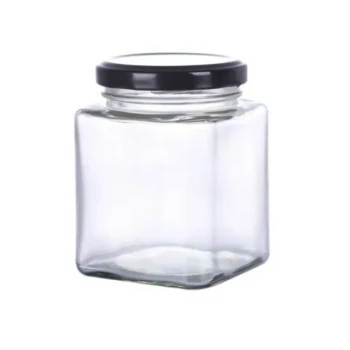
Glass remains the gold standard for preserving honey's quality because it is chemically inert.
Plastic containers used for tubes and pouches are generally safe, but they do not offer the same absolute barrier against oxygen and moisture as glass. Over long periods, this can impact the honey's stability and increase the risk of crystallization or fermentation if the seal is compromised.
Brand Perception and Shelf Appeal
Flexible packaging often struggles to convey the "premium" status associated with glass jars.
Glass offers high transparency, allowing consumers to see the honey's color and texture, which builds trust and authenticity. Pouches are functional and utilitarian, making them less effective for brands trying to establish a high-end, artisanal image on a retail shelf.
Making the Right Choice for Your Goal
Selecting between flexible packaging and rigid containers depends entirely on the end-user's context.
- If your primary focus is immediate convenience: Choose pouches or tubes to serve athletes, travelers, or fast-paced food service environments where portability is key.
- If your primary focus is long-term quality: Opt for glass jars to ensure an airtight seal that prevents moisture absorption and preserves the honey's enzymatic integrity.
- If your primary focus is premium branding: Utilize clear glass to showcase the product's color and texture, signaling authenticity to the consumer.
Ultimately, the best packaging strategy aligns the physical container with the specific moment your customer intends to enjoy the product.
Summary Table:
| Packaging Feature | Honey Pouches & Tubes | Traditional Glass Jars |
|---|---|---|
| Primary Use | On-the-go / Single-serve | Long-term storage / Retail |
| Portability | High (Lightweight & Durable) | Low (Heavy & Fragile) |
| Portion Control | Precise (Pre-measured) | Variable |
| Preservation | Moderate | Superior (Airtight & Inert) |
| Sustainability | Improving (PCR options) | High (Infinite recycling) |
| Brand Image | Functional & Utilitarian | Premium & Artisanal |
Elevate Your Honey Distribution Strategy with HONESTBEE
Whether you are scaling a commercial apiary or supplying a global distribution network, HONESTBEE provides the end-to-end solutions you need to succeed. From precision honey-filling machines for pouches and jars to a comprehensive range of wholesale beekeeping tools and equipment, we empower our partners to meet the diverse demands of the modern market.
Our value to you:
- Comprehensive Wholesale Range: Access the full spectrum of beekeeping hardware and essential consumables.
- Industrial Efficiency: Optimize your production with our specialized hive-making and honey-processing machinery.
- Market Growth: Expand your reach with our unique honey-themed cultural merchandise and retail-ready equipment.
Ready to enhance your operational efficiency and product appeal? Contact HONESTBEE today to discuss how our wholesale offerings can grow your beekeeping business!
Related Products
- Food Grade Plastic Honey Bucket Pail for Beekeeping
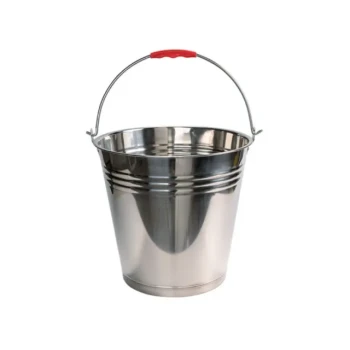
- Premium Stainless Steel Honey Tank Bucket Pail with Reinforced Handle and Polished Finish
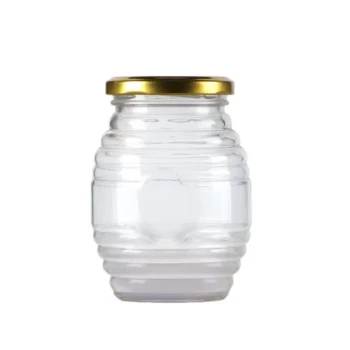
- Classic Glass Honey Jar with Metal Lug Cap for Beehive Storage
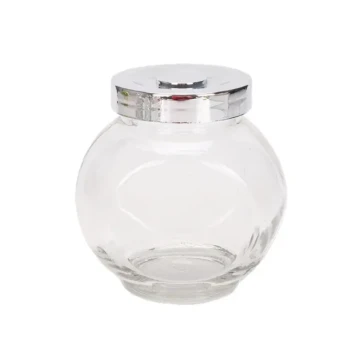
- Classic Drum Shaped Glass Honey Jar with Airtight Lid
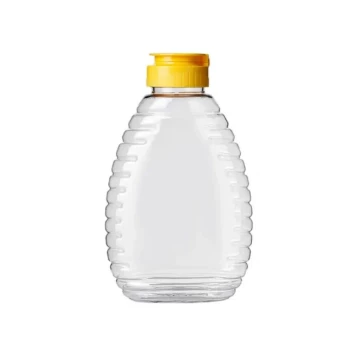
- Squeezable No-Drip Beehive-Shaped Honey Jars with Flip-Top Cap
People Also Ask
- What key operational precautions should be taken when using honey buckets and extractors fitted with bottom drain taps?
- What functions do food-grade honey buckets perform? Safeguard Your Harvest and Optimize Apiary Logistics
- Why are food-grade plastic buckets preferred for honey? Protect Quality with Modern Honey Collection Tools
- What is the significance of food-grade plastic honey collection buckets? Boost Quality in Forest Honey Logistics
- What is a honey pail? The Essential Container for Protecting Your Honey's Value