The wide-mouth glass jar serves as the primary processing vessel for the inert powder detection method, specifically designed to facilitate the uniform coating of honey bees. Its internal geometry provides sufficient space to tumble the bees during the rolling phase, while its transparency allows the operator to visually confirm that the powder has effectively distributed over the bees to dislodge the mites.
The jar’s design is not merely for containment; it is a precision tool that balances the need for vigorous agitation to detach mites with the requirement to keep the sampled bees alive and safe for return to the colony.
The Mechanics of Effective Coating
Optimizing Internal Volume
The "wide-mouth" designation is critical because it provides the necessary internal space for the bees to move freely.
When the jar is rolled, the bees must tumble over one another rather than clump together.
This movement ensures that the inert powder (typically powdered sugar) is uniformly coated over every bee, a prerequisite for the method's success.
Visual Process Control
The transparency of the glass is a functional requirement, not just an aesthetic one.
It allows the operator to directly monitor the powder distribution in real-time.
By seeing inside, the operator can ensure the agitation is sufficient to coat the bees and cause the mites to detach, without being so violent that it harms the insects.
Separation and Sustainability
The Filtration Mechanism
While the glass body holds the bees, the jar is functionally incomplete without a specific mesh lid, typically with a 0.5 x 0.5 mm aperture.
This mesh size is calibrated to act as a sieve during the shaking process.
It allows dislodged Varroa mites and excess powder to pass through into a collection container while retaining the adult bees safely inside the jar.
Non-Destructive Monitoring
The ultimate purpose of this jar assembly is to maintain sustainable beekeeping practices.
Unlike alcohol washes that kill the sample, the inert powder method disrupts the adhesive capabilities of the mite's feet without harming the host.
This design enables beekeepers to return the live bees to the colony after testing, preserving the colony's labor force.
Understanding the Trade-offs
Humidity and Clumping
The effectiveness of the jar relies heavily on the physical properties of the powder.
If the jar or the environment is damp, the powder will clump rather than flow through the mesh.
This can trap mites inside the jar with the bees, leading to a false negative or artificially low mite count.
Accuracy vs. Effort
While the method allows for bee survival, it requires more physical effort (rolling and shaking) than lethal methods to achieve high accuracy.
Data suggests this method offers up to 94% accuracy, but only if the rolling and shaking within the jar are performed correctly and thoroughly.
Making the Right Choice for Your Goal
When selecting your detection equipment and method, consider your primary objective:
- If your primary focus is Colony Preservation: Use the wide-mouth jar method, as it allows you to return the sampled bees to the hive, maintaining the colony's population strength.
- If your primary focus is Speed of Processing: Be aware that the rolling and shaking required to ensure the jar works effectively will take more time per hive than lethal dip methods.
The wide-mouth jar is the essential interface that converts a simple powder into a non-lethal, high-accuracy diagnostic tool for colony health.
Summary Table:
| Feature | Function in Mite Detection | Benefit to Beekeeping |
|---|---|---|
| Wide-Mouth Design | Facilitates bee tumbling and uniform coating | Ensures high accuracy (up to 94%) |
| Transparency | Allows real-time visual process monitoring | Prevents bee injury during agitation |
| Mesh Lid Compatibility | Acts as a sieve for mites and powder | Separates mites without harming bees |
| Glass Material | Easy to clean and non-reactive | Durable and sustainable for repeated use |
Maximize Your Colony Health with Professional Tools
At HONESTBEE, we understand that commercial apiaries and distributors require reliable, high-accuracy diagnostic solutions to protect their honey bee investments. Our wide-mouth detection jars and mesh systems are designed for durability and precision in the field.
Whether you are scaling your operation or supplying the next generation of beekeepers, HONESTBEE provides the full spectrum of wholesale beekeeping machinery, specialized hardware like honey-filling machines, and essential consumables.
Ready to upgrade your apiary’s efficiency? Contact us today to explore our comprehensive wholesale catalog and discover how our expert-grade equipment can secure your honey production and colony sustainability.
References
- P. A. Macedo, M D Ellis. Using inert dusts to detect and assess varroa infestations in honey bee colonies. DOI: 10.1080/00218839.2002.11101062
This article is also based on technical information from HonestBee Knowledge Base .
Related Products
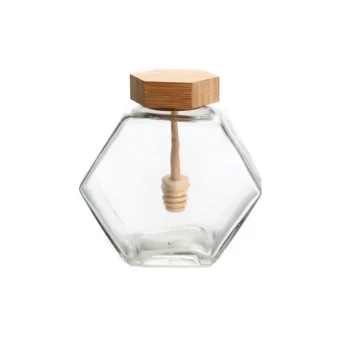
- Hexagonal Glass Honey Jar with Wooden Lid Integrated Dipper Elegant Functional Storage
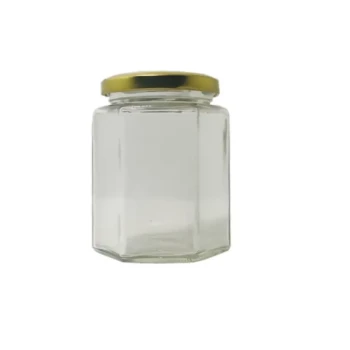
- Hexagonal Glass Honey Jars with Metal Lug Caps Elegant Versatile Packaging
- Modern Square Glass Honey Jar with Twist Off Lid
- Classic Drum Shaped Glass Honey Jar with Airtight Lid
- Classic Glass Honey Jar with Metal Lug Cap for Beehive Storage
People Also Ask
- What are the benefits of glass jars regarding strength and safety for storing honey? Ensure Purity and Long-Term Quality
- What are the advantages of using glass jars for honey storage? Ensure Purity and Premium Appeal for Your Product
- What is the aesthetic appeal of using glass jars for honey? Elevate Your Brand with Premium Packaging
- What are the advantages of glass containers for honey? Elevate Quality and Market Value with Premium Packaging
- What are the benefits of using high-transparency Glass Jars for honey? Elevate Purity and Premium Branding