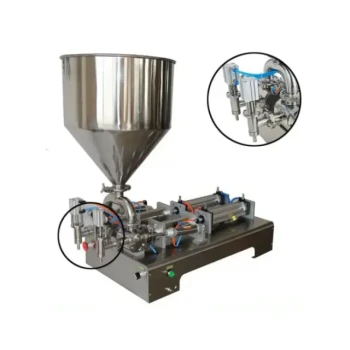
Automated filling and packaging equipment serves as the critical bridge between bulk honey processing and the retail market. Its primary role is to execute high-efficiency, quantitative packaging using precise flow control and hygienic systems, all while operating within a closed environment to strictly prevent secondary contamination and thermal damage.
The core value of this equipment lies in its ability to increase output speed without compromising the honey's delicate physical and chemical properties, ensuring the final product meets rigorous international food safety standards.
Preserving Chemical Integrity and Hygiene
Preventing Thermal Damage
Honey is heat-sensitive; excessive heat destroys enzymes and alters flavor. Automated equipment is designed to fill containers efficiently without requiring high temperatures that would damage the honey’s physical and chemical properties.
The Closed-Loop Environment
Manual handling introduces bacteria and foreign particles. Automated systems utilize a closed processing environment, which eliminates human contact during the filling stage.
Controlling Moisture and Contamination
Honey is hygroscopic, meaning it absorbs moisture from the air, which leads to fermentation. Sealed, automated filling lines prevent exposure to humid air and external contaminants, ensuring the product remains stable.
Efficiency and Market Standardization
Precision Flow Control
Inconsistent fill levels can ruin brand reputation and lead to regulatory fines. High-precision quantitative filling technology ensures that every bottle contains the exact same volume of product.
Reducing Waste via Anti-Drip Mechanisms
High-viscosity liquids like honey are prone to dripping, which causes product loss and sticky packaging. Automated machines employ specialized anti-drip mechanisms to ensure clean sealing and minimize waste.
Enhancing Visual Appeal
Market competitiveness relies on shelf presence. These machines provide professional, clean sealing and aesthetic consistency, transforming bulk raw honey into high-value retail products.
Understanding the Trade-offs
Operational Complexity
While automation reduces manual labor costs, it increases the need for technical oversight. Operators must be trained to manage calibration and troubleshoot mechanical issues specific to viscous fluids.
Maintenance Requirements
Honey can crystallize or become extremely sticky, posing a challenge for machinery. Automated lines require rigorous, regular cleaning cycles to prevent clogs and ensure the "hygienic filling systems" remain truly hygienic.
Making the Right Choice for Your Goal
When integrating automated filling into your processing line, align the technology with your specific objectives:
- If your primary focus is Product Quality: Prioritize equipment with advanced temperature controls and closed-loop systems to keep biochemical indicators (like HMF) within optimal ranges.
- If your primary focus is Export and Scale: Focus on machines that offer high-speed output, precise weight verification, and traceability features to meet international standards.
By automating the packaging stage, you not only accelerate production but also lock in the quality and safety required to command a premium price in the market.
Summary Table:
| Key Role | Primary Benefit | Technical Feature |
|---|---|---|
| Quality Preservation | Prevents thermal damage & enzyme loss | Advanced temperature-controlled filling |
| Hygiene Control | Eliminates secondary contamination | Closed-loop processing environment |
| Precision Filling | Ensures consistent volume & brand trust | High-precision quantitative flow control |
| Waste Reduction | Keeps packaging clean & minimizes loss | Specialized anti-drip mechanisms |
| Market Readiness | Professional, shelf-ready aesthetics | Automated sealing & labeling systems |
Elevate Your Honey Production with HONESTBEE
Transitioning from bulk processing to retail success requires precision and reliability. HONESTBEE empowers commercial apiaries and global distributors with professional-grade beekeeping tools and specialized machinery. Whether you need high-efficiency honey-filling machines, custom hive-making equipment, or essential industry consumables, our comprehensive wholesale solutions are designed to scale your operations.
Ready to lock in product quality and command premium market prices? Contact our experts today to discover how our tailored equipment can optimize your honey processing line.
References
- Agnieszka Borowska. Kształtowanie się światowego rynku miodu w latach 1961-2010. DOI: 10.22630/rnr.2011.98.3.38
This article is also based on technical information from HonestBee Knowledge Base .
Related Products
- Fully Automatic Honey Filling Packaging Machine for Processing Line
- Automatic Honey Filling and Filtering Machine for Beekeeping Bottle Filling
- Precision Durable Efficient HONESTBEE Rotary Honey Filling Machine
- Semi Automatic Small Honey Bottle Filling Machine Honey Filler
- Precision Automated Packaging Turntable Honey Spoon Filling Sealing Packing Machine
People Also Ask
- Why are fully automatic honey filling and packaging lines essential? Boost Your Honey's Market Value and Quality
- What is a fully-automatic honey filler? Streamline Your Production with High-Precision Automation
- How do automated honey filling and packaging machines affect profitability? Boost Margins with HONESTBEE Technology
- How do automated honey filling and packaging machines contribute to the market value of honey products? Maximize Your ROI
- How do industrial-grade automated honey filling and packaging machines mitigate the risk of physical contamination?