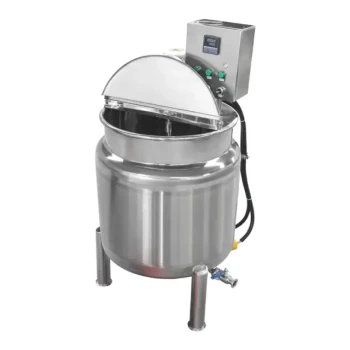
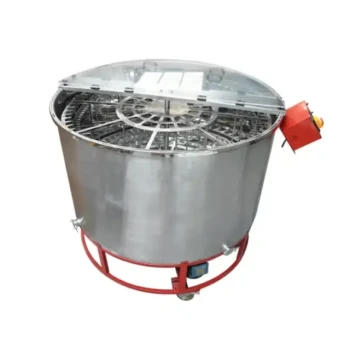
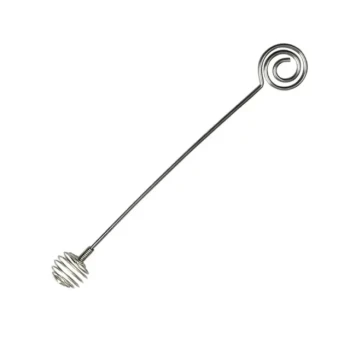
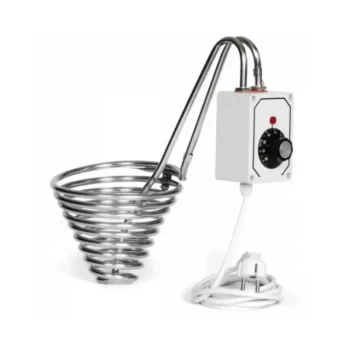
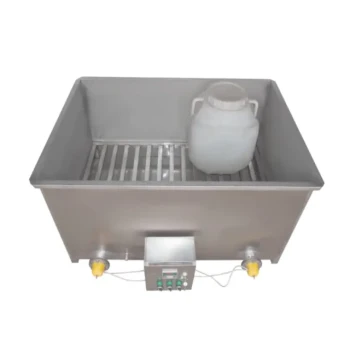
Industrial-grade stirring and heating equipment is the foundation of high-quality supplementary bee feed production. This specialized machinery ensures the rapid, thorough dissolution of crystalline sugar into water while maintaining the precise temperature controls necessary to prevent the formation of toxic chemical byproducts.
Core Takeaway: By combining high-shear mechanical stirring with precision thermal management, industrial equipment ensures syrup uniformity and colony safety, preventing both feeder clogging and Hydroxymethylfurfural (HMF) toxicity.
Achieving Optimal Feed Uniformity
High-Efficiency Sugar Dissolution
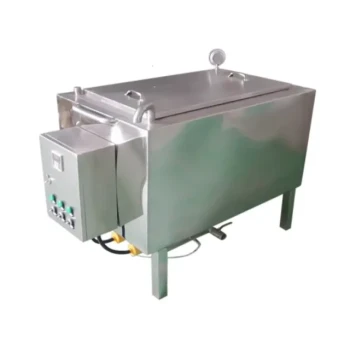
Industrial equipment is designed to heat water to approximately 100°C while providing high-torque stirring to dissolve crystalline sugar rapidly. This process creates a stable, homogeneous syrup that prevents sugar from recrystallizing in low-temperature environments.
By ensuring total dissolution, the equipment prevents sugar crystals from clogging small feeding tubes, allowing bees to easily ingest the syrup through their mouthparts.
Uniform Nutrient Distribution
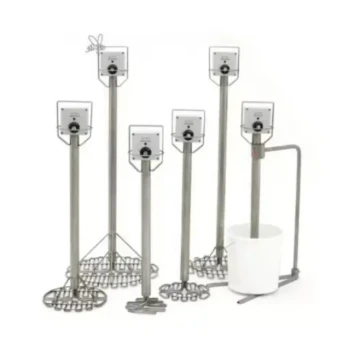
Beyond simple sugar water, supplemental feeds often include soybean flour, brewer’s yeast, and micronutrients. Industrial mixers use mechanical shear and tumbling actions to achieve a highly uniform distribution of these dense ingredients.
This homogeneity prevents the stratification of nutrients, ensuring that every bee in the colony consumes a consistent ratio of essential amino acids and minerals.
Achieving Specific Gravity and Brix Levels
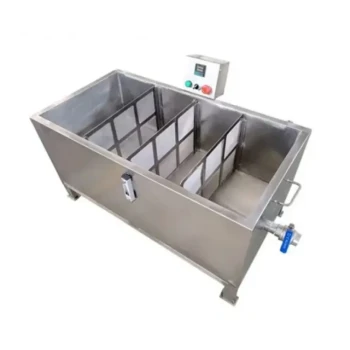
For large-scale operations, reaching a specific dry matter content—typically 67% to 68%—is critical for subsequent enzymatic reactions. Industrial tanks facilitate efficient heat exchange and molecular diffusion to reach these high concentrations quickly.
Consistent Brix levels are essential for distributors who require standardized products that meet rigorous quality control benchmarks for their clients.
Advanced Thermal Management for Bee Safety
Preventing HMF Toxicity
The most critical role of precision heating is the prevention of Hydroxymethylfurfural (HMF) formation. HMF is a toxic and potentially carcinogenic substance for honeybees that is produced when sugars are overheated or held at high temperatures for too long.
Industrial-grade equipment utilizes precision temperature sensors to ensure the syrup dissolves without undergoing this dangerous chemical breakdown, protecting the immune security of the hive.
Facilitating Sucrose Inversion
During the production of inverted sugar syrup, equipment must maintain a critical temperature point of approximately 38°C. Regular, intermittent stirring at this temperature allows enzymes or acids to hydrolyze sucrose into glucose and fructose.
This process mimics the natural chemistry of honey, making the feed higher in digestibility and ensuring immediate energy utilization by the bee colony.
Sterilization and Concentration
In certain applications, such as concentrating fruit juices into syrup, equipment must maintain a consistent 90°C to facilitate water evaporation. This thermal process also serves to sterilize the product, eliminating pathogens that could otherwise compromise the health of the colony.
Understanding the Trade-offs
Temperature vs. Processing Speed
While higher temperatures (near 100°C) significantly accelerate the dissolution of sugar and ensure sterilization, they increase the risk of sugar degradation. Operators must balance the need for rapid production with the strict cooling requirements necessary to stop HMF development.
Mechanical Shear vs. Ingredient Integrity
High-shear stirring is excellent for homogenization but can occasionally introduce excessive aeration into the syrup. Excessive bubbles can lead to oxidation of certain micronutrients, requiring a calibrated approach to stirring speeds based on the specific feed formula.
Selecting the Right Industrial Solution for Your Inventory
Choosing the right equipment requires balancing output volume with the technical requirements of the beekeeping industry.
- If your primary focus is rapid order fulfillment and high-volume turnover: Prioritize high-capacity dissolving tanks with rapid heating elements to maximize throughput.
- If your primary focus is premium feed quality and colony safety: Invest in equipment with advanced PID temperature controllers and intermittent stirring programs to guarantee low HMF levels.
- If your primary focus is providing a full-spectrum product portfolio: Source multi-functional mixing units capable of handling both liquid syrups and dense protein-based pollen substitutes.
Equipping your operation with professional-grade stirring and heating technology is the only way to guarantee a safe, uniform, and nutritionally stable product for the modern beekeeping market.
Summary Table:
| Key Feature | Functional Role | Benefit for Apiaries |
|---|---|---|
| High-Torque Stirring | Rapid sugar dissolution | Prevents feeder clogging and recrystallization |
| Precision Heating | Prevents HMF formation | Eliminates chemical toxicity for colony safety |
| Mechanical Shear | Nutrient homogenization | Ensures uniform distribution of proteins/minerals |
| Thermal Control | Facilitates sucrose inversion | Improves feed digestibility and energy utilization |
| Sterilization | High-temperature processing | Pathogen elimination to protect hive health |
Scale Your Operations with HONESTBEE’s One-Stop Wholesale Solutions
Maximize your profit margins and supply reliability with HONESTBEE, the leading partner for commercial apiaries and B2B distributors. We provide a comprehensive, full-spectrum portfolio of beekeeping tools—from specialized syrup mixing tanks and honey-filling machines to essential industry consumables and cultural merchandise.
Why Partner with HONESTBEE?
- Comprehensive Sourcing: Access everything from heavy machinery to specialized hardware in one place.
- Rapid Fulfillment: Benefit from our ultra-fast delivery and efficient order processing to keep your inventory moving.
- Deep Industry Expertise: Our team provides dedicated technical support and OEM/ODM capabilities tailored to your specific market needs.
- Exceptional Service: Experience rapid response times and customer-focused solutions designed for large-scale growth.
Ready to elevate your beekeeping supply chain? Contact HONESTBEE today for a customized quote and expert consultation!
References
- Naznin Sultana, Md. Mashiur Rahman. Evaluating the efficiency of supplementary feeding as a management strategy for enhancing honeybee (Apis mellifera L.) colony growth and productivity. DOI: 10.3389/frbee.2024.1386799
This article is also based on technical information from HonestBee Knowledge Base .
Related Products
- HONESTBEE Round Hive Top Bee Feeder for Syrup
- Professional Stainless Steel Honey Filtering Machine with Water Bath Heating for Beekeeping
- HONESTBEE Entrance Bee Feeder Efficient Hive Front Liquid Feeding Solution for Beekeeping
- Electric Commercial Beeswax Melter for Factory Use
- HONESTBEE Professional Hive Top Bee Feeder Feeding Solution
People Also Ask
- What can the round hive top feeder be used for? A Guide to Efficient, Safe Bee Feeding
- What is the capacity of the round hive top feeder for syrup and pollen? A Guide to Targeted Apiary Support
- What types of hive boxes is the round hive top feeder compatible with? Universal Fit for 8 & 10-Frame Langstroth Hives
- What types of feed can be used with the round hive top feeder? Versatile Feeding for Optimal Apiary Health
- What are the different types of top feeders for bees? Choosing the Best Feeder for Your Apiary