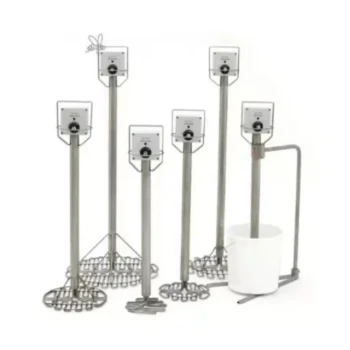
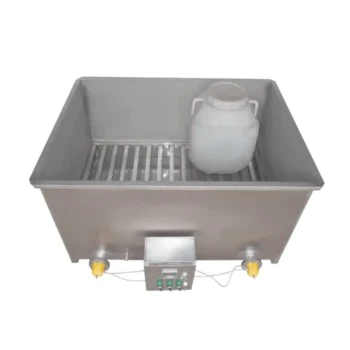
Industrial thermochemical heating equipment serves as a precision instrument for the structural modification of honey. It facilitates a controlled low-temperature caramelization process, specifically operating between 60°C and 75°C. By maintaining this narrow thermal window for a brief duration of 45 to 90 seconds, the equipment initiates specific chemical reactions without degrading the honey's natural qualities.
The primary value of this equipment is its ability to trigger the polymerization of sugars and alter the honey's supramolecular structure while preserving its biological activity. This is achieved by strictly limiting heat exposure to a "Goldilocks" zone—hot enough to react, but cool enough to protect sensitive enzymes.
The Mechanics of Controlled Caramelization
Precision Temperature Regulation
The central role of this equipment is to maintain a low-temperature environment. unlike standard caramelization which often requires high heat, this process is restricted to 60-75°C.
This specific range is critical. It provides enough energy to initiate chemical changes but remains below the threshold where massive degradation of nutrients occurs.
Time-Sensitive Processing
The equipment is designed to execute this thermal treatment rapidly. The exposure time is strictly limited to between 45 and 90 seconds.
This brief duration prevents thermal stress. It ensures the honey is processed only long enough to achieve the desired structural changes.
Chemical and Physical Transformations
Triggering Polymerization
The heating process drives the polymerization and polycondensation of the honey's sugars. Specifically, it acts on monosaccharides and disaccharides.
This chemical reaction transforms the simple sugars into more complex structures. This is the fundamental mechanism behind the "caramelization" effect in this specific context.
Altering Supramolecular Structure
Beyond simple chemical changes, the equipment alters the supramolecular structure of the honey. This refers to how the molecules arrange themselves on a larger scale.
This structural reorganization creates a stable product with modified physical properties.
Reduction of Pollen Particle Size
A significant physical outcome of this process is the reduction of pollen grain size. The treatment reduces the particle size of pollen by 5 to 10 times.
This physical refinement contributes to a smoother texture and alters the visual clarity of the final product.
Understanding the Trade-offs
The Risk of Deviation
The effectiveness of this process relies entirely on precision. If the temperature exceeds 75°C or the duration surpasses 90 seconds, you risk damaging the biological activity of the honey.
Conversely, falling below 60°C or 45 seconds may fail to trigger the necessary polymerization. The equipment must be calibrated to avoid these extremes.
Complexity vs. Simplicity
Using industrial thermochemical equipment adds a layer of technical complexity compared to simple batch heating. It requires tight monitoring of process parameters.
However, simple heating cannot achieve the dual goal of structural modification and biological preservation. The complexity is the cost of quality.
Making the Right Choice for Your Goal
To maximize the utility of industrial thermochemical heating, align your process parameters with your specific end-product requirements.
- If your primary focus is Biological Preservation: Ensure your equipment calibration strictly adheres to the 45-90 second limit to prevent enzyme denaturation.
- If your primary focus is Texture and Structure: Verify that the temperature consistently reaches the 60-75°C range to fully activate the polymerization of mono- and disaccharides.
Mastering this equipment allows you to fundamentally engineer the structure of honey while keeping it biologically alive.
Summary Table:
| Parameter | Range/Impact | Role in Process |
|---|---|---|
| Temperature Window | 60°C - 75°C | Initiates polymerization without enzyme denaturation |
| Processing Time | 45 - 90 Seconds | Prevents thermal stress and preserves biological activity |
| Chemical Action | Polymerization | Transforms simple sugars into stable complex structures |
| Physical Effect | Pollen Reduction | Reduces particle size by 5-10x for smoother texture |
| Core Goal | Structural Engineering | Modifies supramolecular structure while remaining 'biologically alive' |
Elevate Your Honey Processing with HONESTBEE Precision Engineering
Are you a commercial apiary or distributor looking to master the science of honey modification? At HONESTBEE, we specialize in providing the full spectrum of industrial beekeeping machinery, including advanced thermochemical heating systems and honey-filling machines.
Why partner with HONESTBEE?
- Precision Control: Our equipment ensures the 60-75°C 'Goldilocks' zone to protect your honey's biological activity.
- Wholesale Excellence: We offer everything from specialized hardware to essential industry consumables for large-scale operations.
- Structural Innovation: Achieve superior texture and sugar stability with tools designed for modern market demands.
Ready to transform your production line? Contact us today to explore our wholesale solutions!
References
- Сергій Андрійович Курта, Nadiya Boyko. Biopolimeric Nano Structural Compositions Based on Caramelized Honey. DOI: 10.15330/pcss.20.4.445-452
This article is also based on technical information from HonestBee Knowledge Base .
Related Products
- Professional Thermostatic Conical Honey Melter
- Silicone Rubber Honey Drum Heating Belt
- Honey Concentrating Vacuum Heating Thickening Machine Dehumidifier for Honey
- HONESTBEE Commercial Upright Honey Melter
- Double Wall Honey Heating Stirring Homogenizer Mixing Machine with Various Capacity
People Also Ask
- What is melter honey used for? A Low-Cost Ingredient for Bakers and Brewers
- How does a honey melter address the issue of crystallized honey in storage? Restore Flow and Quality Efficiently
- How do you melt a bucket of honey? Safely Reliquefy Crystallized Honey Without Damage
- When is a honey melter necessary? Optimize Your Facility's Workflow for Crystallized Honey
- How to heat a bucket of honey? Safely Restore Liquid Honey While Preserving Quality