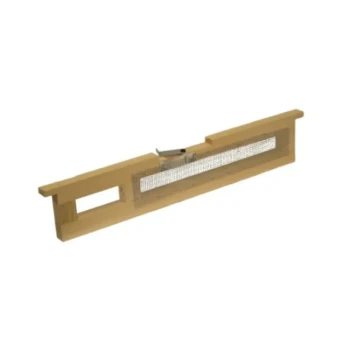
Standardized wooden bee hives serve as the fundamental infrastructure for professional stingless bee management. They provide a controlled, transportable habitat that allows colonies to acclimate to new surroundings prior to field deployment. This acclimation period ensures colony vitality and stability, which is essential for effective pollination services and reliable research outcomes.
By simulating natural nesting conditions within a modular framework, standardized hives transform stingless beekeeping from opportunistic wild harvesting into a precise, scalable science. They bridge the gap between natural adaptation and human management requirements.
The Mechanics of Acclimation and Stability
Ensuring Colony Vitality
Before a colony is deployed for pollination or experimentation, it must be biologically stable. Standardized wooden hives provide a secure environment where bees can adapt to local conditions before facing the stress of field activities.
Facilitating Safe Transport
Moving stingless bee colonies is inherently risky and stressful for the insects. The robust construction of standardized hives protects the delicate internal nest architecture during transit. This ensures the colony arrives at the pollination site or research station intact and ready to work.
Creating a Controlled Habitat
Research and commercial success depend on minimizing variables. These hives offer a reproducible environment that shields the colony from weather fluctuations and external stressors, allowing the bees to focus energy on colony maintenance rather than survival.
Bridging Natural Instincts and Human Management
Simulating Natural Cavities
Stingless bees naturally nest in hollow tree trunks or underground cavities. Standardized wooden rational hives are engineered to mimic these internal dimensions and microclimates, significantly reducing physiological stress on the bees.
Optimizing Spatial Arrangement
Unlike natural log hives, standardized units are designed with specific internal layouts. They encourage bees to separate brood cells from food storage (honey pots), which aligns with their natural hygiene instincts and promotes better colony health.
Protection from Predators
Small stingless bees are vulnerable to pests and larger predators. Specialized hive designs include defensive features that protect the colony from invasion, a critical factor for colonies that are being managed for commercial production.
Operational Efficiency and Scalability
Streamlining Daily Maintenance
Standardized hives replace the complexity of manual rearing with a systematic approach. Their design allows beekeepers to perform routine inspections and monitor health without destroying the nest structure, a common issue with traditional methods.
Enabling Modular Management
Systems like the INPA standard vertical hive utilize layered modules. This modularity allows for easy manipulation, such as separating honey chambers for hygienic harvesting or splitting brood chambers for artificial colony division.
Standardizing Research Data
For scientific study, consistency is paramount. By eliminating variables related to the nesting environment, standardized hives ensure that data regarding geopropolis production or pollination efficiency is accurate and comparable across different colonies.
Understanding the Trade-offs
The Shift to Active Management
Moving from wild harvesting to standardized hives requires a change in mindset. It necessitates a commitment to regular monitoring and maintenance, as the hive is a tool that requires human operation to function optimally.
Precision Requirements
The effectiveness of a standardized hive relies on precise engineering. Incorrect internal dimensions or poor-quality wood can fail to provide the necessary thermal insulation or simulation of natural conditions, potentially harming the colony rather than helping it.
Making the Right Choice for Your Goal
To maximize the utility of standardized hives, align your equipment use with your specific management objectives:
- If your primary focus is Commercial Pollination: Prioritize hives with robust external structures that facilitate frequent transport and rapid on-site acclimation.
- If your primary focus is Honey and Propolis Production: Utilize vertical, modular designs (like INPA) that physically separate storage units for clean, hygienic extraction.
- If your primary focus is Scientific Research: Ensure all hives possess identical internal dimensions to eliminate environmental variables and guarantee data integrity.
Standardized wooden hives are the technological leap that allows stingless bees to be managed not just as wild insects, but as a reliable, sustainable agricultural resource.
Summary Table:
| Feature | Benefit for Stingless Bees | Management Advantage |
|---|---|---|
| Standardized Dimensions | Simulates natural nesting cavities | Ensures reproducible data & growth |
| Modular Design | Separates brood from storage | Facilitates hygienic honey harvesting |
| Robust Construction | Thermal insulation & protection | Enables safe transport & relocation |
| Protective Features | Defense against pests & predators | Increases colony survival rates |
| Controlled Environment | Faster acclimation to local sites | Higher pollination efficiency |
Elevate Your Apiary with Professional Stingless Bee Solutions
At HONESTBEE, we understand that the right infrastructure is the foundation of successful beekeeping. Whether you are managing a large-scale commercial pollination service or distributing premium beekeeping tools, our standardized wooden hives and advanced machinery provide the precision you need.
Why partner with HONESTBEE?
- Comprehensive Wholesale Range: From specialized hive-making and honey-filling machines to high-quality consumables.
- Engineered for Efficiency: Our hives are designed to maximize colony stability and streamline your operations.
- Tailored for Pros: We cater specifically to commercial apiaries and international distributors with scalable, reliable equipment.
Ready to scale your production? Contact us today to discuss our wholesale offerings and discover how our beekeeping technology can drive your success.
References
- Ina Rubiatul Hasanah, DADANG DADANG. The Toxicity Test of Synthetic Insecticides on Tetragonula laeviceps (Apidae: Meliponini). DOI: 10.4308/hjb.31.2.271-283
This article is also based on technical information from HonestBee Knowledge Base .
Related Products
- Wooden Bee Hive Frames for Beekeeping and Wholesale
- Wholesales Dadant Size Wooden Bee Hives for Beekeeping
- HONESTBEE Wired and Assembled Wooden Bee Frames Foundation for a Thriving Hive
- Assembled Wooden Bee Frames with Plastic Foundation for Durability and Convenience by HONESTBEE
- Professional Wooden Requeening Frame for Beekeeping
People Also Ask
- How does balancing the number of frames impact hive productivity? Optimize Your Apiary's Biological Output
- How do wooden and plastic hive frames compare in terms of durability? Wood vs. Plastic Longevity & Repairability
- What are the main considerations when choosing between wooden and plastic bee hive frames? Optimize Your Apiary's Efficiency
- How should beehive frames be maintained to prolong their lifespan? 5 Pro Tips for Durable Beekeeping Equipment
- What are frames and combs used for in beekeeping? The Foundation of Modern Hive Management