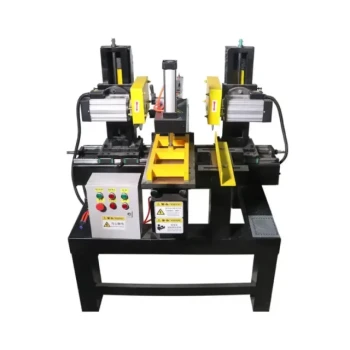
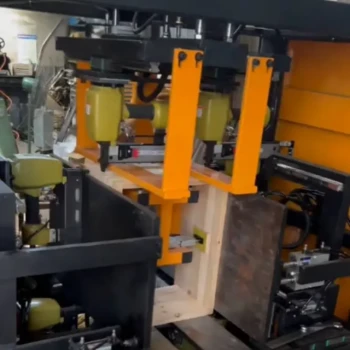
Standardized hive-making equipment is the cornerstone of constructing defensive, high-precision habitats for honeybee colonies. By utilizing machinery that guarantees structural integrity and superior sealing, apiarists create dwellings that provide essential thermal insulation and physical security against natural predators. This manufacturing precision directly mitigates environmental stress, reducing the risk of Colony Collapse Disorder (CCD) and ensuring a stable breeding foundation for critical pollination tasks.
The use of standardized equipment moves beekeeping from artisanal crafting to industrial precision, creating a controlled environment that minimizes external variables. This hardware foundation not only protects the colony physically but enables the interchangeability and data tracking necessary for modern, scalable apiary management.
The Foundation of Colony Defense
Enhancing Structural Integrity
Standardized equipment ensures that every hive body is produced with precise dimensions and tight tolerances. This structural accuracy results in excellent sealing, which is the first line of defense against environmental fluctuations.
Thermal Regulation and Stress Reduction
A well-sealed hive allows the colony to maintain internal temperatures efficiently, reducing the metabolic energy bees must expend on heating or cooling. By minimizing this thermal stress, the colony is less susceptible to Colony Collapse Disorder (CCD) caused by environmental exhaustion.
Predator Deterrence
High-quality, machine-produced hives eliminate gaps and structural weaknesses often found in inconsistent, hand-made equipment. These secure dwellings effectively prevent the intrusion of natural predators that exploit structural flaws to decimate colonies.
Operational Efficiency and Scalability
Component Interchangeability
The most immediate operational benefit of standardization is the uniformity of internal components, such as frames. Beekeepers can seamlessly move frames between different colonies to balance resources or manage brood without compatibility issues.
Optimizing "Bee Space"
Standardized hardware is engineered to maintain precise "bee space"—the exact gap required for bees to move freely without building excess comb. This precision is vital for efficient colony regulation, brood rearing, and maximizing honey storage space.
Facilitating Mechanization and Transport
Uniform hive specifications are a prerequisite for industrial beekeeping, enabling the use of mechanized lifters and automated processing lines. This uniformity significantly improves transport efficiency and bee survival rates during the logistical strain of large-scale pollination operations.
Data-Driven Management
Quantifiable Production Metrics
When every hive has identical specifications, beekeepers can accurately compare honey production capacity and colony size across different locations. This transforms dispersed apiary sites into quantifiable data points essential for ecological modeling.
Controlled Artificial Splitting
Standardization provides the reliability needed for precise artificial colony splitting. This allows managers to systematically increase colony numbers to offset losses from pesticides or disease, maintaining the apiary's economic carrying capacity.
Understanding the Constraints
While standardized equipment offers immense benefits, it imposes specific operational rigors.
Systemic Replication of Errors
The primary risk of standardization is that a flaw in the design or manufacturing process is replicated across the entire operation. If the "standard" dimensions are slightly off, the issue affects every hive, potentially violating bee space principles and complicating management rather than simplifying it.
Reduced Flexibility
Standardized systems are designed for the average needs of Apis mellifera and large-scale efficiency. They may lack the flexibility required for unique micro-climates or experimental management techniques that require non-standard hive volumes or geometries.
Making the Right Choice for Your Goals
To leverage standardized equipment effectively, align your hardware choices with your primary management objectives.
- If your primary focus is Colony Health: Prioritize equipment with high-precision sealing to maximize thermal insulation and minimize environmental stress on the bees.
- If your primary focus is Commercial Scalability: Ensure strict dimensional uniformity across all components to facilitate mechanization and rapid component interchangeability.
- If your primary focus is Sustainability: Utilize standardized hives to implement systematic artificial splitting protocols to offset annual colony losses.
Standardized hive equipment is not merely a logistical convenience; it is a critical defensive tool that stabilizes the biological and economic viability of the apiary.
Summary Table:
| Feature | Benefit for Colony Protection | Operational Advantage |
|---|---|---|
| Structural Integrity | Prevents predator intrusion & enhances insulation | Reduced maintenance & equipment longevity |
| Precise 'Bee Space' | Optimized brood rearing & efficient comb building | Easier frame manipulation & resource balancing |
| Dimensional Uniformity | Minimizes environmental stress & CCD risk | Seamless interchangeability & mechanized transport |
| Sealing Precision | Stable internal hive temperatures | Data-driven management & scalable production |
Elevate Your Commercial Apiary with HONESTBEE Precision
At HONESTBEE, we understand that standardized equipment is the backbone of professional beekeeping. We empower commercial apiaries and distributors by supplying a full spectrum of high-precision beekeeping tools, machinery, and essential consumables.
Whether you need specialized hive-making machines to ensure perfect thermal insulation, honey-filling lines for industrial efficiency, or honey-themed cultural merchandise to expand your brand, we provide the hardware foundation your business needs to scale. Our products are engineered to protect your colonies while maximizing your operational ROI.
Ready to optimize your apiary’s defensive capabilities? Contact HONESTBEE Today for Wholesale Solutions
References
- Luciano Pereira Da Silva, Edemar Ferrarezi. AS ABELHAS E SUA RELEVANTE IMPORTÂNCIA NO PROCESSO DE POLINIZAÇÃO. DOI: 10.31510/infa.v19i1.1369
This article is also based on technical information from HonestBee Knowledge Base .
Related Products
- High-Efficiency Pneumatic Bee Hive Making Machine for Rapid Box Assembly
- Mini Desktop Bee Hive Frame Forming Making Machine
- Professional Stainless Steel Pry-Bar Hive Tool
- Stainless Steel J Hook Hive Tool for Beekeeping
- Beehive Machine Double End Saw for Precision Hive Component Manufacturing
People Also Ask
- How does the introduction of professional beehive-making machinery benefit sustainable beekeeping? Scale Your Apiary
- Why is specialized beehive-making machinery critical for low-defense breeding? Enhance Selection with Precision Tools
- How does the introduction of specialized beehive making machinery contribute to increasing the scale of regional beekeeping industries?
- What is the importance of specialized beehive making machinery in a circular bio-economy? Build Local Sustainability
- Why is specialized beehive-making machinery essential? Scale Your Apiary with Precision Industrial Standards