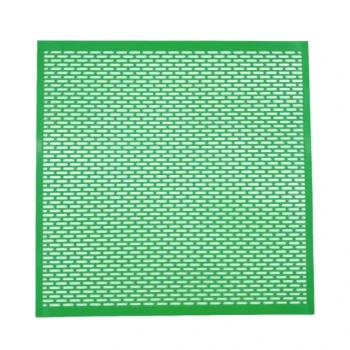
In the context of disease-resistance trials, the technical purpose of a queen excluder is to enforce a strict physical separation between the reproductive brood chamber and the honey storage areas. By restricting the queen to the lower chamber, researchers ensure that the brood remains concentrated for standardized health inspections while simultaneously preserving the integrity of honey production data.
The queen excluder turns a hive into a controlled laboratory environment; it isolates the variable of brood rearing to a specific zone, allowing for precise quantification of disease symptoms and honey yield without cross-contamination.
Precision in Disease Monitoring
The primary technical driver for using excluders in these trials is to standardize the area where disease symptoms are manifested.
Concentrating the "Search Image"
In resistance research, specifically for American Foulbrood (AFB), consistent monitoring is non-negotiable.
The excluder confines the queen—and consequently all egg-laying activity—to the lower brood chamber.
This ensures that researchers do not need to inspect honey supers for brood, allowing them to focus their attention entirely on the concentrated brood nest where disease symptoms appear.
Facilitating Rapid Assessment
Trials often involve inspecting many colonies in a short window.
Because the queen is physically unable to access the upper supers, researchers can eliminate those boxes from the disease inspection protocol entirely.
This reduces the time required per hive and minimizes the risk of missing a diseased cell that might otherwise be hidden in a honey super.
Ensuring Data Integrity
In scientific trials, data purity is as important as the physical purity of the product.
Isolating Yield Variables
To measure a colony's performance, researchers must accurately weigh honey production.
If a queen lays eggs in the honey supers, the resulting weight includes brood, pollen, and larvae, rendering the honey yield data inaccurate.
The excluder ensures that the mass accumulated in the upper boxes is exclusively honey, providing a "pure" data point for the colony's productivity.
Preventing Sample Contamination
Disease trials often require chemical analysis of the honey.
Brood rearing areas naturally contain higher levels of pollen and biological impurities.
By forcing a separation, the honey harvested for analysis is free from larvae and eggs, ensuring that chemical or biological assays reflect the honey itself, not the brood cycle.
Operational Control and Efficiency
Beyond data collection, excluders provide necessary operational control during the management of the trial.
Streamlined Queen Location
Research protocols frequently require locating the queen to assess her physical condition or for re-queening.
The excluder guarantees the queen is located in the bottom brood chamber.
This eliminates the need to dismantle and search the entire stack of boxes, significantly reducing stress on the colony and time spent by the researcher.
Understanding the Trade-offs
While excluders are essential for data control, they introduce variables that must be managed to avoid skewing trial results.
The "Honey Bridge" Challenge
Bees are sometimes reluctant to cross the metal or plastic barrier of the excluder to work in the upper supers.
This can result in "honey binding" in the brood nest, where bees store nectar below because they refuse to move up, potentially stalling the queen's laying space.
Management Requirements
To mitigate this, researchers may need to "bait" the bees upward.
This often involves placing a frame of brood briefly above the excluder to draw nurse bees up, or ensuring drawn comb is used rather than bare foundation.
Failure to manage this transition can lead to artificially low honey production data, not because the bees are unproductive, but because the barrier impeded their movement.
Making the Right Choice for Your Goal
Whether you are conducting a rigorous scientific trial or managing a commercial apiary, the use of an excluder depends on your specific metrics.
- If your primary focus is Disease Research: You must use excluders to concentrate the brood pattern, ensuring no symptoms of American Foulbrood are missed during rapid inspections.
- If your primary focus is Production Metrics: You should use excluders to guarantee that honey super weight reflects pure honey stores, eliminating the variable of brood mass.
The queen excluder is not just a tool for convenience; in a research setting, it is a calibration device that ensures your biological data is consistent, measurable, and comparable.
Summary Table:
| Technical Function | Research Benefit | Operational Impact |
|---|---|---|
| Brood Concentration | Standardizes inspection area for AFB symptoms | Reduces inspection time and improves accuracy |
| Yield Isolation | Prevents brood from skewing honey weight data | Provides pure productivity metrics per colony |
| Spatial Control | Guarantees queen location in the lower chamber | Simplifies queen assessments and re-queening |
| Sample Purity | Keeps honey supers free of larvae and pollen | Ensures accurate chemical/biological assays |
Optimize Your Apiary with Professional-Grade Solutions
At HONESTBEE, we specialize in supporting the rigorous demands of commercial apiaries, distributors, and research trials. Whether you are conducting disease-resistance studies or scaling commercial honey production, we provide the comprehensive wholesale infrastructure you need.
Our value to your business includes:
- Precision Equipment: From high-quality queen excluders to specialized hive-making and honey-filling machinery.
- Full-Spectrum Supply: A wide array of beekeeping tools, hardware, and essential industry consumables.
- Cultural Merchandise: Unique honey-themed products to expand your market reach.
Partner with a supplier that understands the technical precision required for modern beekeeping.
Contact HONESTBEE Today to Discuss Your Wholesale Needs
References
- Marla Spivak, Gary S. Reuter. Resistance to American foulbrood disease by honey bee colonies <i>Apis mellifera</i> bred for hygienic behavior. DOI: 10.1051/apido:2001103
This article is also based on technical information from HonestBee Knowledge Base .
Related Products
- High Performance Plastic Queen Excluder for Beekeeping and Apiary Management
- Professional Plastic Queen Excluder for Modern Beekeeping
- Lightweight Durable Plastic Queen Excluder Scraper for Beekeeping
- Metal Queen Bee Excluder for Beekeeping
- Premium Wood Framed Metal Wire Queen Bee Excluder
People Also Ask
- What are the characteristics of a plastic queen excluder? Key Benefits for Cost-Effective Beekeeping
- What are the operational and cost advantages of using plastic queen excluders over metal or wire excluders in commercial hive management? Discover how they reduce labor, prevent wing damage, and lower total costs.
- What types of queen excluders are available for beekeepers? Choose the Right Tool for Your Hive
- Why are standardized hive frames and queen excluders essential for maintaining honey purity and quality? Scale Your Purity
- Do plastic queen excluders work? A Cost-Effective Solution for Modern Apiaries