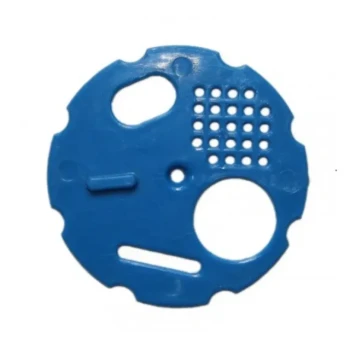
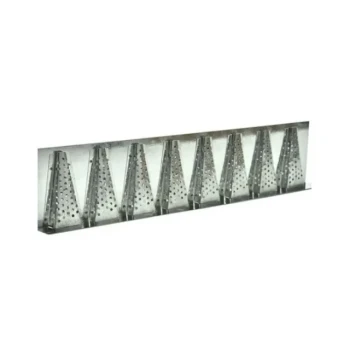
Beehive entrance reducers are essential winter hardware designed to physically restrict the size of the hive's flight opening. By narrowing this aperture, you act to control the colony's environment, drastically reducing the rate of heat exchange between the interior and the freezing exterior while simultaneously fortifying the entrance against opportunistic predators during periods of colony dormancy.
The technical value of an entrance regulator lies in two critical functions: energy conservation and perimeter defense. It minimizes the caloric expenditure required for thermoregulation and prevents physical invasion by rodents seeking warmth.
The Thermodynamics of Winter Survival
Minimizing Heat Loss
The primary technical function of an entrance reducer is the mitigation of cold stress. By significantly narrowing the opening, you reduce the surface area available for convective heat loss, allowing the hive to retain the warmth generated by the cluster more effectively.
Preserving Energy Reserves
Bees generate heat by vibrating their wing muscles, a process that consumes stored honey. Reducing the entrance aids in maintaining a stable internal temperature, which directly correlates to lowered metabolic demands on the colony.
Preventing Energy Depletion
When a hive is too open to the elements, bees must consume excessive amounts of honey to combat the cold. Using a regulator prevents premature energy depletion, ensuring food stores last throughout the winter.
Perimeter Security and Pest Exclusion
Defense During Dormancy
During winter, a colony’s activity levels drop significantly, rendering them unable to effectively guard a large entrance. Entrance reducers act as a physical barrier, compensating for the colony's lowered defensive capability against intruders.
The Rodent Threat
Hives are particularly attractive to pests like mice because they are warm, located near the ground, and contain abundant food sources. Without a reducer or a specialized mouse guard, rodents can enter to nest, causing unsanitary conditions and physical damage to the equipment.
Protection of Infrastructure
Beyond biological survival, these regulators protect the standardized equipment itself. Preventing pest intrusion ensures that frames and combs remain intact and interchangeable for the following season.
Common Pitfalls to Avoid
Neglecting Early Installation
The most significant error is delaying the installation of reducers until after the first frost. Mice often seek shelter as soon as temperatures drop, so the hardware must be in place before the "rodent pressure" peaks.
Overlooking Hardware Fit
While modern machinery ensures high-precision and standardized production, it is vital to check that the reducer fits snugly. A loose reducer defeats the purpose of thermal regulation and may still allow pests to squeeze through gaps.
Making the Right Choice for Your Goal
To maximize the effectiveness of your winter management strategy, consider these specific applications:
- If your primary focus is Colony Survival: Prioritize entrance reduction to minimize heat loss, reducing the risk of starvation due to rapid consumption of honey stores.
- If your primary focus is Equipment Preservation: Ensure your regulators or mouse guards are installed early in autumn to prevent rodents from destroying comb and woodenware.
Effective winter management relies on proactively controlling the hive entrance to preserve both the biological colony and the physical apiary assets.
Summary Table:
| Technical Function | Mechanism of Action | Key Benefit for Apiaries |
|---|---|---|
| Thermoregulation | Minimizes convective heat loss | Reduces metabolic demand and honey consumption |
| Pest Exclusion | Physically narrows hive aperture | Prevents rodent intrusion and hardware damage |
| Energy Conservation | Maintains stable internal temperature | Prevents premature depletion of food stores |
| Colony Defense | Compensates for dormancy inactivity | Protects vulnerable winter clusters from predators |
Secure Your Apiary for the Winter with HONESTBEE
Maximize your colony survival rates and protect your investment with professional-grade wintering hardware. HONESTBEE specializes in serving commercial apiaries and distributors with high-precision beekeeping tools, machinery, and essential consumables.
From standardized entrance reducers and mouse guards to advanced hive-making and honey-filling machinery, our comprehensive wholesale offering ensures your operation runs efficiently in any season. Partner with us to access the full spectrum of beekeeping equipment and honey-themed cultural merchandise designed for industry excellence.
Ready to scale your beekeeping business? Contact us today to discuss your wholesale needs!
References
- Hasan Vural, Süleyman Karaman. Socio-economic analysis of beekeeping and the effects of beehive types on honey production. DOI: 10.5897/ajar09.655
This article is also based on technical information from HonestBee Knowledge Base .
Related Products
- Steel Round Disc Entrance Reducer for Flexzion Bee Hive Nuc Box Gate
- Beehive Entrance Reducer Guardian Metal Hive Entrance for Bees
- White Plastic 0.5L Beekeeping Entrance Feeder for Bees
- Beehive Entrance Discs Plastic Bee Entrance Disc for Bee Hives
- Professional Hive Front Entrance Bee Feeder
People Also Ask
- What is the purpose of an entrance reducer for a beehive? Strengthen Colony Defense and Prevent Robbery
- Why are entrance reducers used to counter hornet infestations? Protect Your Hive with Strategic Choke Points
- Why is it critical to maintain a smaller entrance for a newly established bee hive? Boost Colony Growth and Security
- Under what conditions should a beekeeper adjust the size of a beehive entrance? Seasonal & Defense Management Tips
- What is the function of an entrance reducer on a beehive? Strengthen Colony Defense and Climate Control