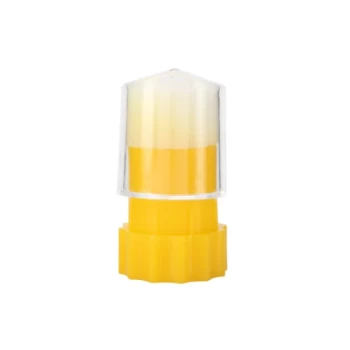
The technical significance of specialized thorax marking paint lies in its ability to ensure long-term data reliability without introducing physiological bias. In behavioral labeling experiments, particularly those comparing cohorts like infected versus control groups, this specialized medium is essential for maintaining individual identification over extended periods while exerting minimal impact on the bee's physical condition.
Core Takeaway The validity of behavioral data hinges on the premise that the marking method does not alter the subject's natural performance. Specialized thorax paint is technically significant because it decouples the variable of identification from the variable of health, offering the high wear resistance necessary for 15+ day field experiments without compromising the bee's physiology.
Ensuring Data Integrity in Longitudinal Studies
Durability for Extended Observation
For experiments tracking return times and survival rates, the marking agent must withstand the rigors of flight and hive activity. Specialized paint is engineered to be wear-resistant, ensuring that markings remain legible throughout the experiment.
Supporting Long-Term Timelines
Field homing experiments often extend beyond two weeks. This paint allows researchers to track specific groups of newly emerged bees for durations lasting over 15 days, providing data continuity that less durable markers cannot guarantee.
Minimizing Confounding Variables
Physiological Neutrality
A critical technical requirement for labeling experiments is ensuring the label does not weigh down the bee or cause toxicity. This specialized paint has a minimal impact on honey bee physiology, ensuring that observed behaviors are due to experimental conditions (such as infection status) rather than the burden of the marker itself.
Precise Group Differentiation
In comparative studies, such as those analyzing infected versus control groups, clear visual distinction is paramount. This marking method allows for error-free segregation of cohorts, ensuring that data regarding survival and behavior is attributed to the correct experimental group.
Broader Applications in Colony Management
Rapid Identification in High Density
While critical for experiments, this tool also serves a technical function in general husbandry by allowing for the rapid identification of specific individuals, such as queens, within a large, dense colony.
Tracking Lineage and Reproductive Status
Using color codes on the thorax enables the recording of vital metadata, such as a queen's age and origin. This is technically vital for monitoring swarming events, determining if a colony has undergone natural queen replacement, and tracking genetic lineages.
Understanding the Trade-offs
Application Precision is Critical
While the paint is physiologically neutral, its placement is technically demanding. It must be applied strictly to the thorax to avoid interfering with the wings or sensory organs, which would immediately invalidate behavioral data.
Dependence on External Visibility
This method relies on visual confirmation. While effective for survival and return-time studies, it requires the bee to be physically seen or captured to record data, unlike radio-frequency identification (RFID) tags which can be automated but carry a higher physical payload.
Making the Right Choice for Your Goal
To select the correct marking strategy for your specific technical needs, consider the following:
- If your primary focus is behavioral research: Prioritize this paint for its ability to withstand 15+ days of wear while maintaining a neutral physiological profile for accurate survival data.
- If your primary focus is colony management: Use color-coded thorax painting to track queen age, origin, and swarm status for long-term genetic monitoring.
The success of a bee behavior experiment depends not just on the observation of the subject, but on the invisibility of the observer's tools.
Summary Table:
| Feature | Technical Significance | Research Impact |
|---|---|---|
| Wear Resistance | Withstands flight and hive friction for 15+ days | Ensures longitudinal data continuity |
| Physiological Neutrality | Minimal weight and non-toxic formula | Prevents confounding behavioral bias |
| Visual Clarity | Precise color-coded differentiation | Enables error-free group/cohort tracking |
| Metadata Support | Identifies age, origin, and reproductive status | Critical for genetic and colony management |
Elevate Your Apiary Operations with HONESTBEE
At HONESTBEE, we understand that precision is the foundation of successful beekeeping and research. Whether you are a commercial apiary managing thousands of hives or a distributor seeking high-quality supplies, we provide the professional-grade tools you need to succeed.
Our comprehensive wholesale portfolio includes everything from specialized bee marking tools and consumables to advanced hive-making and honey-filling machinery. We empower our partners with the equipment necessary to track genetic lineages, monitor colony health, and optimize honey production efficiently.
Partner with a supplier that values technical excellence as much as you do.
Contact HONESTBEE Today to Explore Our Wholesale Solutions
References
- Jing Gao, Pingli Dai. Tropilaelaps mercedesae parasitism changes behavior and gene expression in honey bee workers. DOI: 10.1371/journal.ppat.1009684
This article is also based on technical information from HonestBee Knowledge Base .
Related Products
- Queen Bee Marking Pen POSCA Queen Marking Pens for Beekeeping Bee Markers
- Queen Bee Marking Pen UNI Medium Point for Queen and Bee Marking
- Plastic Long Marker Device for Catching and Marking Bees Queen Bee Marking Tube and Cage
- One Hand Yellow Queen Marking Catcher Tube Cage Beekeeper Tool Accessory for Queen Bee
- Queen Bee Catcher Plastic Bee Marker Bottle with Piston Marking Tube
People Also Ask
- What role do specialized marking pens and color-coding systems play in honeybee tracking? Enhance Research Precision
- Why are specialized marking pens used for stingless bee queens? Essential Tools for Large-Scale Breeding Success
- How should a new paint pen be primed before marking a queen bee? Essential Tips for Safe & Clear Markings
- How should a queen bee marking pen tip be properly primed? Master the Art of Safe Queen Marking
- What specifications are required for a high-quality queen bee marking pen? Ensure Safety and Precision for Your Colony